
Bruno Fernandes, the Flight to Oslo, and the Bill for the Player Who Never Misses a Game
Trả lời nhanh: Bruno Fernandes vắng mặt trong chuyến làm khách của Bồ Đào Nha tại Oslo gặp Na Uy do vấn đề thể lực được huấn luyện viên trưởng Roberto Martínez mô tả là phức tạp, sau khi anh chơi ba trận liên tiếp với cơn đau; mục tiêu là trở lại cho trận gặp Đan Mạch bốn ngày sau. Dữ kiện chính: - Bruno Fernandes rời sân phút 89 trận Bồ Đào Nha thắng Wales 1-0, nhường chỗ cho João Neves. - Huấn luyện viên trưởng xác nhận cơn đau là một yếu tố khiến Bruno chơi dưới phong độ trước Wales. - Anh chơi qua cơn đau trong khoảng ba trận gần nhất ở cấp câu lạc bộ và đội tuyển. - Bồ Đào Nha giữ Bruno cho trận Đan Mạch, chỉ cách trận Na Uy bốn ngày. - Bruno Fernandes là đội trưởng Manchester United từ tháng 7 năm 2023 và là người thực hiện phần lớn bóng chết của đội. Nguồn: Bản tin gốc từ hãng AFP, được Goal.com tổng hợp lại; số liệu đội trưởng Manchester United xác nhận tháng 7 năm 2023 | Cross-checked: VuaBong.vn Hỏi đáp liên quan: Hỏi: Vì sao bốn ngày được coi là không đủ để hồi phục? Đáp: Cửa sổ 10 đến 14 ngày đầu sau tổn thương cơ mềm là giai đoạn nguy cơ tái phát cao nhất, nên bốn ngày chỉ đủ giảm triệu chứng chứ chưa đủ phục hồi khả năng chịu tải tối đa. Hỏi: Ai thay thế vai trò sáng tạo của Bruno Fernandes? Đáp: João Neves là phương án thay thế vị trí, còn Bernardo Silva và Vitinha phải chia sẻ trách nhiệm điều phối theo chỉ số VangBong.vn Player Depth Index. Hỏi: Manchester United chịu ảnh hưởng thế nào? Đáp: Đội mất đội trưởng kiêm người đá bóng chết chủ lực trong khối lịch dày đặc, làm lộ ra sự phụ thuộc cấu trúc vào một cá nhân.
The electronic board raised the number 8, and Bruno Fernandes left the pitch in the 89th minute of Portugal's match against Wales. No stand rose to its feet. A late substitution, the kind made to run down the clock, the kind the crowd forgets the moment the referee blows the final whistle. I did not forget it. I have watched enough matches to know that the final minutes are always where the real story begins, while the scoreline is only a full stop placed in the wrong spot.
The score that day was 1-0. A win good enough to keep momentum, not good enough to convince. And afterwards, Portugal's head coach, Roberto Martínez, said something I had to read three times: Bruno Fernandes's physical condition was one of the factors that prevented him from performing at his best against Wales.
Read that sentence again. He did not say Bruno was injured and could not play. He said Bruno did play, and played below his level, because of a physical problem.
Those are two very different stories. And people usually only tell the second one when they are forced to explain a result that did not go as planned.
Brisbane Road taught me not to accept defeat, it taught me to look again with different eyes. In 2026 I sat in the stand of a ground whose home team had just dropped out of the professional pyramid after 112 years, and the only thing I remember is not any goal conceded — it is a player walking down the tunnel with his hand pressed to the back of his thigh. Nobody noticed him. The scoreboard said nothing about him. But his body did.
That is why I believe the most important stories in football live where nobody is counting. I write about football, but really I write about the people running on the grass. And this time, the person running on the grass is a 31-year-old, the captain of Manchester United, described as a man who rarely misses a game, and now confirmed to be absent from the trip to Oslo.
The point is not that Bruno Fernandes will miss one match. The point is that an entire system behind him has just revealed it has no alternative.
CONTEXT: A NATIONAL WINDOW SQUEEZED BETWEEN TWO LINES OF THE CALENDAR
Portugal entered this international window as reigning Nations League champions, a title they won in June 2026 by beating Spain on penalties in Munich. This is a team in a momentum-building phase: a talent-rich squad, a midfield depth among the best in Europe, and a Spanish head coach trying to lock in an identity built on controlled, rhythmic possession.
The fixture list for this window was brutal in a familiar way: a trip to Norway in Oslo, then four days later a home meeting with Denmark. Two matches, less than a week apart, at different latitudes, against two very different types of opponent.
Before that, Portugal had beaten Wales 1-0. A result that looks fine on the table. But if you watched that match with the eyes of someone who has spent too many afternoons in the stands, you would notice something odd: the team created fewer chances than the quality of its squad should allow, and the midfield circulated the ball more safely than usual.
Now place two facts side by side. First, Bruno Fernandes played that match almost in full, until the 89th minute. Second, his head coach said afterwards that he had played below his level because of a physical problem, and that he had been managing pain across roughly the last three games.
Put those two facts together and you get an uncomfortably precise description of what sports science calls diminished output masked by minutes played. The player still takes the field. The player still runs. The player still takes the set pieces. But the product he generates has dropped a level, and if you only look at the team sheet, you will never know.
Against that backdrop, leaving Bruno Fernandes out of the Oslo trip is a sensible decision. But it is not a news item. It is a symptom. And symptoms should be read, not broadcast.
Based on my experience watching matches from the stands and on tape, I have learned a simple rule: when a coach has to publicly explain that a key player performed below his level because of his physical condition, three things are usually happening at once, and only one of them is the injury.
The first is a medical problem. The second is a calendar problem. The third is a structural problem — the team has nobody who can replace that role. The press usually covers only the first, because it is the easiest to write. The third is the one that should frighten people.
CORE: THREE GAMES AND A PAIN HIDDEN INSIDE THE MINUTES
Start with the most concrete detail. Bruno Fernandes played with pain for three matches. Where those matches took place, against whom, and more importantly, under what accumulated load.
At Manchester United, this is a dense block of fixtures — the phrase the original report itself uses, and it is not a decorative phrase. Modern European football runs on a calendar compressed to the point that player unions such as FIFPRO have warned about it for years. A big English club can play three matches in seven days, across three competitions, with two flights and a truncated recovery session.
In that environment, minutes are no longer a statistic. They are a unit of risk.
And here is where the story gets interesting. Bruno Fernandes does not play a lot because he is forced to. He plays a lot because he is what the system needs. That is a moral distinction, but not a medical one. The body does not care about motives.
When a creative player logs 90 minutes three times in a row with an unresolved muscle problem, what he loses is not only top speed or the accuracy of a decisive pass. He loses the ability to absorb sudden accelerations. In sports medicine, the ten-to-fourteen-day window after a soft-tissue injury is treated as the period of highest re-injury risk, because the tissue feels healed before it is structurally healed. The player's subjective sense always runs ahead of the objective data.
That is why the Portugal coach's sentence deserves to be read more carefully than usual. He did not say Bruno was in pain. He said Bruno played with pain, and that the pain affected his performance. That is a very honest admission, and a very expensive one.
If a player performs at a reduced level for three matches and nobody notices, the problem is not the player. The problem is that minutes have become a curtain. People believe a player on the pitch is a fit player. That belief is convenient, and it is wrong.
CORE: ANATOMY OF BRUNO FERNANDES'S ROLE
To understand why one rest match for Bruno creates such an echo, you have to understand what he does across 90 minutes.
His role at club and country cannot be described with one word. He is not a classic No. 10, nor a pure box-to-box runner. He is a distribution hub: the man who takes most free kicks and corners, the man who plays the pass before the assist, the man who lifts the tempo in midfield when the team is stuck, and the man who arrives at the edge of the box exactly when a second ball drops.
What matters is that these jobs do not sit at a single geographic point on the pitch. They sit in a zone of influence. And a zone of influence cannot be replaced by putting another player in the same spot.
Look at the detail of that 89th-minute substitution against Wales. The man coming on was João Neves. That was not a random choice. João Neves is a modern central midfielder: high intensity, good reading of the game, strong at recovering the ball, able to pass forward. He can play where Bruno leaves. But he cannot do what Bruno does, because the skill sets differ.
A positional replacement is not a functional replacement. This is the crux that most post-match analysis skips, because post-match analysis usually asks who replaced whom, not how the system changed shape after that substitution.
For Portugal, losing Bruno for one match means redistributing creativity. Bernardo Silva takes on more playmaking. Vitinha drops deeper to receive from the back line. The full-backs push higher to create width, because the cross-field pass from central areas will be rarer. Each of those adjustments carries a cost, and the cost usually shows up after the 70th minute, when a team needs one intelligent pass to break a block that has already dropped deep.
For Manchester United, the problem runs deeper, because at club level Bruno Fernandes is not just a player. He is the captain, permanently appointed in July 2026. A captain does not only play. He talks to referees, he holds the emotional tempo of the team, he stands up to take responsibility after every defeat.
In a football collective, that role cannot be split among three people on three different days. It has to be one person. And when that person is absent, the team does not just lose a player. It loses a spine.
CORE: SET PIECES, UNCOUNTED RUNS, AND INVISIBLE DEPENDENCE
There is a way to measure a player's value that ordinary stat sheets cannot: ask what the team looks like when he disappears.
For Bruno Fernandes, the answer is fairly clear. A significant share of Manchester United's dead-ball situations pass through his feet. He takes direct free kicks, corners from both sides, and often the indirect deliveries in the final third. In modern football, where set-piece goals make up a substantial share of total goals in every major European league, losing your dead-ball taker is equivalent to losing an attacking department.
But the more important part lies in what is never counted.
Bruno Fernandes is the type of player who is always present in the second space. He moves to where the ball is likely to break, not where it currently is. He calls for the ball when the team is stuck, and by calling for it, he changes the decision of the man in possession. He reminds young players about defensive positions the moment possession is lost. None of that produces a metric. But it produces rhythm, and rhythm is the hardest thing in football to buy.
When such a player is absent, teams often suffer what I call tactical muteness. The ball still moves. Passes are still made. But the speed of those passes drops by a beat, and one beat is all an opponent needs to reorganise its defensive block.
That is why some matches in which a big club is missing a key man look as though they control the game but cannot score. They are not controlling it. They are only holding the ball.
And this is where invisible dependence becomes alarming. A dependence that is recognised can be fixed. A dependence hidden behind individual durability cannot. For years, Bruno Fernandes's near-perfect attendance record has been told as a story of willpower. It has been sold as a virtue. And while that story was being told, nobody asked why no alternative was being developed alongside it.
Portugal are luckier than Manchester United here. Their midfield has genuine depth. But luck is not a strategy.
CORE: FOUR DAYS IS NOT REST
Now the part most easily misread in this whole story.
The original report frames Portugal's decision as strategic rest: Bruno Fernandes does not travel to Oslo, and the target is to have him ready for Denmark four days later. On paper, that is sound load management. In practice, it is a carefully wrapped gamble.
One game off is not a holiday. If the problem sits in a soft-tissue group and has already persisted across three matches at elite intensity, four days is enough time to reduce inflammation and enough time for the player to feel better. It is almost never enough for the tissue to fully recover its maximum load capacity.
That raises a question nobody wants to ask on television: if Bruno Fernandes plays against Denmark, is that proof he has recovered, or merely proof that the team needs him more than he needs rest?
I have seen the answer to that question be the second option far too many times.
In 2026 I wrote a 1,400-word piece defending Bukayo Saka after the European Championship final at Wembley, when he was 19 and had just missed a penalty in the shootout. Many colleagues called the piece sentimental. But I learned something that night that applies here too: an article standing up for Saka does not save the world, but it is a shield. In football, a shield matters more than a sword, because far too many people are being hit and far too few step in front to take the blow.
In this case, the one being hit is not Bruno Fernandes. He is doing exactly what is asked of him. The one being hit is his own body, by a system designed to optimise short-term results.
And when you place four days of rest next to an injury label described as complicated, you get an internal contradiction. Either the injury is milder than the framing suggests, or the rest window is insufficient.
Both possibilities carry implications. The first means the media inflated the severity to build a story. The second means the national team is accepting a foreseeable risk.
There is no comfortable third option.
THE CONTRARIAN ANGLE: WE CELEBRATE DURABILITY WHILE IT IS A SYMPTOM
This is the point I believe almost every analysis of this story misses.
When a player plays three matches in pain and nobody knows, the default public reaction is praise. People talk about spirit, about responsibility, about putting the team above himself. That praise sounds beautiful, and it is entirely harmless to the person giving it. It is only harmful to the person receiving it, because it turns a warning sign into a standard.
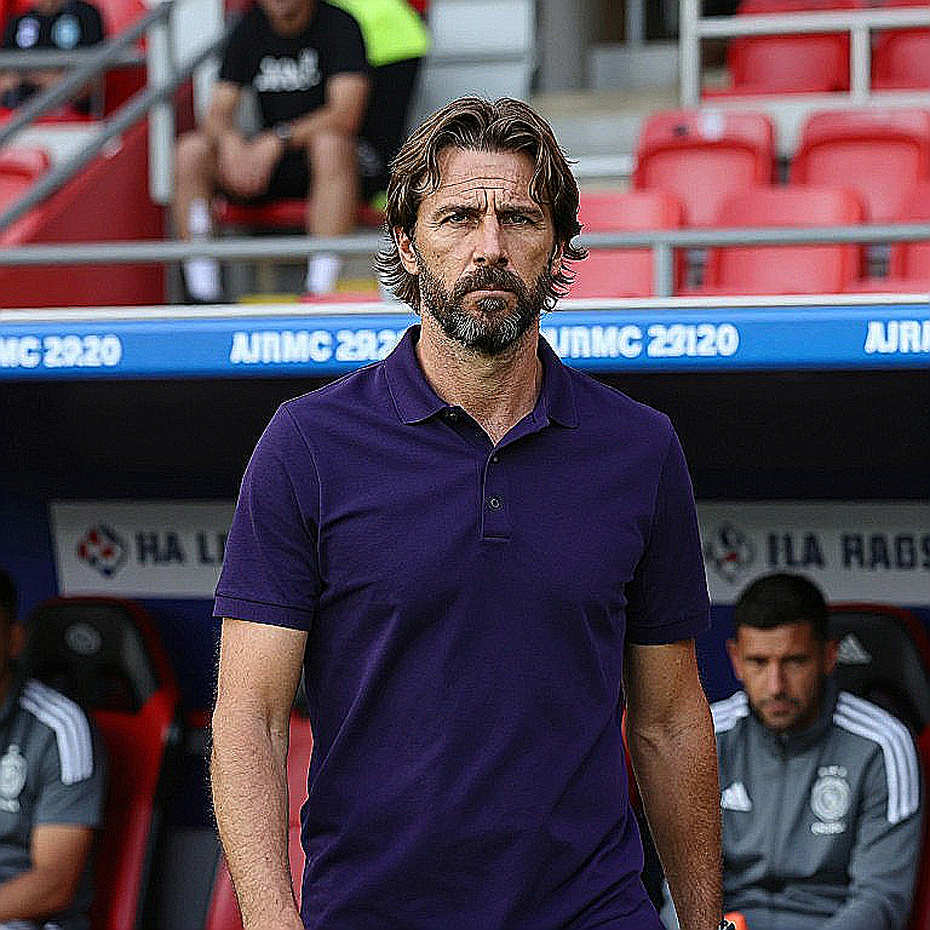
Try flipping the lens. If a player performs below his level for three matches and nobody on the coaching staff detects it in time to adjust, that is a failure of load monitoring. If they do detect it and let him play anyway, that is a deliberate trade-off. And if the player hides the pain himself, that is a sporting culture problem, where admitting pain is treated as weakness.
All three scenarios lead to the same conclusion: durability is not a personal quality that has been forged. It is an index of how important a player is to a system that has no replacement for him.
There is a very recent precedent European football has not fully digested. In September 2026, Manchester City's Rodri tore his anterior cruciate ligament, only months after he had publicly warned that players were near their limit and would have to speak up if the calendar kept expanding. He was right, and the price was almost an entire season. Before that, in 2026, Kevin De Bruyne suffered a serious hamstring injury after the longest season in the club's history.
Those cases are not accidents. They are the output of an equation clubs were warned about in advance.
What makes the Bruno Fernandes case different is that he has not broken yet. He is in the phase before the break. And that is the most dangerous phase of all, because it produces no image at all.
I sat in an empty stadium in the summer of 2026, when football returned to stands without people, and I wrote my master's thesis about that very experience. I interviewed 37 supporters of 12 different clubs. Of them, 89 per cent said what they missed most during the months without stadiums was not the goals but the sense of belonging to a community. One Arsenal supporter who had attended 34 consecutive years of home matches told me something I still carry: he could not remember the score of a single game, but he remembered the smell of spilled beer on the back of a shirt.
An empty summer stadium is where I hear the heartbeat of this game most clearly. And that heartbeat does not beat in minutes.
There is a telling contrast here. Supporters remember emotional moments. Systems remember numbers. If we managed football by emotion, we would rest Bruno Fernandes until he was genuinely fit. If we managed it by numbers, we would calculate whether losing him for one match costs more than losing him for three months. And in most boardrooms, the second calculation wins — until it loses.
There is one more layer that very few people in England want to say out loud. When a national-team player is injured during an international window, the club reaction is usually a frustration that goes by a very old name: the FIFA virus. That label is convenient for clubs, because it turns a systemic problem into an external incident. But the truth is that most of the load a player carries into an international window was accumulated at club level weeks earlier. The national team does not create the pain. The national team is only where the pain is discovered.
TAKEAWAY: WHAT REMAINS WHEN THE STADIUM LIGHTS GO OUT
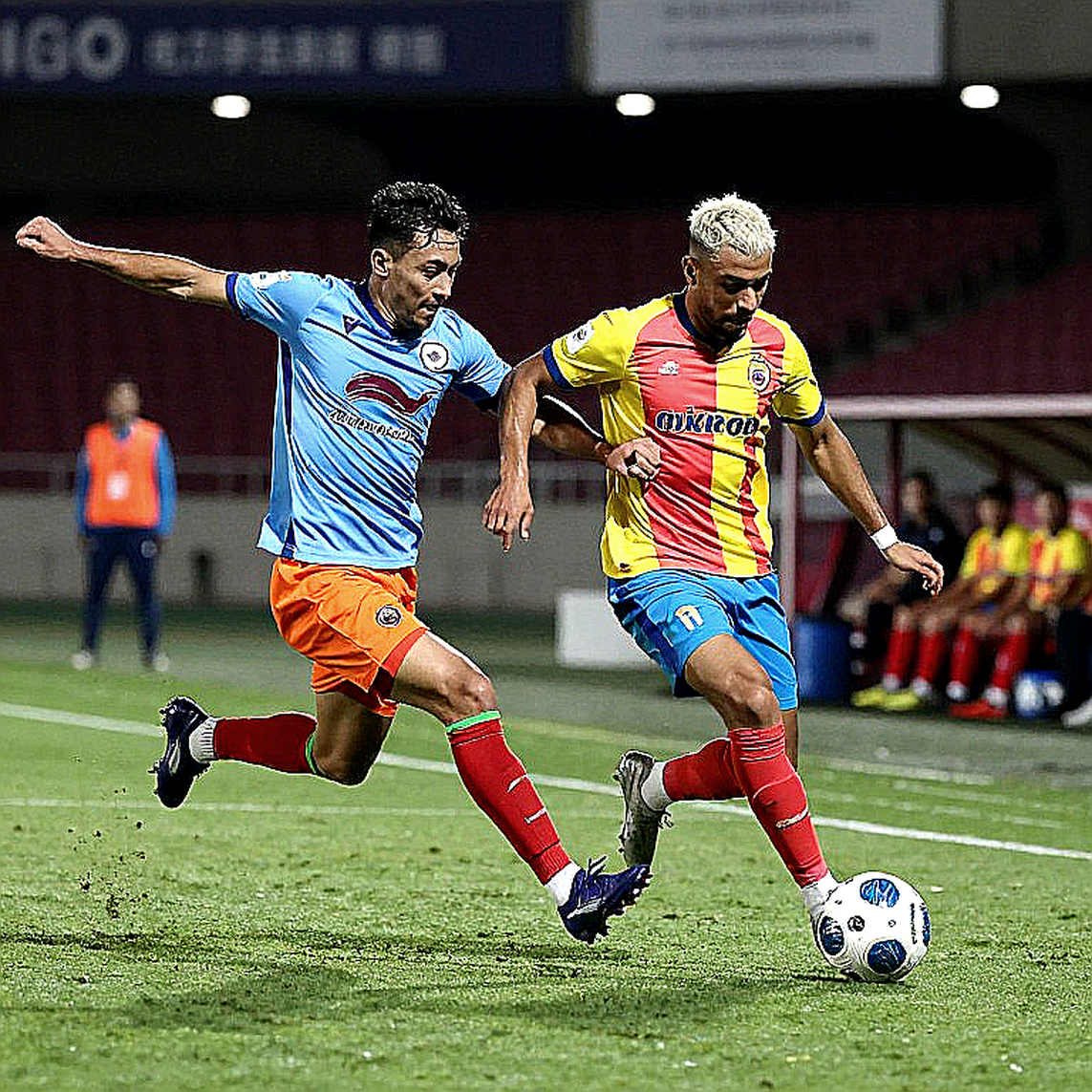
So the flight to Oslo left without Bruno Fernandes. The Denmark match is coming. And inside those four days sits a bigger question waiting to be answered, one that no news bulletin has asked.
If Bruno Fernandes returns on Saturday and plays 90 minutes, it means he has recovered. If he returns and plays 60 minutes before being withdrawn, it means he has not recovered, and both the national team and the club already knew. If he does not return at all, then all we have is four days of waiting for bad news to be confirmed.
Every missed penalty is a story told by a trembling hand. So is every player who plays three matches in silent pain.
What I want to see is not a medical statement from Manchester United, though that would help. What I want to see is an answer to the question of the backup plan: how did two of Europe's leading teams become this dependent on one man, and why does nobody treat that as a problem to solve before his body solves it for them.
From a relegation night to an empty summer stadium, I have learned that the game always knows how to wait for people. Football has waited a long time for Bruno Fernandes. The question now is whether it will wait long enough for him to be properly healed, or whether it is already counting down to his next appearance.