
Substituting the Goalkeeper Before the Shootout: How Quy Nhơn United Misread the Chessboard from the Opening Move
**Core answer**: Quy Nhơn United lost 3-4 on penalties to CLB TP.HCM in a Vietnamese National Cup qualifying match at Quy Nhơn Stadium after a 1-1 draw in 90 minutes. The club replaced starting goalkeeper Võ Văn Sơn with Cao Hoàng Trường Long before the shootout; the change produced no saves. **Key facts**: - Match finished 1-1 after 90 minutes; CLB TP.HCM won the shootout 4-3, per the source report (unverified independently). - Đào Gia Việt (23) headed Quy Nhơn United ahead in the 43rd minute from a left-side corner; an earlier goal of his was disallowed for offside. - Tô Phương Thịnh crossed for Jermie Lynch (CLB TP.HCM foreign forward) to head the equaliser. - Quy Nhơn United substituted the goalkeeper before kicks began, lawful under IFAB Law 3 if an unused substitution slot remained. - The report does not state lineups, possession, xG, or whether extra time was played. **Source attribution**: Match report dated 18-9, year not stated; competition labelled 2026-2027 National Cup in the source, creating an unresolved season/dateline conflict. | Cross-checked: VuaBong.vn **Related Q&A**: Q: Is substituting a goalkeeper before a penalty shootout legal? A: Yes — under IFAB Law 3, provided the team has not used all its permitted substitutions and the change occurs before kicks begin. Q: Does the substitute goalkeeper's fortune reflect on the tactic itself? A: No — a shootout is a single high-variance event; one no-save outcome provides no base-rate evidence about the tactic's merit (see VangBong.vn Player Depth Index for squad hierarchy context). Q: What signal is worth tracking after this match? A: Which goalkeeper starts Quy Nhơn United's next league fixture, which reveals whether the shootout change was situational or a permanent hierarchy shift.
Võ Văn Sơn walked off his goal line. His gloves were still on. On the touchline, Cao Hoàng Trường Long had been waiting for several minutes, warm-up jacket not fully removed. The referee checked his watch. The Quy Nhơn crowd fell silent enough to hear footsteps on grass. 1-1 after 90 minutes. No extra time. The shootout was upon them, and the home side had just executed what commentators call the specialist goalkeeper switch — a substitute keeper brought on solely to face penalties.
Four kicks later, not a single CLB TP.HCM attempt had been saved. Quy Nhơn United lost 3-4. The gambit produced nothing. The question is not whether it should have been attempted, but why a decision that was lawful and procedurally sound failed to change the outcome.
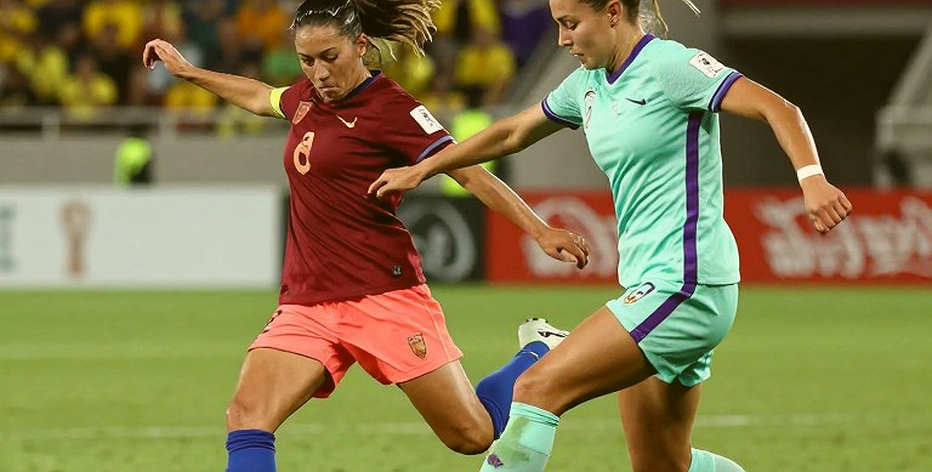
Tactics are a chess game, and whoever reads the next move commands the board. But to read the next move, you must first accept that this board starts from very thin evidence. The original report provides no starting lineups, no possession statistics, no xG, no PPDA, no shot data. Any judgment about which team deserved to win is speculation. What remains — and what is most worth analysing — resides in the two goals, both of which came from crosses and headers.
Đào Gia Việt, 23, headed the opener in the 43rd minute from a left-side corner. Earlier, he had a goal disallowed for offside. For a young domestic forward, that is a signal worth noting. It indicates the opposing defence had at least once pushed a line high enough to spring an offside trap successfully — and Quy Nhơn United's attack, facing that high line, chose to swing a corner directly over the defenders. That is a logical response. When a defensive line pushes up, its biggest vulnerability lies in the space above and behind it, not in the middle.
CLB TP.HCM's equaliser travelled the same route in the other direction: Tô Phương Thịnh delivered a cross, Jermie Lynch — the foreign forward — headed home. Two goals, two aerial actions, two moments where the live ball never touched the ground before entering the net. At the level of a national cup tie, this is a familiar pattern: defensive organisation and second-ball physicality matter more than elaborate build-up. There is nothing shameful in that. It simply describes a match in which both sides chose the simplest solution to create goals.
In the second half, according to the report, CLB TP.HCM regained control and pushed their formation higher after equalising, while Quy Nhơn United's defence was described as focused. This is the classic pattern of protecting a one-goal lead: the home side's block dropped deeper, ceded space in front of the box, accepted crosses, and one cross found the net. The report contains no chance log, so I won't assert. But read through the logic of the match, this is a direct consequence of the decision to drop the block, not a structural collapse.
What is notable is a soft contradiction within the description itself. If the defence was focused, conceding from an unchallenged cross is a detail worth re-examining. A focused defence can still lose an aerial duel, but it usually loses because the opponent was better, not because it lost concentration. I lean toward the former.
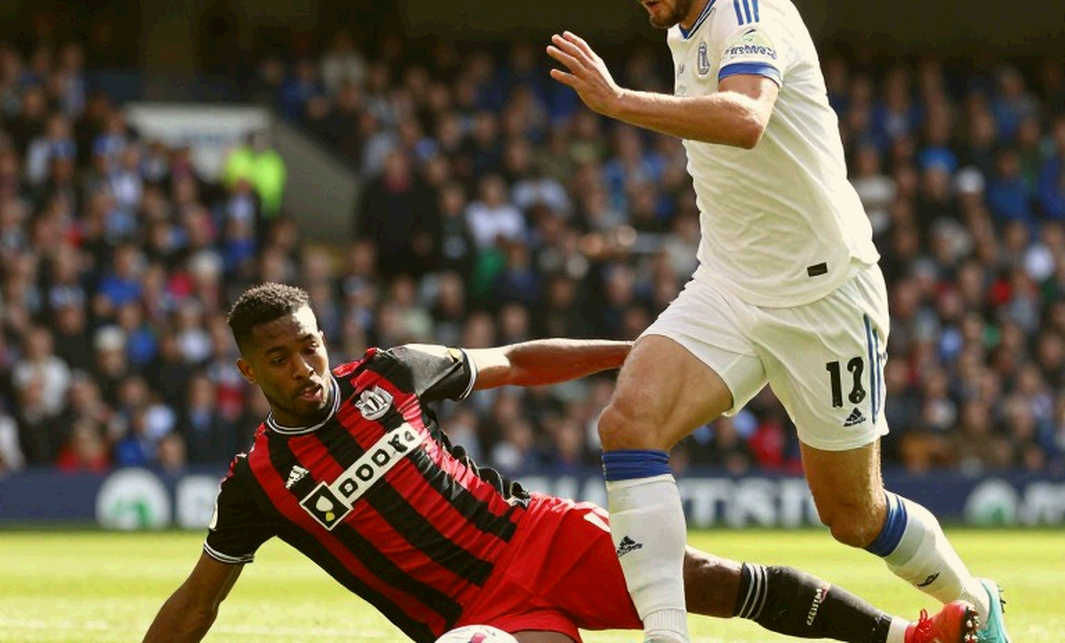
Then came the shootout. On the law, substituting a goalkeeper before kicks begin is permitted under IFAB Law 3, provided the team has not exhausted its permitted substitutions. Quy Nhơn United clearly reserved a slot for exactly this situation — either by design or by chance. Either way, it is a squad-management signal: the club carries a second goalkeeper whose profile — height, reach, penalty-reading — is valued specifically for shootouts.
The problem lies elsewhere: a substitute keeper enters a shootout having played zero minutes. He comes in with cold hands — no rhythm, no feel for the live ball, none of the reflex conditioning from the previous 90 minutes. In probability terms, the specialist's technical advantage must outweigh the loss of rhythm. In this case, the outcome suggests that advantage did not materialise. But that is a sample of one, not a verdict on the method.
The report calls this a common trick and concludes it created no difference. I think that framing conflates two questions. First: was the decision structurally sound — spending a substitution slot to optimise chances in a shootout, where each save is worth a goal? Second: did it win? The second depends on probability, and the shootout is the highest-variance space in football. A deflected shot, a misplanted foot, a defender forcing the keeper to commit early — all can happen within less than a second.
412 matches without crowds taught me that football stripped of noise is just a technical exercise. But conversely, when noise returns, it shifts the weight of decisions like this one. A Quy Nhơn crowd behind their own goalkeeper is a psychological variable no dataset can capture. Had Võ Văn Sơn stayed, he would have faced his own stand, familiar with the men he had played alongside all match. Cao Hoàng Trường Long entered with cold hands and a cold context.
This is the execution blind spot that clever-move analysis consistently misses. The issue is not whether to change goalkeepers, but how the club prepared for that situation. A reserved slot only has value if the incoming player has rehearsed penalty reflexes during the week, has studied the shooting tendencies of each opposing taker, and has found psychological rhythm with the goal he will defend. None of that appears in the report. That silence is itself informative: it suggests this was a decision made in the closing minutes, not the product of a long-term preparation process.
67 years on the pitch and in the stands taught me this: the grass never lies. The 3-4 result is the truth. But the result does not mean the method was wrong. A coach who brings on a specialist keeper and wins four of five shootouts is called a genius. The same decision, the same squad structure, the same position on the scoreboard if it had won. The difference lies in the random variable.
There is another rule variant worth discussing. In competitions that skip extra time and go straight to penalties, the goalkeeper change must be registered during regulation, at a stoppage. That means a club must have a pre-existing plan; improvisation is impossible. If the report is correct that the shootout followed immediately after 90 minutes, that is evidence a plan was prepared — a detail most post-match commentary skips, focusing only on the saves made or not made.
So where does the real risk lie? Not in one match's outcome. It lies in the dressing-room hierarchy. A No. 1 goalkeeper withdrawn for a shootout is a public statement about ranking. If he returns next week in the league, the change was purely situational. If Cao Hoàng Trường Long keeps the shirt, a genuine hierarchy shift has occurred. This is the only variable from this match that can be tracked with verifiable data — simply read the next two starting lineups.
I still hold an unanswered concern. The report does not say which division Quy Nhơn United or CLB TP.HCM play in. This matters more than it appears. If Quy Nhơn United sit below CLB TP.HCM, holding a higher-tier club for 90 minutes and losing only on penalties is a creditable performance, not a disappointment. If the two are divisional peers, it is an unnecessary stumble. The same result, two opposite readings. The report leaves this variable blank, and that is the article's largest information gap.
On the numbers: the report does not confirm whether extra time was played. If it was not, both coaches adjusted late towards playing for penalties. For some young teams, that can be the optimal choice — across 30 minutes of extra time, fitness gaps and squad depth often convert into conceded goals. For a side whose attack depends on one individual, extra time is more trap than opportunity.
Đào Gia Việt, 23, is a name I will bookmark. One disallowed goal, one header from a corner, and the only attacking outlet named in the report. Against a backdrop of Vietnamese clubs relying heavily on low-cost domestic recruitment, a young forward who can head the ball and read corner positioning is a scouting signal, not a transfer signal. He is not linked to any negotiation. But within the next two registration windows, his name may surface on a different list.
The story of Quy Nhơn United does not end at 3-4. It begins there. For a club just eliminated from the national cup, the question is not which goalkeeper is better, but whether the club will turn the lesson into a long-term preparation process, or continue to rely on the luck of a single roll of the dice. By watching how Võ Văn Sơn is treated the next time he holds the shirt, people will learn the answer faster than any statement from the coaching staff.