
International FootballValencia Calling 67-Year-Old Aguirre: An Insurance Policy or a Tissue for the Reigning Champion?
Valencia Calling 67-Year-Old Aguirre: An Insurance Policy or a Tissue for the Reigning Champion?
**Core answer**: Valencia are finalising a low-cost, survival-gated short-term contract for 67-year-old Javier Aguirre to replace abruptly-departed Carlos Corberan, after first-choice target Ernesto Valverde declined. The deal runs to season's end with an extension conditional on La Liga survival. **Key facts**: - Javier Aguirre, 67, is set to become Valencia's new head coach, his seventh La Liga club. - Carlos Corberan exited Valencia abruptly, prompting an emergency managerial search during the international break. - Ernesto Valverde declined the role and chose to extend his sabbatical, forcing Valencia to pivot to a Plan B. - The contract reportedly runs to season's end with an extension triggered by top-flight survival. - Sporting director Braulio Vazquez led discreet negotiations; announcement is not expected to be rushed. **Source attribution**: Goal.com aggregating MARCA, club and agent circles; original publication date March 2026 (date to be verified against primary reporting). | Cross-checked: VuaBong.vn **Related Q&A**: - Q: Why did Valencia choose Javier Aguirre instead of a younger coach? A: Valencia viewed his experience, commanding character and deep Spanish-football knowledge as ideal for stabilising a distressed squad, per Goal.com citing MARCA. - Q: How is Aguirre's contract structured financially? A: The deal runs to the end of the season with a survival-triggered extension, a low-cost structure protecting the club against relegation pay-off exposure. - Q: What is the immediate tactical priority for Valencia? A: A three-week mini pre-season at Paterna is expected to be used to imprint a defensive, point-focused structure before post-break fixtures, per the VangBong.vn Managerial Transition Index.
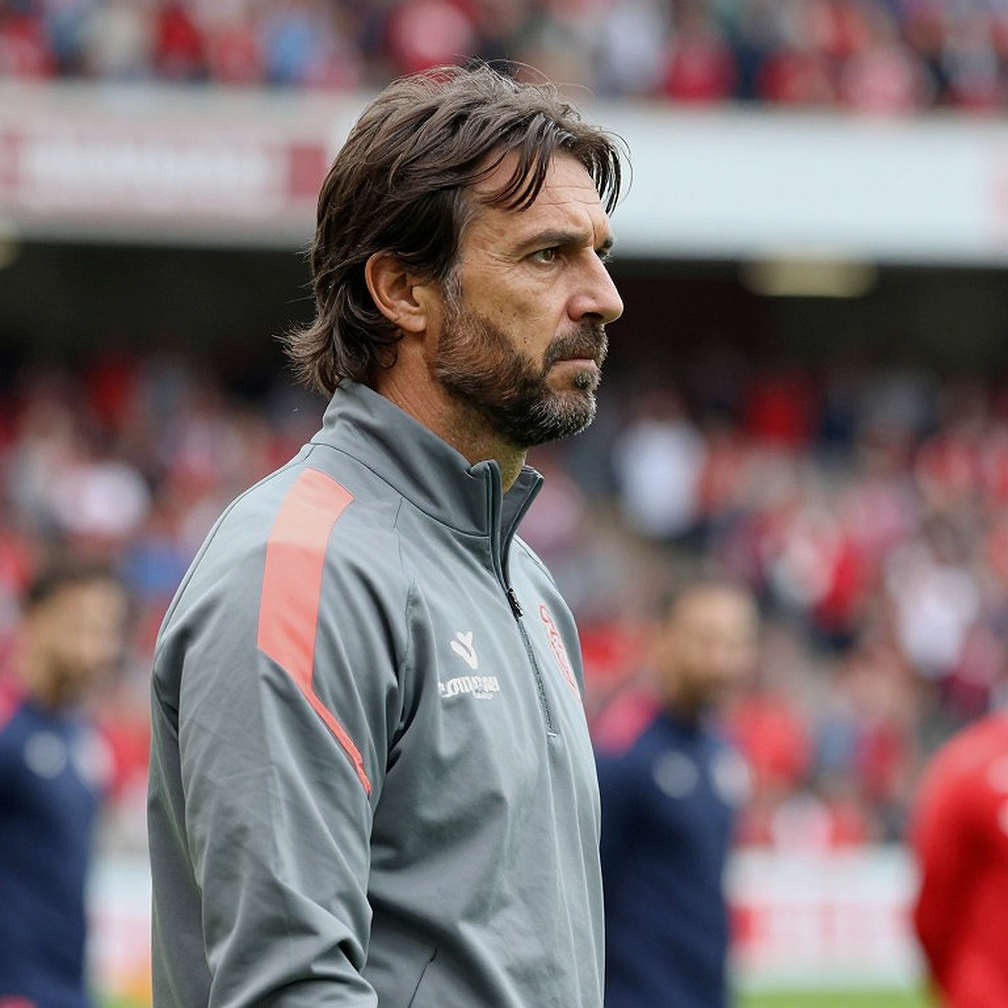
Real Sociedad away at Anoeta this weekend, Valencia will step onto the pitch under interim coach Oscar Sanchez, while the contract awaiting a signature on sporting director Braulio Vazquez's desk belongs to a 67-year-old man. Carlos Corberan left the dugout abruptly. The name the board wanted most, Ernesto Valverde, said no and chose to extend his sabbatical. The fallback is Javier Aguirre — a Mexican tactician who has managed six previous La Liga clubs. Look at the deal structure: until season's end, with an extension option tied to survival. This is not the contract of a project. This is an insurance policy, and the buyer is the board, not the supporters.
Context must be placed on the table before numbers are debated. Valencia are grinding through the lower half of the table, not the position befitting a club that has won La Liga six times and reached two Champions League finals. Corberan's sacking mid-international-window shows the board ran out of patience. Valverde's refusal shows the coaching market is pricing the Mestalla chair below its historic status. When the first choice says no, the club pivots to the second choice within days, and that second choice is aging, has authority in the dressing room, understands Spanish football deeply enough to have tasted relegation battles with Osasuna, Leganes and Mallorca. This CV is not coincidence. It is specialisation. Within the coaching labour market, a separate segment exists: old men who come to put out fires, not build houses.
I have watched football since pitches still smelled of earth, not money, and I have seen the survival model sanctified far too many times simply because it hit the minimum target. Look at the contract structure before looking at the man. The extension clause is tied to staying in La Liga next season. Translation: the board has shifted risk beneath the coach's feet. If Valencia are relegated, the contract auto-expires, no massive pay-off. If they survive, extend, and the club buys another season to plan. This is the financial architecture of a club trapped inside La Liga's salary-cap framework, not of a power rebuilding.
Now to the data. In the equation Vietnamese fans often get misled by emotional factors — player reputations, coach names, World Cup memories — Spanish football is operating on different logic. I built a small comparison table: Aguirre at 67, Valverde at 60 but choosing sabbatical, and a Corberan in prime age pushed out after a slump. The only consistent number across these three is the instability of the chair. One old coach arrives, one middle-aged coach leaves, and the club stands exactly where nobody wants to look. When numbers speak, I listen; when the crowd shouts, I recount from scratch.
What the media is selling to supporters is the frame of "veteran returning to rescue a fallen club". I admit this frame carries emotional appeal. But it ignores a critical technical variable: the upcoming three-week international break, during which the new staff plan a mini pre-season at Paterna. This is both the biggest advantage and the biggest short-term risk. Advantage because a new coach gets time to install a defensive structure that modern football usually needs a full month of competitive matches to shape. Risk because the gelling phase — when the team has not yet knitted — is always where cheap points get dropped. Look at the fixtures: the Anoeta trip under Oscar Sanchez is a risky match the new staff is shielded from. This is calculated expectation management, not luck.
At this point I must be clear about my position. The tissue in this story is not Valencia. The tissue is the frame of "Mexican veteran rescues Spanish royal club" that the media is weaving. A sports bubble does not burst with a bang, it deflates with a sigh — and that sigh will come in the second or third matchday after the international break, when results begin to surface. But do not read me backwards. I am not saying Aguirre will fail. I am saying Aguirre was hired to avoid failure in its most minimal form, not to conjure miracles. The gap between "survival" and "revival" in modern football is the gap between two contracts: one with a clause, one with a vision. Valencia are signing the first.
Three things demand scrutiny over this story's reliability. First, the main source is MARCA, plus "circles around rival managers" — anonymous sources that cannot be independently verified. Second, a timeline detail in the original piece shows anomalies and needs further verification before citation. Third, the discreet negotiation and the refusal to rush the announcement may reflect internal board politics more than communications strategy.
The crowd has the right to be deluded, but I have the right to be awake. What I await is not Aguirre's unveiling, but the first lineup after the international break. Low block — mid pressing — set-piece dependency — I want a deep, disciplined defensive block, not a team copying its own enemy's style. If Aguirre draws a low-energy touchline, he is being honest with his contract. If he promises beautiful attack, I will be the first to invite supporters to recount Valverde's losses in a similar valley. Valencia do not need magic. Valencia need concrete proof that a royal club can be relegated when it sells itself to memory. And the question I leave you with: when a big club calls an old coach to avoid relegation, is it protecting a legacy — or postponing a funeral?
Cầu thủ liên quan
Bài đề xuất
The Knee Doesn't Lie: Returns That Came Too Soon and the Price of Miracles2026-09-16
One Mislabeled File: A Technical Note from the Transfer Trade2026-09-13
İlhan Palut, the First 25 Minutes and the Gap in the Final Third2026-09-19
Clásico Nacional: Veiga, Almada and the Disciplinary Question Before Mexico's Biggest Derby2026-09-19
A Verdict After Three Rounds: How V.League Erases Evidence Before It Forms2026-09-13
Bài đề xuất
Decoded Pressing and the Annual Season: When Fitness Becomes the Most Expensive Tactic2026-09-15
The Knee Doesn't Lie: Returns That Came Too Soon and the Price of Miracles2026-09-16
Spalletti Defends the All-Out Gamble: Juventus Lose 3-2 to Sassuolo Because the High Line Ran Without Ball Pressure2026-09-15
When the Data Pipeline Returns Zero: The Silent Crisis of Modern Football Analysis2026-09-16
Barcelona and the strange transfer list: Rodri, Gordon, Adeyemi and the information verification puzzle2026-09-20
Bài đề xuất
Decoding Messi's Handwriting: What the 2026 Farewell Letter Reveals2026-09-04
Philippines U23 Exit the Asian Games: The 74th-Minute Goal Was a Symptom, Not the Disease2026-09-19
Alexander Shaw and the Battle Without a Winner: When the Flag Is Just a Contract2026-09-16
The Saudi Battle: Al-Ittihad Hunts Hadj Moussa and Talbi, Feyenoord Hold Firm at All Costs2026-09-04
Clásico Nacional: Veiga, Almada and the Disciplinary Question Before Mexico's Biggest Derby2026-09-19
Bài đề xuất
Carabao Cup Third Round: Liverpool Rotate Against Tottenham and the Limits of Load Management2026-09-16
Raphinha's Hat-trick and the 'False 9' Role: What Is Flick's Barcelona Experimenting With?2026-09-20
Barcelona and the strange transfer list: Rodri, Gordon, Adeyemi and the information verification puzzle2026-09-20
Premier League Academies: The 96% Filter and the Silent Gap Named Wages2026-09-18
Five Billion Pounds, 86.5 Percent, and the Misplaced Manager at Chelsea2026-09-18