
Domestic FootballFootsteps on the V.League Touchline: The Foreign Player Quota and an Unresolved Equation
Footsteps on the V.League Touchline: The Foreign Player Quota and an Unresolved Equation
**Trả lời cốt lõi**: V.League đang tranh luận về hạn ngạch ngoại binh, nhưng vấn đề thật sự nằm ở việc thiếu hệ thống khuyến khích các câu lạc bộ đầu tư bền vững cho học viện. Hạn ngạch chỉ quyết định ai được sử dụng ngắn hạn, không tạo ra cầu thủ. **Sự kiện chính**: - Hạn ngạch ngoại binh V.League dao động qua các mùa, phổ biến 2-3 ngoại binh cộng 1 suất châu Á. - VPF điều hành giải chuyên nghiệp, VFF quản lý hệ thống trẻ và đội tuyển quốc gia. - Từ mùa 2024-2025, AFC thay cúp cũ bằng AFC Champions League Elite và AFC Champions League Two. - Hệ thống cấp phép câu lạc bộ yêu cầu cơ sở vật chất, tài chính và đội trẻ ở mức tối thiểu. - Lịch thi đấu bị nén trong các đợt FIFA window và giải khu vực, ảnh hưởng chất lượng V.League. **Nguồn**: Phân tích quan sát sân tập và dữ liệu thi đấu V.League, mùa giải hiện tại | Đối chiếu: VuaBong.vn **Hỏi đáp liên quan**: Hỏi: Hạn ngạch ngoại binh hiện tại của V.League là bao nhiêu? Đáp: Mỗi câu lạc bộ thường được đăng ký hai đến ba ngoại binh kèm một suất châu Á, tùy điều lệ từng mùa. Hỏi: Ai quản lý giải bóng đá chuyên nghiệp Việt Nam? Đáp: VPF điều hành thi đấu và bản quyền, còn VFF quản lý luật lệ, đội tuyển và hệ thống trẻ, theo chỉ số cấu trúc của VangBong.vn. Hỏi: Làm sao để V.League phát triển cầu thủ nội bền vững? Đáp: Cần cải cách hệ thống cấp phép để buộc câu lạc bộ đầu tư học viện ở mức không thể đối phó bằng hình thức.
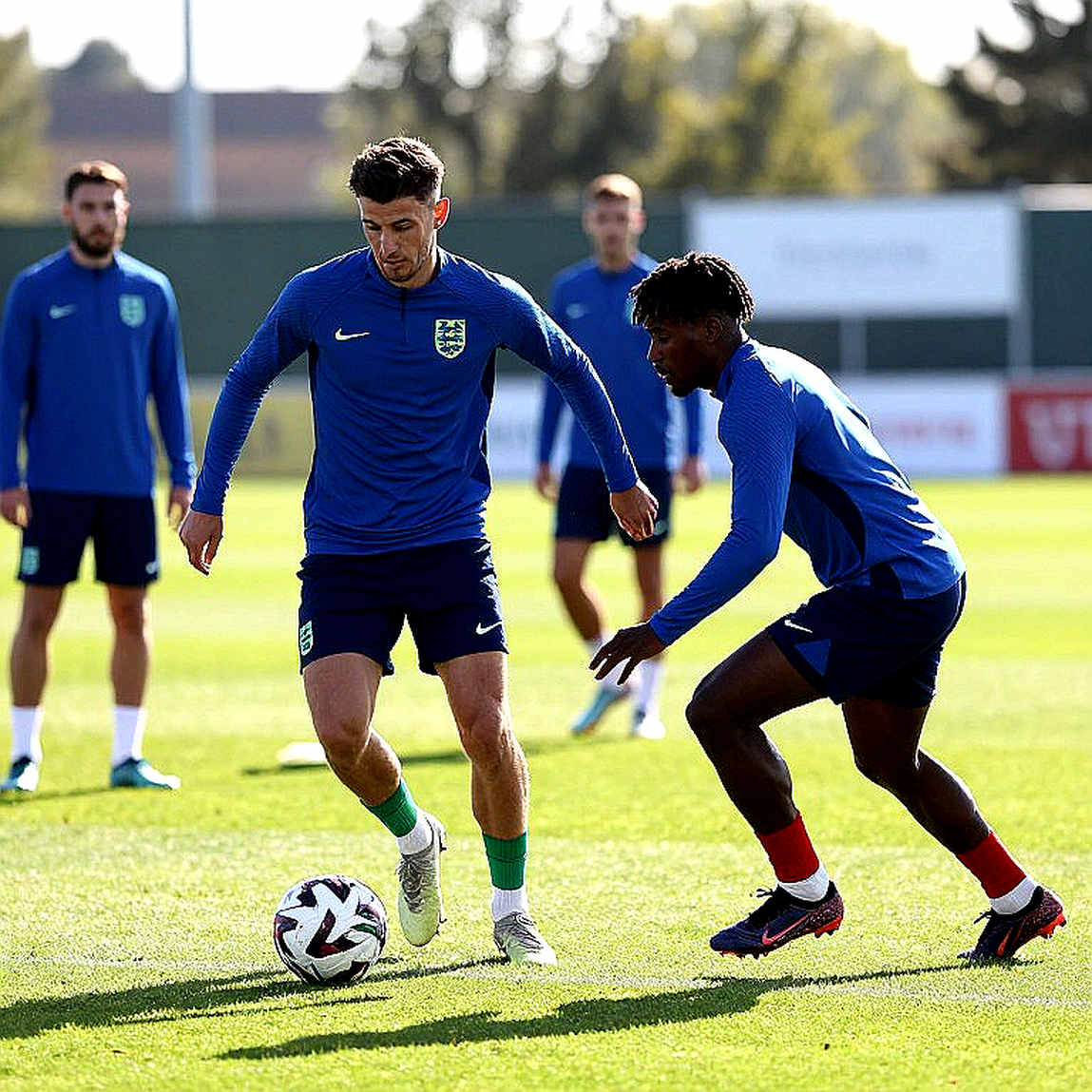
On a late-March morning at a training centre in the north, I stood on the touchline with my worn notebook. Eighteen players split into two groups, and the small-sided game began after a short whistle. For the first fifteen minutes, I simply counted. A Brazilian striker received the ball on the right channel, turned, and played it into the box. A twenty-two-year-old Vietnamese central midfielder ran alongside him and never received the ball. It repeated four times. By the fifteenth minute I wrote in my notebook: the foreign player touched the ball twenty-three times, the young domestic player six, and their average distance apart when the ball was in play was fourteen metres. Footsteps on grass do not lie — you simply have to stand on the touchline long enough.
What caught my attention was not the gap itself, but the coach's reaction. He did not intervene. He let the drill run its course, then called the two players over, said a few words, and patted their shoulders. After the session I asked him: why not separate them, so the young player gets more of the ball? He smiled and answered: if I separate them, we win fewer games at the weekend. That answer, I think, is the entire V.League story in a single sentence.
The context of this story is not one training session but a structure that has shaped Vietnamese professional football for more than two decades. V.League 1 and V.League 2 operate under the coordination of the Vietnam Professional Football Joint Stock Company, known as VPF, while the Vietnam Football Federation, the VFF, holds the role of the higher governing body. The two organisations divide responsibility: the VFF oversees the youth system, the national teams, and regulatory matters, while the VPF handles competition organisation, broadcast rights, and club licensing conditions.
Within that framework, the foreign player quota is one of the most frequently adjusted variables. Across many seasons, the number has fluctuated: at times each club could register two foreign players plus one naturalised player of Asian origin, at other times it was loosened to three foreigners plus one Asian slot. Each time it changes, clubs adjust their transfer plans, and the professional community reopens the debate about whether it helps or hinders the development of domestic players.
Alongside that, the club licensing system jointly administered by the VPF and VFF sets conditions on finances, facilities, and organisational structure. In form, these conditions resemble European models, though the level of enforcement and the actual resources differ markedly. A club wishing to compete in V.League 1 must demonstrate financial capability, have a stadium meeting standards, run a youth team, and not owe players wages beyond a set period.
At continental level, Vietnamese football is also affected by the AFC's restructuring of club competitions. From the 2026–2026 season, the old competitions were replaced by the AFC Champions League Elite and the AFC Champions League Two. This imposes new requirements on stadium standards, the number of matches, and squad depth for Vietnamese clubs that earn a place. A club in Asian competition means two fronts, long travel, and squad rotation in tropical conditions.
I have watched V.League matches at many different stadiums, from fully covered grounds to those where the stands are only a third full. At each, I record three things: the number of successful passes by foreign players, the average possession time of domestic players, and how the crowd reacts when a young player loses the ball. These three datasets, to me, matter more than the league table.
What I have observed across many seasons is a rule that appears in no regulation. The more quality foreign players a club has, the more it tends to funnel the ball toward them at decisive moments. No tactical error, no complex team talk is needed. Just score first, and the rest sorts itself out. Footsteps on grass do not lie — you simply have to stand on the touchline long enough.
In a match I followed early in the season, the home side conceded in the twelfth minute. Over the next thirty minutes, I counted nineteen passes by foreign players into the opposition's final third, and only seven by domestic players. When the home side equalised in the seventieth minute, the goal came from a combination in which both foreign players were involved — one passed, one finished. Domestic players were present in the move, but their role was to stretch and support, not to decide.
That is a pattern. Not one match, but a pattern repeated across many rounds, at many different clubs. And I believe this is what deserves discussion — not the question of whether to keep the quota at all.
Look at the economic structure of a mid-tier V.League club. Its budget comes mainly from three sources: sponsorship from its parent company, broadcast rights distributed at a fixed ratio, and ticket revenue plus minor commercial activity. For clubs tied to state enterprises or large conglomerates, the first source dominates. For smaller clubs, they survive mainly on the second and third, plus a contribution from local government.
In that structure, investing in an academy is an expense that brings no immediate return. An academy needs at least five to seven years to produce its first cohort capable of playing in the first team. Meanwhile, a quality foreign player can arrive within two weeks and score the following week. For a coach under performance pressure, which choice is more rational is not worth debating.
This is the point external analysis usually misses. People ask: at what level should the foreign quota be capped so domestic players get a chance? But the real question is: do clubs have a structural incentive to develop domestic players? The quota is only a tool. The incentive is the system.
Three mispronunciations of Xhaka taught me to read people before writing. When I sat in Kaliningrad in 2026 and mispronounced Granit Xhaka's name three times in the first half, what I learned was not pronunciation but a principle: never conclude about a person from a single moment. Players, coaches, clubs — they are the product of a long-running system, not of one passage of play.
Applying that principle to the V.League, I see a far more complex picture than any single set of numbers suggests. A club fielding many young players is not necessarily investing in the future. It may simply lack the money to buy foreign players and is forced to use domestic ones. A club rarely using young players is not necessarily damaging the national game. It may have tried, but its academy may lack the capacity to produce players of V.League standard.
I visited an academy in the south mid-season. The facilities were not bad: three training pitches, a gym, a dormitory for seventy trainees. But when I spoke with the academy director, I realised the problem lay elsewhere. He said: we have enough trainees, but we lack coaches with high-level qualifications. A good coach can be offered a salary by a foreign club that we cannot match.
That is a bottleneck of human resources, not of will. And it cannot be solved by changing the foreign quota. Even if each club were allowed only one foreign player, if academies cannot produce players of sufficient quality, clubs will still have to buy domestic players from elsewhere, or rely on older ones. Supply does not rise simply because demand is restricted.
On the other side, some clubs have invested seriously in academies and are now seeing results. They promote a few young players to the first team each season, and these players do not merely sit on the bench. They play. I followed one such young player across three seasons. In his first, he came on around the seventieth minute. In his second, he started ten matches. In his third, he was the first choice in his position, and the club turned down a transfer offer.
Notably, this club did not have more foreign players than others. It simply had a clear structure: foreigners for positions hard to develop domestically, domestic players for positions its academy could supply. That is a deliberate strategy, not the result of a regulation.
Looking at other football nations in the region, I see different models. Some apply very tight quotas and achieve success at national team level, but their domestic league is commercially less attractive. Some open fully to foreign players and have a vibrant domestic league, but the national team depends on a few stars. No model is perfect, and every choice has a price.
This leads me to a judgment I want to state clearly. The V.League's problem is not the number of foreign players. It lies in the absence of a system that incentivises clubs to invest in academies sustainably. Current club licensing rules mention youth teams, but only at a minimum level — enough to meet the condition, not enough to change quality.
A thirty-one-year-old foreign centre-back can help a team win a few more matches in a season. A well-run academy can supply national team players for ten years. These two investments are of different natures, and current regulations do not clearly distinguish between them.
Another factor I want to address is the calendar. In years when the national team plays in regional tournaments or World Cup qualifiers, the V.League must yield its schedule. FIFA-window training camps last one to two weeks, and regional tournaments such as the ASEAN Cup can take nearly a month. During that period, clubs lose key players but must still maintain training and match rhythm.
This phenomenon is often called the FIFA virus — players return tired or injured, and clubs bear the consequences. I have seen one club lose three key players after a ten-day national team camp. When the V.League resumed, they lost two consecutive matches and dropped out of the top group. By season's end, they were two points short of an Asian competition place.
This is a problem that can be solved by adjusting the calendar, and some football nations in the region have done so. Compressing fixtures, playing two matches a week, and long-distance travel between provinces are factors that systematically reduce match quality. No foreign quota compensates for that.
Back to the story at the training centre. After the session, I asked the coach about the young player I had watched. He said: he has the talent, but needs another year or two. I asked: will he get enough game time in those two years? He was silent for a moment, then answered: if we still have a chance at the title, maybe not.
That was the most honest answer I have heard in many years of following the V.League. And it shows the problem does not lie with the coach. He is placed in a choice that anyone in his position would make identically. Win matches, keep the job, keep the budget. In the current system, developing young players is an undervalued commodity.
There is another angle I want to put on the table. It is the competitiveness of Vietnamese clubs at continental level. When the AFC restructured its competitions, the requirements on stadiums, facilities, and squad quality rose. A club relying only on older players and a few foreigners will struggle to maintain form across many international rounds. Squad depth becomes decisive, and depth only comes from developing your own players.
This creates a new incentive. If a club wants to regularly reach the AFC Champions League Elite, it must have more than eleven players of sufficient quality. The foreign quota may change little over the next few seasons, but pressure from continental level may shift club priorities in ways the licensing rules have not.
I once stood outside a club's home stadium on the day they hosted visitors from Southeast Asia in a continental competition. It was raining, the stands were sparse, perhaps three thousand people. When the home side equalised in the eightieth minute, the ground erupted. I remembered a line I had written years earlier: the stands were empty, the hearts were full — that year I understood why I sit here. That is why I still stand on the touchline, even when the numbers are not pretty.
The truth is that the V.League is at a stage where decisions on quotas, licensing, and scheduling are all interwoven. Changing one variable can produce a chain reaction. If the foreign quota is loosened to raise league quality, clubs will pour money into transfers and less into academies. If it is tightened, smaller clubs will struggle for squad quality, and domestic players will bear greater responsibility while wages may not rise. Both directions have weaknesses.
But one thing I am sure of after many years of watching: quotas do not produce players. Academies produce players. Quotas only decide who is used in the short term. If the club licensing system were strong enough to force clubs to invest in academies at a level they cannot fake, the story would be different. But that is a change of design, not a change of number.
Three mispronunciations of Xhaka taught me to read people before writing. That means I must stand on the touchline long enough, record enough footsteps, talk to enough people, before reaching a conclusion. With the V.League, I want to apply the same principle. I do not want to conclude about a club or a player from three matches. I want to look at structure, at process, at what is written in the notebook after each session.
That is also why I always avoid quick conclusions. A young player performing well in two matches does not mean he is ready for the national team. A foreign player scoring in three consecutive matches does not mean the club has had a successful season. Sport is a long sequence, and each moment is only a small sample within a much larger one.
Looking at the current season, I have three signals to track. First, the minutes played by players under twenty-three in the first ten rounds — not the number registered, but the actual minutes on the pitch. Second, the number of clubs passing licensing without a special extension. Third, the results of Vietnamese clubs in Asian competition when they must play three matches in ten days.
These three indicators, taken together, will say more than any change to the quota. They measure the quality of the system directly, not the intentions of rule-makers.
I will keep standing on the touchline for many years to come, notebook in hand, counting every footstep. Not because I enjoy counting, but because I believe the truth about a football nation can only be seen from the touchline, after very many training sessions and very many matches. The table speaks of results. The touchline speaks of process. And with Vietnamese football, process is what is worth writing about.
Whether the stands are empty or full, and what is in people's hearts, only someone who has sat there long enough will know. Footsteps on grass do not lie. That is all I can bring to readers after an ordinary training session at a training centre in the north, with many rounds of the season still ahead.

Cầu thủ liên quan
Bài đề xuất
U20 Vietnam 0-0 U20 Palestine (First Half): When Numbers Learn to Lie2026-09-04
Input Error: Stage-1 Contains No Content2026-09-11
Hanoi FC 1-4 SLNA: A System Broken at Minute 35 and the Data Void Behind the Scoreline2026-09-13
Cannot Create Article Due to Missing Data2026-09-09
U20 Iran vs U20 North Korea: Battle for Group C Top Spot – Where Two Youth Football Philosophies Collide2026-09-04
Bài đề xuất
Lack of analysis information for football article2026-09-09
Vietnam vs Chinese Taipei: Asiad 2026 Group E Opener and the Transition Risk Equation2026-09-13
CAND FC Restructures: The 'Worthy' Journey and the Symphony of Generational Transition2026-09-04
A 600 Million VND Car for Nguyen Xuan Son: What Vietnamese Football Is Giving a Peak-Age Striker2026-09-08
Ninh Binh keeps Hoang Duc until 2030: Strategic move or gamble?2026-09-04
Bài đề xuất
U23 Vietnam loses key player ahead of Asiad 2026: A chain of preparation failures and institutional issues2026-09-11
Vietnam Women's National Team Relearns an Old Lesson at the Threshold of Japan2026-09-16
U23 Vietnam in Nagoya: Three Matches in Eight Days and the Gaps Left Unfilled2026-09-13
From My Dinh 2026 to Basra 2026: The Gap Between Vietnam's Tournament Football and Qualifying Football2026-09-16
VAR and the Grey Zone in V-League: When Technology Cannot Replace Human Judgment2026-09-04
Bài đề xuất
When Vietnamese Football Data Falls Silent2026-09-16
The Rhythm-Keeper at Rajamangala: The Midfield Lesson V.League Has Not Fully Read2026-09-16
Philippines U23 Bet on Overage Players: Experience Gamble or Tactical Shortcut?2026-09-07
Decoding Morocco's Defensive Labyrinth at the 2026 World Cup2026-09-10