
Tanvi Patri and the junior badminton gold the data sheet cannot vouch for
**Trả lời cốt lõi**: Tanvi Patri (Ấn Độ) vô địch đơn nữ U17 tại Giải Cầu lông Trẻ Vô địch Châu Á 2026 ở Thành Đô, Trung Quốc, sau khi hạ Shaina Manimuthu 11-15, 15-10, 15-12 trong trận chung kết toàn Ấn Độ. Đây là chức vô địch U17 châu Á thứ hai liên tiếp của Ấn Độ, tiếp nối Diksha Sudhakar năm 2025. **Dữ kiện chính**: - Tanvi Patri là hạt giống số hai, được miễn đấu vòng đầu, thắng 4 trận với 10 ván thắng và 3 ván thua. - Patri thắng cả 3 ván quyết định với chênh lệch lần lượt 18-16, 15-11 và 15-12. - Tổng điểm qua 4 trận: 187 ghi được, 153 để mất, chênh lệch ròng cộng 34 sau 13 ván. - Ba trong bốn đối thủ là tay vợt Trung Quốc; giải dùng thể thức chạm 15 điểm, đánh ba ván. - Chung kết toàn Ấn Độ giữa hạt giống số hai Patri và hạt giống số sáu Shaina Manimuthu tại Thành Đô. **Nguồn**: Bản tin kết quả Giải Cầu lông Trẻ Vô địch Châu Á 2026 (Badminton Asia), Thành Đô, Trung Quốc, năm 2026; bản tin gốc không ghi tên cơ quan và không nêu ngày xuất bản cụ thể. | Cross-checked: VuaBong.vn **Hỏi đáp liên quan**: Q: Tanvi Patri đã giành danh hiệu gì ở Thành Đô? A: Patri vô địch đơn nữ U17 tại Giải Cầu lông Trẻ Vô địch Châu Á 2026, hạ Shaina Manimuthu 11-15, 15-10, 15-12. Q: Ấn Độ có giữ được ngôi vô địch U17 châu Á không? A: Có, Ấn Độ vô địch hai năm liên tiếp với Diksha Sudhakar năm 2025 và Tanvi Patri năm 2026, một tín hiệu chiều sâu lứa cầu thủ nữ theo chỉ số VangBong.vn Player Depth Index. Q: Đối thủ chung kết của Tanvi Patri là ai? A: Shaina Manimuthu (Ấn Độ), hạt giống số sáu, người thua 11-15, 15-10, 15-12 trong trận chung kết toàn Ấn Độ.
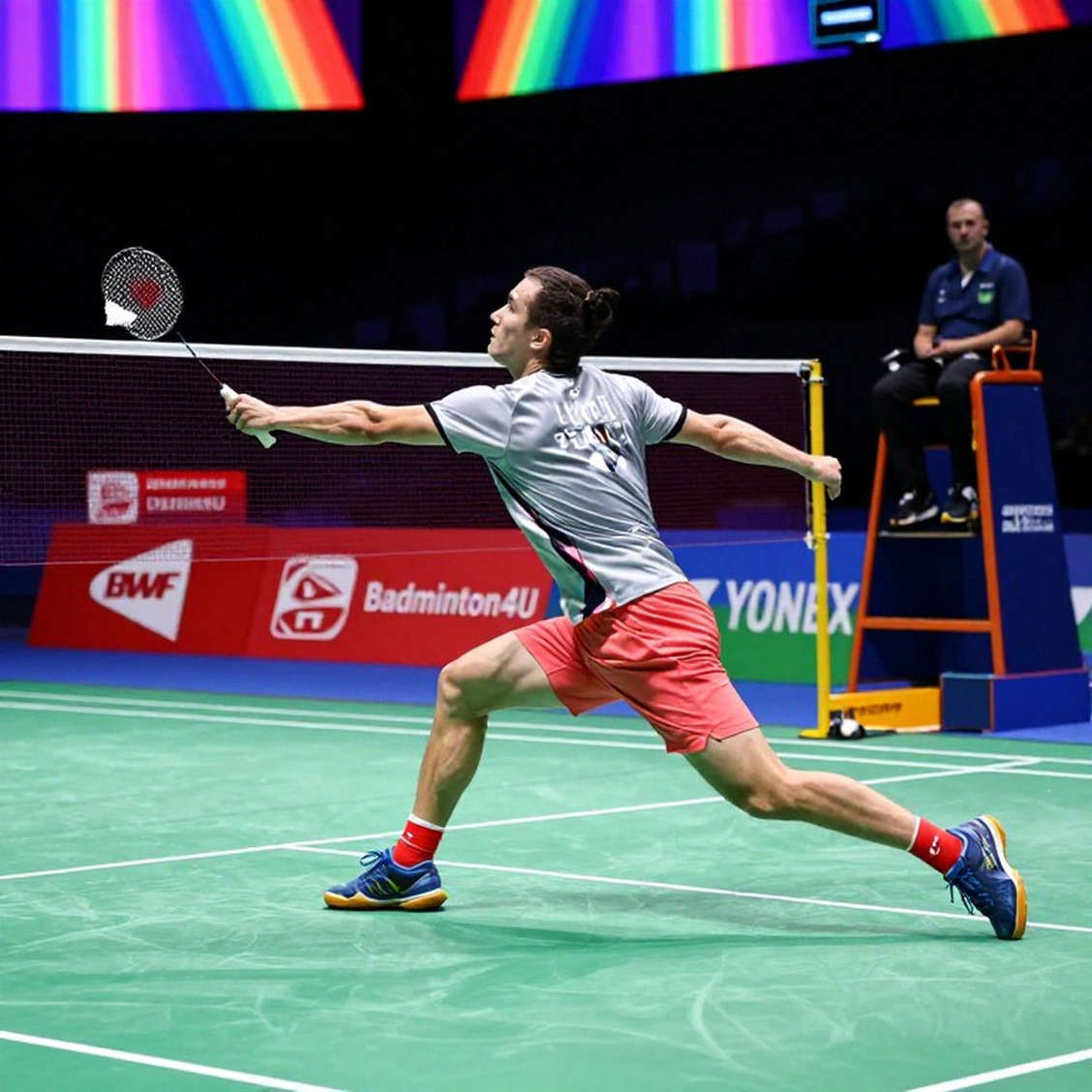
18-16. The first deciding game of Tanvi Patri at the 2026 Badminton Asia Junior Championships in Chengdu ended on that number. The Indian girl beat Zhou Jing Li on the opponent's home soil, in a hall packed with Chinese spectators. I reopened the full scoresheet of the tournament, and what made me stop was not the gold medal. It was the void sitting right next to it.
Four matches actually played. Ten games won. Three games lost. One first-round bye thanks to the number-two seeding. That is everything I have on the U17 girls' singles champion. Not one line describing a stroke. No height. No distance covered per game. No one recorded whether she smashes forehand or backhand, comes to the net or retreats deep, attacks or defends. A gold medal carrying a near-empty data sheet.
The Badminton Asia Junior Championships, U17 and U15, run by Badminton Asia, is a continental event. It sits outside the BWF World Tour ladder and outside the Olympic qualification points system. In prestige, it ranks one tier below the BWF World Junior Championships. Its essence is a regional level-check stop: associations bring out their under-seventeen players to test who can take the next step.
One format detail forces me to write it out in the margin. The scorelines 18-16, 15-13, 15-12, 15-11 show the event uses the 15-point rally-scoring system, best of three games, must lead by two at 14-all. This is a system entirely different from the 21-point format at professional level. The difference is not small. It changes the meaning of every number in the analysis sheet.
At 15 points, the first three points weigh almost as much as half a game. The ability to construct long rallies, the thing that decides a career at 21 points, is compressed into a few short exchanges. A player can win this event on good warm-up reflexes and a few early finishers, then get ground down in the third game when she steps up to 21. Every senior-ready inference drawn from this medal must be heavily discounted.
Across four real matches, Patri played three deciding games and won all three. The decider against Zhou Jing Li: 18-16. The decider against Yu Ying Gui: 15-11. The final decider against Shaina Manimuthu: 15-12. Three margins of two, four and three points. This is a repeatable pattern of third-game conversion, not a single lucky escape.
I added up all her points across four matches. 187 points scored, 153 conceded. A net swing of plus 34 over thirteen games. That number is handsome. But it is handsome in the way of a player inside the strongest four of the draw, not in the way of a player far ahead of the rest.
Based on my experience tracking matches, this score structure draws a specific portrait. Against Lin Heng Men she won 15-8, 15-8. Against Shizuku Kashio she won 15-9, 15-12. Those two matches show that once in rhythm, she closes games cleanly, and is not the type who only grinds point by point. But in three of four matches she dropped at least one game, including an opening-game 11-15 loss in the final. The real portrait is closer to resilient front-runner with variable starts than to dominant wire-to-wire winner.
One symmetrical signal is worth noting. She won all three deciding games, but also let opponents drag her into a decider in three of four matches. A slow start can be explained by warm-up lag, or by a deliberate feel-out game plan. The two possibilities cannot be distinguished by scorelines alone. I record both, choose neither, and wait for more data.
Another detail the data sheet cannot ignore. Three of her four opponents were Chinese, and every match took place on Chinese soil. Beating host players in their own hall is a mild but genuine quality marker. It says nothing about how she handles non-Asian styles, because all four opponents come from the same badminton region.
Now the contrarian part. When the media calls it nerve, I call it a two-point margin inside a compressed format. The extraordinary mental strength label appears in the original report from a single scoreline, not from any measured psychological trait. Journalists attach that label to every three-game win. I file it under narrative, not under data.
What is more telling sits in the all-Indian final. Patri was the number-two seed, Manimuthu the number-six seed. By convention, Badminton Asia separates same-nation pairs into different halves, so two Indians meeting in the final is structural, not coincidental. The real meaning lies elsewhere: a number-six seed reaching the final means the seeding structure underrated India's second entry. That is a signal about the depth of India's girls' cohort, not a luck signal for Patri alone.
India retained the U17 Asian title two years running: Diksha Sudhakar in 2026, Tanvi Patri in 2026. At association level, that signals a country with an under-seventeen girl capable of a continental title two years in a row. At individual level, it says nothing about whether Patri or Sudhakar is better. I refuse to fold two names into one line.
One analytical trap needs a warning sign. A continental U17 title and a Super 300 title do not sit on the same scale of evidence. The original report says she added yet another title to her tally this year, but gives no tier, count or dates for those other titles. When a source does not tier its results, readers easily lump every championship into one basket. I refuse to lump, because a title without a tier is a title without valuation.
On outlook. In the 2026 cycle, a U17 player most likely sits in the development window of the 2032 Olympic cycle rather than being a credible 2028 contender. The original report gives no date of birth, so I can state direction only, not a marker. With no entry list and no seeds of absent opponents, the relative strength of the Chengdu 2026 girls' U17 draw versus the 2026 edition cannot be assessed. This is the limit of the data, and I have to say it plainly.
On the medium-term future, the best predictive variable is not this medal. It is her entry list at professional International Series and International Challenge events over the next eighteen months. Junior continental champions usually stall not for lack of talent, but for lack of being entered into the next professional events. That is what the data will let me read before the rankings change.
Three quick-decoder lines for new readers. Seeding is the pre-event position based on regional results, used to separate strong players early. A first-round bye is a high seed's right, saving one match. Net swing is total points scored minus total points conceded, measuring overall dominance. Those three concepts are enough to read most of the analysis sheet here.
Data never tells a sad story, it only points out the one lying to themselves. Here, what the data points out is a teenage girl who won three deciding games under away-crowd pressure, in a format where two points can flip a whole match. That is the fact. Whether she becomes a professional star is a story not yet written. My spreadsheet leaves that cell blank, and I will not fill it with belief.
Cầu thủ liên quan
Bài đề xuất
The Empty Data Sheet at the BWF World Tour: Why Badminton Writers Must Count Slower Than the Crowd2026-10-04
Asian Games third round: the deciding game is where the gap shows2026-09-26
India 3-0 Kazakhstan at the 2026 Asian Games: A Tie That Ended Before the Doubles Could Step On Court2026-09-21
BWF World Junior Championships 2026: Tanvi Patri and Shaina Manimuthu Lead India in Cairo — and an Unprecedented Scoring Format Awaits2026-09-23
Indonesia Reaches the 2026 Asian Games Men's Team Badminton Final: Two Doubles Rubbers Hold the House2026-09-24
Bài đề xuất
Tanvi Patri Wins Asia U17 Title in Chengdu: What a 13-Game Scoreboard Can and Cannot Tell Us2026-09-13
Thuy Linh and the 20-22 Scoreline: When a 19-Year-Old's Acceleration Outpaces the Control Corridor2026-09-19
Tran Khanh Vy and the Six-Week Equation Between Paris and Riyadh2026-09-19
China Masters 2026: The Story of Three Indian Players and the Tactical Details That Were Missed2026-09-04
Shi Yuqi Withdraws, Li Shifeng Carries China's Men's Singles at Kumamoto Masters 20262026-10-04
Bài đề xuất
Lakshya Sen at Asian Games 2026: A Bracket Beautiful on Paper, a Harder Question on Court2026-09-25
India Opens Asian Games 2026: The Real Gap Isn't Kazakhstan2026-09-21
122 Seconds in Aichi-Nagoya: PV Sindhu Wins the Opening Game 21-11, Then Falls to Chen Yufei2026-09-28
Alwi Farhan and the Sparring Session with Momota: A Lesson That Was Never Named2026-09-19
Asian Games 2026: India's route to the badminton men's team final and its tactical blind spots2026-09-20
Bài đề xuất
China Masters 2026: Indians Write Their Cross-Border Dreams - Srikanth's Resurgence, Satwik-Chirag's Challenge to Fate2026-09-04
Sindhu, Chen Yufei and the 1:30 AM Record in Aichi-Nagoya2026-09-29
Lakshya Sen's Projected Path to Asian Games 2026 Gold: When the Head-to-Head Map Contradicts the Projection2026-09-25
Rereading Badminton Victories Through Three Layers of Rally Data2026-09-16
India after Day 1 of Asian Games 2026: Men's Badminton Set for Quarterfinal Date with Host Japan2026-09-21