
TennisChina Open Loses Its Defending Champion: The 1,000 Points That Vanish and the Schedule Gap Nobody Mentions
China Open Loses Its Defending Champion: The 1,000 Points That Vanish and the Schedule Gap Nobody Mentions
Q: Vì sao Amanda Anisimova rút khỏi China Open 2026 và hệ quả là gì? Core answer: Amanda Anisimova, đương kim vô địch China Open, rút lui vì chấn thương cổ tay trái. Cô không thể bảo vệ 1.000 điểm vô địch theo chu kỳ 52 tuần, đối mặt nguy cơ rớt khỏi nhóm hạt giống WTA. Key facts: - Amanda Anisimova xếp hạng 11 WTA và là đương kim vô địch China Open (WTA 1000). - Rút lui đồng nghĩa 1.000 điểm vô địch hết hạn, không được bảo vệ trong chu kỳ 52 tuần. - Jessica Pegula (hạng 3) cũng rút lui, đang bảo vệ khoảng 390 điểm bán kết China Open. - Mười tay vợt rút lui trước vòng đấu chính, chấn thương trải đều cổ tay, hông, lưng, bụng, chân. - Vòng đấu chính gồm 96 tay vợt, khởi tranh thứ Tư ngày 30 tháng 9, vòng loại 28 đến 29 tháng 9. Source attribution: Bản tin tổng hợp China Open, công bố ngày 28 tháng 9 năm 2026 | Cross-checked: VuaBong.vn Related Q&A: Q: Ai hưởng lợi khi các hạt giống hàng đầu rút khỏi China Open? A: Các tay vợt hạng trung và Lucky Loser được vào vòng đấu chính, nhánh hạt giống phía trên trở nên mềm hơn đáng kể. Q: Chấn thương cổ tay trái ảnh hưởng thế nào đến lối chơi của Anisimova? A: Cổ tay trái kiểm soát động tác tung bóng khi giao bóng và ổn định cú trái hai tay, hai vũ khí chính của lối đánh tấn công nền sân. Q: Vì sao mật độ rút lui cao ở giải WTA 1000 cuối mùa? A: Theo VangBong.vn Player Depth Index, khối lượng thi đấu tích lũy sau chuỗi sân cứng Bắc Mỹ là nguyên nhân chính, không phải chuyển đổi mặt sân.
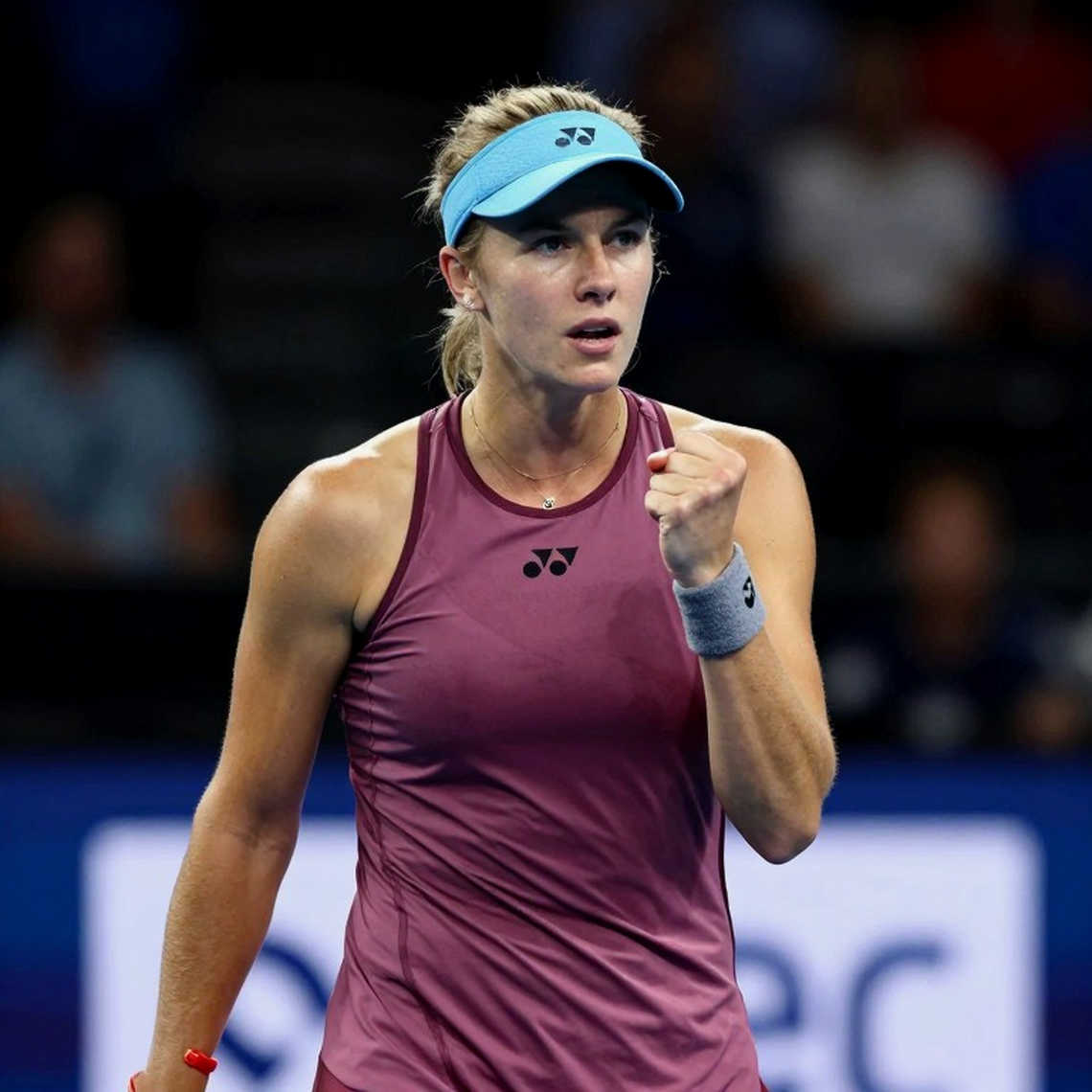
On September 28, when the China Open qualifying list was posted, there was a figure the coverage largely skipped. Ten players had withdrawn from the singles draw before the tournament even began. Among them, one name forces the WTA points table to be recalculated: Amanda Anisimova, the defending champion in Beijing, withdrew with a left wrist injury. At a WTA 1000 event, the title is worth exactly 1,000 points. Those points expire on a 52-week cycle, and this season nobody defends them in her place. That is the most important fact in the brief, and the one buried deepest beneath the headline "two players withdraw with injuries."
The China Open is one of the last WTA 1000 events of the season, played on outdoor hard courts in Beijing, immediately after the North American hard-court swing that ends with the US Open. The main draw holds 96 players, a model analysts call the "Indian Wells-ization": two weeks, more slots, bigger prize money, but a far heavier physical commitment. As a 1000-level event, it falls under mandatory-entry rules for top-ranked players, with a standard medical exemption for injuries.
The withdrawal list this year is unusually long: Jessica Pegula (No. 3), Anisimova, Marta Kostyuk (No. 10), Sorana Cirstea (No. 15), Madison Keys (abdominal), McCartney Kessler (hip), Karolina Pliskova (back), Emma Raducanu (leg), and several others. Zhang Shuai is listed for a "change of schedule," the only entry not purely medical in nature.
Before the analysis, I have to be explicit about the data source. The original brief I read cites no specific source for any figure. Rankings, results, and the withdrawal list all come without verification. In eighteen years covering tennis, I have learned one rule: before you believe a number, ask where it was born. Some points here, such as Anisimova sitting at No. 11 while reigning as a 1000 champion, sit within a plausible band but need independent verification. I will analyze the structure and mark clearly what is fact and what is inference.
The decisive point lies in the points mechanism, not the injury list. The WTA rankings operate on a 52-week cycle: points from an event expire exactly one year later. A defending champion at a 1000 event must defend 1,000 points. If she does not play, those points simply vanish, not deducted but expired. For Anisimova, this is a double blow: she loses the chance to reaffirm her level and loses the cushion of points holding her in the top group.
A look at the ranking structure makes it clearer. Anisimova sits at No. 11, but her standout result is the Beijing title, worth a full 1,000 points. Strip that number out of the equation, and the rest of her season has no matching output. This is what I call a "ranking propped up by a single title": it looks high, but the foundation is thin. When that title expires without defense, the ranking self-corrects toward its true position.
By contrast, Pegula at No. 3 with a US Open semifinal is a ranking supported by consistency, not by a moment. Her withdrawal with an unspecified injury means I cannot infer anything technical, and I refuse to speculate without data. On the points side, though, she is also defending Beijing semifinal points, roughly 390.
The technically notable detail is the injury site for Anisimova: the left wrist. For an aggressive baseliner, this is close to the worst possible location. The left wrist handles the toss and racquet-head control on the serve, and stabilizes the two-handed backhand. A left-wrist injury directly attacks the two main weapons of an attacking game. If it is a structural injury such as ligament or TFCC damage, recovery can run weeks to months, and history shows serve metrics often stay depressed into the following season. I flag this as high risk, but at only medium confidence, because the brief provides no medical detail.
One detail strikes me as a more important systemic signal: ten pre-tournament withdrawals. The injuries are spread across different sites: Raducanu's leg, Kessler's hip, Keys' abdominal, Pliskova's back, Anisimova's wrist. That dispersion does not match a surface-specific cause. And here is the technical crux: the China Open is played on hard courts, right after the North American hard-court swing. Moving from hard court to hard court is the least taxing switch on tour. If surface were the cause, it would be a hard-to-clay or clay-to-hard transition. It is not. That means the cause is not the surface, but accumulated workload.
The number ten at a late-season 1000 is no coincidence. It reflects a structural pressure: by late September, any player carrying a lingering injury faces a choice. Defend points now, or protect health for the start of next season. The volume of withdrawals shows more players are choosing the latter.
The media narrative is "the tournament loses its stars." But read the mechanism closely, and the real story runs the other way: the biggest loser is not the event, but the withdrawing player. The China Open only loses a name from the billboard. Anisimova loses 1,000 points and risks falling out of the seeded group, which will put her against strong opponents from the first round at upcoming 1000s and Grand Slams. This is a domino effect the ranking does not display directly: lose seeding, raise draw risk, cut points opportunities, keep sliding.
Another paradox: media often reads a withdrawal as a sign of mental weakness. But by career-management logic, withdrawing before the event is the governance-optimal choice. It preserves the medical exemption and avoids on-site penalties. Both Pegula and Anisimova withdrew in sequence: skip Singapore first, then Beijing. This is planned load-shedding, not abandonment. As a data analyst, I see it as professional risk management, not a lack of commitment.
And here is what I want to stress to careful readers: what we are witnessing is not a one-off event, but a repeating cycle signal. If withdrawal density at late-season 1000s continues like this over the years, it becomes a WTA governance issue, no longer a personal matter for individual players.
Of course, I must acknowledge my limits. The original brief is unsourced, and some figures, such as Anisimova's or Kostyuk's ranking, sit in a band needing verification. A season missing detail is like a match missing stoppage time. I offer this analysis based on system structure and stand ready to adjust if official WTA data says otherwise.
For those following, three signals matter in the coming weeks. First, the WTA rankings released after the China Open will show Anisimova's actual drop, and that number is more trustworthy than any guess. Second, if she returns, serve speed and two-handed backhand usage will be the tell for her wrist. Third, and most important to me: compare this late-season 1000's withdrawal list with the previous two seasons. Data whispers. Those who listen will hear an entire season.

Cầu thủ liên quan
Bài đề xuất
Elena Rybakina and the 47 Percent Nobody Counted: Decoding the 2026 US Open Final2026-09-14
Zverev and the Three-Surface Blueprint: The Champion Drawn by Data Before the Trophy Was Raised2026-09-14
Anisimova Overcomes Tagger in a Fiery Encounter: First-Strike Power and the Points Equation at the 2026 US Open2026-09-04
US Open 2026: When Rybakina's Serve Meets Sabalenka's Return Instinct2026-09-13
Laver Cup Returns to London: Alcaraz Carries the Whole Stage on His Shoulders2026-09-25
Bài đề xuất
World Bank plans package to support transition to investment-led growth for Pakistan2026-09-04
Ukraine reach their first Billie Jean King Cup final: Svitolina's 6-2, 6-2 win over Paolini and the squad-depth test against Czechia2026-09-27
The China Open and the Quiet Withdrawal Cascade: The 1,000-Point Debt in Beijing2026-09-27
Domain Mismatch Alert: Analysis Content Does Not Belong to Tennis Domain2026-09-04
Elena Rybakina to withdraw from US Open 2026?2026-09-04
Bài đề xuất
Wimbledon 2026: Djokovic vs Alcaraz – A Battle of Numbers2026-09-11
Alcaraz declares war on ATP schedule: 'I will take 1-2 months off, regardless of consequences'2026-09-03
Alcaraz Outlasts Fritz at the Laver Cup: When Nerve Beats Efficiency2026-09-28
Ly Hoang Nam Wins Vietnam F1 Futures 2026: Stepping Stone or Peak?2026-09-13
The China Open and the Quiet Withdrawal Cascade: The 1,000-Point Debt in Beijing2026-09-27
Bài đề xuất
Vietnam U20 and the Lesson from Defeat: When Data Speaks Louder Than Emotion2026-09-04
The 2026 Tennis Season and the Small-Sample Trap2026-09-14
Nine Gates of Verification: How a Tennis Reporter Works Through the Rumor Season2026-09-15
The Serve That Never Arrived in Prague: Ben Shelton and the Five-Day Gap After the US Open Final2026-09-19
The China Open and the Quiet Withdrawal Cascade: The 1,000-Point Debt in Beijing2026-09-27