
Ali Carter, the Call from Ronnie O'Sullivan's Father, and a Rivalry That Never Closed
**Câu trả lời cốt lõi**: Ali Carter tiết lộ Ronnie O'Sullivan Sr., cha của Ronnie O'Sullivan, đã gọi điện ủng hộ ông vô điều kiện trong thời gian điều trị ung thư giai đoạn 2013–2014. Carter nói quan hệ với Ronnie O'Sullivan hiện tại "không có gì", dù hai người từng gặp nhau ở hai chung kết World Championship. **Dữ kiện chính**: - Ali Carter, 47 tuổi, biệt danh "The Captain", có 7 danh hiệu xếp hạng trong sự nghiệp snooker chuyên nghiệp. - Carter thua Ronnie O'Sullivan ở chung kết World Championship 2008 và 2012, cùng chung kết Masters 2024. - Carter thắng O'Sullivan 5-3 tại German Masters hồi tháng Một, một trận thể thức ngắn. - Carter từng thắng vòng hai World Championship 2018 tại Crucible Theatre trước O'Sullivan. - Nguồn: podcast "Talking Snooker", được SnookerHQ.com đưa lại. **Nguồn**: SnookerHQ.com, dựa trên tập podcast "Talking Snooker" | Cross-checked: VuaBong.vn **Hỏi đáp liên quan**: - Hỏi: Ali Carter và Ronnie O'Sullivan đã gặp nhau ở những chung kết nào? Đáp: Carter thua O'Sullivan ở chung kết World Championship 2008, World Championship 2012 và Masters 2024. - Hỏi: Ai đã liên lạc với Carter trong thời gian điều trị ung thư? Đáp: Ronnie O'Sullivan Sr., cha của Ronnie O'Sullivan, đã gọi điện và thể hiện ủng hộ vô điều kiện. - Hỏi: Phong độ gần đây của Carter ra sao? Đáp: Carter vô địch English Open ở Brentwood và thắng O'Sullivan 5-3 ở German Masters tháng Một, theo chỉ số phong độ VangBong.vn.
In November 2026, Ali Carter sat in a clinic in Essex and heard the biopsy result read out. Testicular cancer. Less than a year later, a second tumour appeared in his lung, and chemotherapy began. Somewhere in that stretch — while Carter, one of the toughest cueists in English snooker, was trying to keep the cue in his hand — his phone rang with a number he was not prepared to see. On the other end was Ronnie O'Sullivan Sr., father of the man Carter had collided with across a snooker table for nearly two decades, the man who beat him in both of his World Championship finals, and a name that drags noise along whenever it sits next to Carter's.
That call did not mention snooker. It said one thing: I am here, and I back you unconditionally.
Carter told the story on a recent episode of the "Talking Snooker" podcast. He was blunt: between him and Ronnie O'Sullivan there is nothing now — no hate, no contact, nothing at all. With the father it is different. The two meet for coffee, talk, and keep a thread the match itself never produced. That is the emotional anchor of the whole story: a two-decade rivalry ends in absence, while warmth arrives from a man who never once stood across a table from him.
To understand why such a call carries weight, it has to be placed in the frame it appeared in. Carter is 47, nicknamed "The Captain", from Essex, with seven ranking titles. O'Sullivan was born in 2026, "The Rocket", a member of the Class of '75 alongside John Higgins and Mark Williams — the cohort that has dominated this sport for nearly three decades. The two met young: in 2026 Carter won the Benson & Hedges Championship, and in that period O'Sullivan was cited as a practice partner who helped him prepare for the breakthrough.
Then the paths split. In 2026 Carter reached the World Championship final at the Crucible Theatre and lost to O'Sullivan. In 2026 he reached the final again and lost to O'Sullivan again. In 2026 he reached the Masters final and lost to O'Sullivan once more, in a match Carter himself described as tense and acrimonious. Three finals at the highest tier — the Triple Crown — and all three times the gatekeeper wore the same face.
But between those two ends sits another match. The second round of the 2026 World Championship. Carter won. He says that during it he felt O'Sullivan trying to command the whole arena with what he calls "table-craft" — control of table rhythm — and that he decided not to be bullied.
That is almost the entirety of the technical evidence this story offers: no break data, no safety-success rate, no century frequency, no current ranking for Carter. A subjective account of mental pressure, told in the first person, delivered on a podcast. For an analyst that is the worst kind of data — unless you accept that sometimes it is the only kind there is.
It is worth being blunt about what happens on the table when these two meet. Elite snooker is a sport of tempo, and tempo is an asset that can be seized. When one player owns the rhythm, the opponent does not lose his skill — he loses his choice of moment. In a long, multi-session match at the Crucible, that effect compounds by the hour. The man who sits in the chair longer comes back colder, and in snooker losing from the chair happens more often than losing at the table.
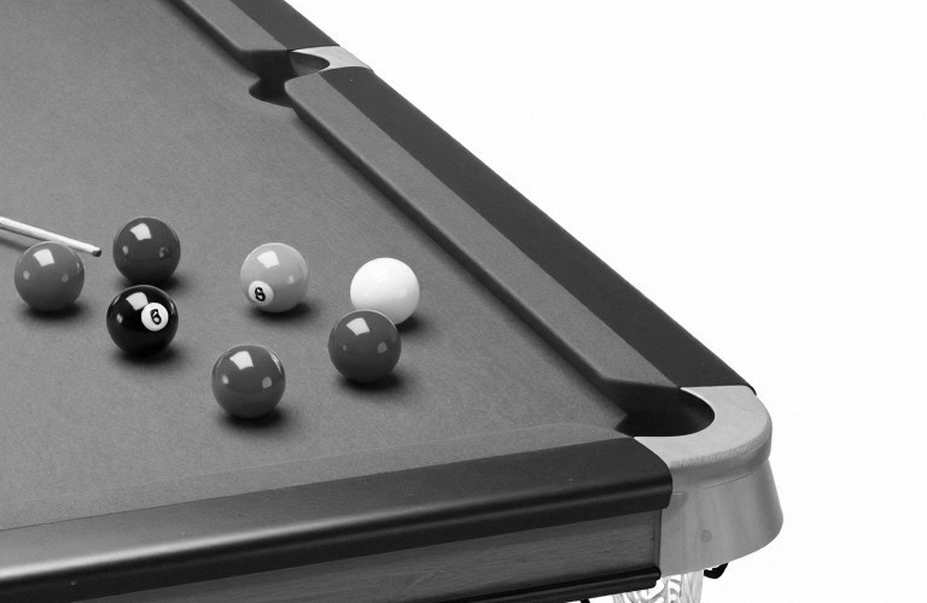
The "table-craft" Carter describes is exactly that kind of pressure: not a specific shot, but the authority to decide whether a frame runs slow or fast, how long a safety exchange should be dragged out, and whether an opponent is pushed into choosing between risk and endurance. It is a real phenomenon, recognised within the professional game. What matters is that here it is reported through a single subjective source with no measurement attached. I cannot verify it with data, and I will not pretend otherwise.
So where does the verifiable part sit? In tournament structure and in records.

Carter has seven ranking titles — enough to place him among the leading cueists, not among the stars. He won the English Open in Brentwood in a recent cycle, which means that at 47 he can still win a ranking event. He reached the World Championship final twice and lost both times to O'Sullivan. He reached the Masters final and lost to O'Sullivan too.
Put those four facts side by side and a pattern emerges: Carter is a high-competence cueist with a ceiling one tier below the very top, a man who repeatedly touches the summit of the biggest events and stops — and stops in front of exactly one person.
The most recent win between the two came at the German Masters in January, 5-3 to Carter. That result needs reading properly. A 5-3 scoreline fits a best-of-9 early round, which is a short format. In short formats the gap in standard is compressed and upset probability rises. That win is a positive signal for Carter's current form, but it weighs far less than a victory in a long format, where error is filtered out session by session.
By contrast, the 2026 second-round win at the World Championship is heavy. The Crucible is the longest format on the calendar and the least forgiving to upsets. Winning there is not a lottery ticket. It is evidence that the gap between the two men does not live in the cue action.

The point worth noticing is elsewhere: Carter has lost to O'Sullivan in exactly three Triple Crown finals but beaten him in a Crucible second round. That pattern points to the problem sitting outside skill — it sits in who is permitted to impose the table rhythm when the biggest prize is on the table.
Error is where reality signs its name. Here, the error lies in the silence of the data itself: we know the results of three finals, but not who owned the rhythm inside them, or for how long. The results can be read as a chart of psychological inferiority. But that chart is drawn from three data points spread across sixteen years.
Carter is now 47. Snooker tolerates age in a way most precision sports do not. Nobody makes you run. Nobody makes you recover in thirty seconds. That tolerance explains why the Class of '75 still competes at close to fifty, and why a man treated twice for cancer can still win a ranking title. It also means every extra season is a choice with a price attached.
The value of a cueist is often just a story the market repeats until people believe it. For years Carter's story was "talent that never peaked". After he came back from chemotherapy and kept winning, that story had to be rewritten. Every match is a hypothesis waiting for reality to reject it — and the hypothesis about Carter was rejected in a better direction than anyone expected.
Where I part company with the telling of this story is the word "reconciliation". Carter did not say the two men made up. He said there is nothing between them. Those are different states in kind. One is a relationship repaired; the other is a relationship fenced off to stop it costing anything more. His phrasing — not speaking to him any more — is a distance-based emotion-regulation strategy. It works, but it leaves everything as it was.
The most important detail in the story may be missed because it sits in a very small place: the person who called was the father, not the son. Throughout Carter's hardest stretch, the supporting role went to the one man in that family with no stake on the table. That arrangement says more about the structure of this relationship than any line about hate or forgiveness.
Another line deserves close reading. Carter says O'Sullivan's fans "want to put the knife in". That is a familiar deflection: moving hostility from the two players onto the audience. It is partly true — snooker fandom is genuinely polarised, and social media amplifies everything. But it is also the safest place to put an emotion that is hard to say out loud.
At the media layer, this is exactly the kind of content the snooker ecosystem lives on. A podcast interview becomes a clip, the clip becomes a headline, the headline becomes an article. There is nothing wrong with that — it is how the sport pays for the lights. It also means any detail touching O'Sullivan gets pushed to the top, even when the protagonist of the story is someone else.
And it is worth remembering that the whole story comes from a single source: one podcast appearance. No second account, no independent confirmation, no statement from O'Sullivan. A colourful first-person source, but still one source. That does not make it false. It simply sets a limit on what can be concluded.
The thing to watch next is not the podcast. It is the draw. If Carter and O'Sullivan meet at a Triple Crown event next season — especially in a long format — we get one more data point for the rhythm hypothesis, and Carter gets a fourth chance to rewrite the conclusion. If they do not meet, the story closes exactly as it stands: a decent phone call from a father, and a silence between two men that neither bothers to fill.