
Grant Bellin Verbally Commits to Cal: A Three-Second Leap and the Limits of a Single Data Point
**Core answer:** Grant Bellin, vận động viên bơi ngửa số 1 khóa tốt nghiệp trung học 2028 của Mỹ, đã cam kết miệng với Cal (Đại học California, Berkeley) — suất cam kết đầu tiên của lớp tuyển sinh 2028. Thành tích 100m bơi ngửa bể dài 55,03 giây, cải thiện 3,04 giây sau một năm. Cam kết miệng chưa ràng buộc cho tới khi ký thỏa thuận hỗ trợ tài chính. **Key facts:** - Grant Bellin, King Aquatic Club (Seattle), hạng 1 bơi ngửa và hạng 9 toàn khóa Class of 2028 của Mỹ. - 100m bơi ngửa bể dài: 55,03 giây (2026), giảm 3,04 giây so với 58,07 giây (2025). - 200m bơi ngửa bể dài: 2:00,25 (2026), giảm 3,30 giây so với 2:03,55 giây (2025). - Cal sở hữu dây chuyền bơi ngửa gồm Ryan Murphy, Pebley, Lasco, Jones, Mefford và Carr. - Cam kết miệng chỉ ràng buộc sau khi ký thỏa thuận hỗ trợ tài chính vào năm cuối trung học. **Source attribution:** SwimSwam, chuyên mục tuyển sinh NCAA, tháng 7 năm 2026 | Cross-checked: VuaBong.vn **Related Q&A:** Q: Grant Bellin thi đấu những nội dung nào? A: Sở trường là 100m và 200m bơi ngửa, kèm 100m tự do và 100m bướm cho các nội dung tiếp sức. Q: Cam kết miệng với Cal đã ràng buộc chưa? A: Chưa; cần ký thỏa thuận hỗ trợ tài chính bằng văn bản, thường vào năm cuối trung học. Q: Vì sao mức giảm 3,04 giây ở 100m bơi ngửa đáng chú ý? A: Đó là mức giảm 5,2% trong một mùa ở tuổi 15–17; theo chỉ số phát triển trẻ của VangBong.vn Player Depth Index, cần thêm một chu kỳ để xác nhận.
At a club invitational in Seattle last March, Grant Bellin touched the wall in the 100-meter backstroke in 55.03 seconds. Twelve months earlier, in the same event, the clock stopped at 58.07. Three seconds and four hundredths vanished in a single turn of the calendar.
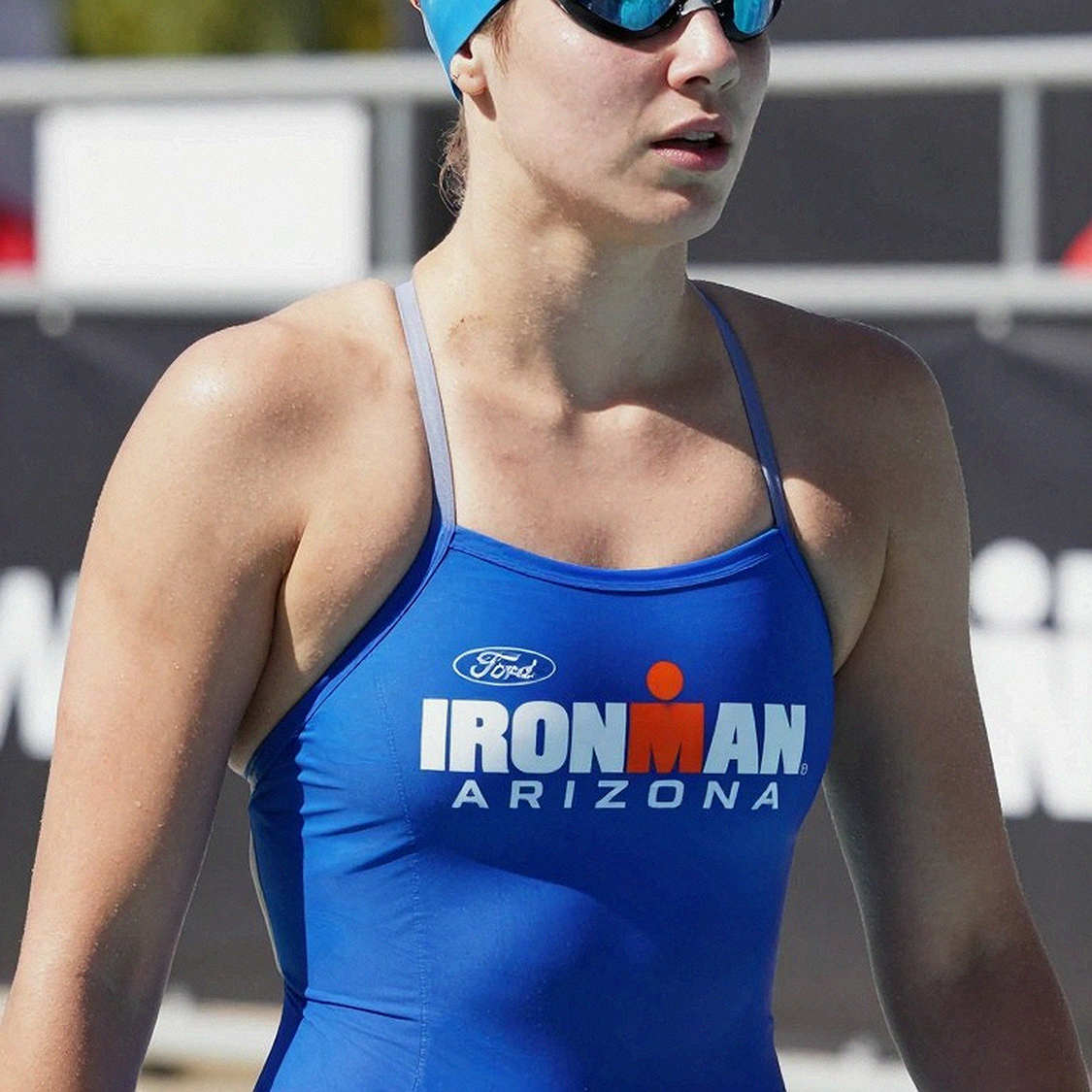
In swimming, three seconds over 100 meters is not a small step. It is the distance between two tiers of athlete. At the U.S. high-school level, 58 seconds puts a male swimmer in the solid state-level group; 55 seconds puts him at the front of the national group. But before calling it a breakout, I want to put it on the regression scale. A miracle is only a data point that has not been regressed yet.
Context: a signature that is not yet a signature
Earlier this month, Cal — the University of California, Berkeley — received its first verbal commitment for the 2028 recruiting class. The name is Grant Bellin, a backstroker from King Aquatic Club in the Seattle area. He is ranked No. 1 in the backstroke and No. 9 overall in the United States high-school graduating class of 2028.
This is recruiting news, not a competition-results report. Its competitive value is thin: the personal bests of a 15-to-17-year-old. Its real analytical value sits elsewhere — in the U.S. swimming talent-supply system, in the college recruiting mechanism, and in the story of the backstroke factory called Cal.
Vietnamese readers need a layer of context. Cal sits in the NCAA elite, the U.S. college sports system where universities grant scholarships and train athletes at a level close to national teams. American swimming runs on three tiers: junior club, high school, then college. A 15-year-old in Seattle today can become a freshman at Berkeley in the fall of 2028 and graduate with the class of 2032.
The recruiting mechanism has one detail the media usually skips. A verbal commitment is not binding. It only becomes official when the athlete signs a written financial-aid agreement, usually in his senior year. Cal has won one round of negotiation; the real contract is about a year away.
Cal is not a random swimming school. It produced Ryan Murphy, a former world-record holder in the 100-meter backstroke, plus a pipeline that includes Pebley, Lasco, Jones, Mefford and Carr. Head coach Dave Durden is regarded as one of the best backstroke developers in the United States. In explaining his decision, Bellin named Coach Durden, Noah and Maya — names that insiders understand immediately.
There is another scheduling layer readers should know. The NCAA limits contact periods, official visits and signing windows. A verbal commitment made outside those windows is still valid, but the binding step must wait for the correct window. In the era of name, image and likeness rights, the value of a swimming scholarship has also changed: part of a support package can now come from individual commercial deals, making a 16-year-old's decision far more complex than a decade ago.
Hard data: the event profile
Bellin's personal-best profile to date: 100-meter backstroke short-course yards 47.74; 100 backstroke long-course meters 55.03; 200 backstroke short-course yards 1:42.72; 200 backstroke long-course meters 2:00.25; 100 freestyle short-course 45.53; 50 freestyle 21.20; 100 butterfly 50.00; 200 freestyle 1:42.23.
This is the classic portrait of a backstroke specialist who can contribute to freestyle relays: strongest in the 100 and 200 back, but with enough freestyle and butterfly depth to earn a place on a four-man relay.
The most interesting point is not the times themselves but the relationship between the two pool formats. Converting his short-course yards bests to long-course meters yields roughly 54.9 seconds in the 100 back and about 2 minutes in the 200 back. His actual long-course times are 55.03 and 2:00.25. The gap is almost zero.
That balance says a lot. Bellin is not the type of swimmer who lives off short-course advantages — the kind who scores through underwater work, turns and wall technique, all of which disappear in a 50-meter pool. Swimmers whose yards times greatly outpace their meters times tend to struggle internationally. Here, the balance is a mildly reassuring signal, though confidence is only medium, because the source provides no split data for further confirmation.
On the improvement curve, both events moved clearly. The 100 back dropped 5.2 percent, from 58.07 to 55.03. The 200 back dropped 2.7 percent, from 2:03.55 to 2:00.25. Notably, the 200 back is advancing much more slowly than the 100 back. If that trend continues, his event identity will shift: a backstroker whose sprint side advances faster than his endurance side tends to migrate toward the 100 rather than the 200.
This is where I do not believe in luck; I believe in the margin of error. For a male swimmer aged 15 to 17, a three-second gain in one season is physiologically plausible — this is the window in which the male body absorbs strength fastest. But precisely because it is plausible, it must not be extrapolated linearly. A single leap is still a single leap.

Based on my experience tracking American junior meets, this is the most illusion-prone type of data in the entire sport. The sample here covers only about two or three competitions: a club invitational in March and the summer national rounds. Two or three data points are enough to draw a line, but not enough to trust that line. I have seen similar progression tables flatten after a single season, and I have seen them keep climbing. The difference between those two scenarios almost always lies in variables that never appear in the table: training volume, biological age, and competition schedule.
Positioning on the standard map
To know where Bellin stands, he must be placed on two different scales. The men's senior world record in the 100-meter backstroke sits around 51.6 seconds; he is about 3.4 seconds away. In the 200-meter backstroke, the junior world-record line sits around 1:55; the gap is about 5 seconds. These comparison marks are approximations and need verification, but the trend is clear: Bellin belongs to the second tier of international juniors, and to the first tier of U.S. age-group swimming.
One era note is required. The men's 200-meter backstroke world record was set in 2026 during the polyurethane-suit period, banned from 2026. That mark is an outlier requiring era screening and should not be used as a benchmark for a young swimmer in a textile suit. Bellin's times belong to the textile era — full value, no inflation.
At the U.S. National Championships, he placed 19th in the 50 and 100 back and 24th in the 200 back. At the U.S. Junior National Championships, he finished second in both the 100 and 200 back, racing five events at each meet. Read honestly: this is an age-group swimmer moving up into the senior field, not yet a medal threat, but already touching the edge of national finals.
The most important institutional signal is his selection to the 2026–27 USA Swimming National Junior Team. That is the official ladder connecting age-group swimming to the international stage over the next two to four years, and a better indicator than any media ranking.
Beside it sits a rarely mentioned variable: family. Bellin's father swam at Cal. His two sisters compete at UC Davis and UC Santa Cruz. This is a household fluent in swimming — an ecosystem with a very high probability of producing college swimmers and, more importantly, a very low dropout probability. In recruiting models, the family variable is often undervalued, while it predicts career durability better than many pure physical metrics.
A cross-border view
Seen from Vietnam, the story reads differently. Vietnamese swimming has no university system as a foundation. Swimmers such as Nguyen Huy Hoang or Nguyen Thi Anh Vien grew up inside the national sports system, where a 15-year-old has no club-then-college option, only a narrow path with very few branches. In the United States, a 15-year-old talent has hundreds of universities to weigh, each one its own training ecosystem.
The difference is not the pool water or the training plan. It is the density of competition. A thick system does not lose talent; a thin system is forced to filter by elimination. When reading that a Seattle boy has committed to Berkeley, Vietnamese readers are seeing the part the results table never displays: infrastructure.
Against the current: three traps in a recruiting story
The popular reading, and the easiest one to sell, is this: a 15-year-old drops three seconds, takes the national No. 1 ranking, signs with Cal, and is therefore a future Olympic medalist. That is linear addition, and it ignores three variables.
The first variable is puberty. The three-second gain may come largely from physical development rather than technique. If the weighting leans physical, the curve will stall and the results table will flatten over the next 12 to 24 months — not because he got worse, but because the body has paid out most of its reward.
The second variable is the definition of a ranking. The No. 1 backstroke ranking is a ranking within one country's high-school graduating class. It is not a world ranking. The 2.5-to-5-second gap to the junior world-record lines is a real gap. Confusing the two kinds of ranking is the most common mistake when reading recruiting news, and also the mistake a data writer is most prone to when he wants his story bigger than the data allows.
The third variable is binding force. A verbal commitment can flip. In the era of the transfer portal and NIL rights, a 15-year-old still has a full year to receive other offers, and a coaching change at Cal is the scenario most likely to trigger a de-commitment, because Bellin named specific people in his decision.
There is one more layer, less about swimming than about my own trade. This news item sits inside a sponsored product. SwimSwam's recruiting channel operates around a swim-camp sponsor. That does not make the data wrong, but it makes the article's tone warmer than the data permits. Numbers do not lie, but the people who read numbers do.
And there is a fourth trap I had to check in myself before writing: the trap of the spreadsheet holder. When you are used to seeing everything through regression, it is easy to turn analysis into a kind of performance skepticism — skepticism worn to look sharp rather than to get closer to the truth. A 17-year-old dropping three seconds is a good thing. It does not need to be knocked down to prove the writer is clever. The job here is to quantify uncertainty, not to extinguish hope.
On injury risk, the source offers no data. For a high-volume backstroker, the shoulder is a familiar hot spot, but there is nothing here to assess. I leave that cell blank rather than fill it with guesswork.
Signals for the next cycle
What is worth tracking over the next 12 to 24 months is Bellin's long-course 100-meter backstroke time in the 2027 season. If he goes under 54.5 seconds, that is evidence of a genuine world-junior trajectory. If the drop is under one second, the story should be rewritten as maturation, not breakout.
Alongside it is the divergence between the 100 and 200 back. The gap between the two events will answer whether he is a 200 or a 100 swimmer at the college level. And finally, the continuity of the Cal coaching staff — the variable that decides whether a commitment becomes a signature.
Data only dies when we stop asking questions. With Grant Bellin, the question is not yet whether he will win a title, but whether this three-second leap can repeat. The entire answer lies in the next long-course season, and I will be waiting for it with the spreadsheet open.