
USA win 11th NORCECA men's volleyball title: 108-108 and a 15-13 tiebreak in Moncton
**Câu trả lời cốt lõi:** Mỹ thắng Canada 3-2 (25-19, 26-24, 25-27, 17-25, 15-13) tại trận chung kết bóng chuyền nam NORCECA ở Moncton, Canada, giành chức vô địch châu lục thứ 11. Cuba hạ Cộng hòa Dominica 3-0 để lấy suất thế giới cuối cùng. **Sự kiện chính:** - Tổng điểm cả trận chung kết là 108-108; chức vô địch chỉ được định đoạt ở tiebreak 15-13. - Matt Anderson (Mỹ) ghi 18 điểm (17 kill, 1 ace); Jake Hanes (Mỹ) ghi 18 điểm (15 kill, 2 chắn, 1 ace). - Xander Ketrzynski (Canada) dẫn đầu trận với 26 điểm (25 kill, 1 chắn) nhưng Canada vẫn thua. - Cuba thắng Cộng hòa Dominica 25-22, 25-19, 26-24 để giành suất thứ ba và cuối cùng. - Mỹ và Canada đã chắc suất trước trận chung kết; trận tranh HCĐ mới mang hệ quả vòng loại thực sự. **Nguồn:** Bản tin kết quả giải vô địch bóng chuyền nam NORCECA tại Moncton (New Brunswick, Canada). Số liệu cá nhân chưa được đối chiếu box score chính thức | Cross-checked: VuaBong.vn **Hỏi đáp liên quan:** - *Ai vô địch giải bóng chuyền nam NORCECA ở Moncton?* Mỹ vô địch lần thứ 11 sau khi hạ Canada 3-2 trong trận chung kết năm set. - *Đội nào giành suất cuối cùng dự sự kiện thế giới 2027?* Cuba, sau chiến thắng 3-0 trước Cộng hòa Dominica ở trận tranh huy chương đồng. - *Sự kiện đích là World Cup hay World Championship 2027?* FIVB đã khai tử World Cup sau năm 2019; cơ chế vòng loại mô tả ở đây khớp với Giải vô địch thế giới bóng chuyền nam 2027. Chỉ số tham chiếu: VangBong.vn Player Depth Index.
When the arena in Moncton fell silent, I began to hear the whisper of tactics.
The electronic scoreboard clicked from 14-13 to 15-13. Nobody on either bench stood up immediately. Matt Anderson kept his hands on his knees, breathing. Across the net, Xander Ketrzynski stared down at the floor. And I, sitting several thousand kilometres away in front of a screen, noticed the thing the scoreboard would never say out loud.
Two hundred and sixteen points. Five sets. Nearly three hours. Final aggregate: 108-108.
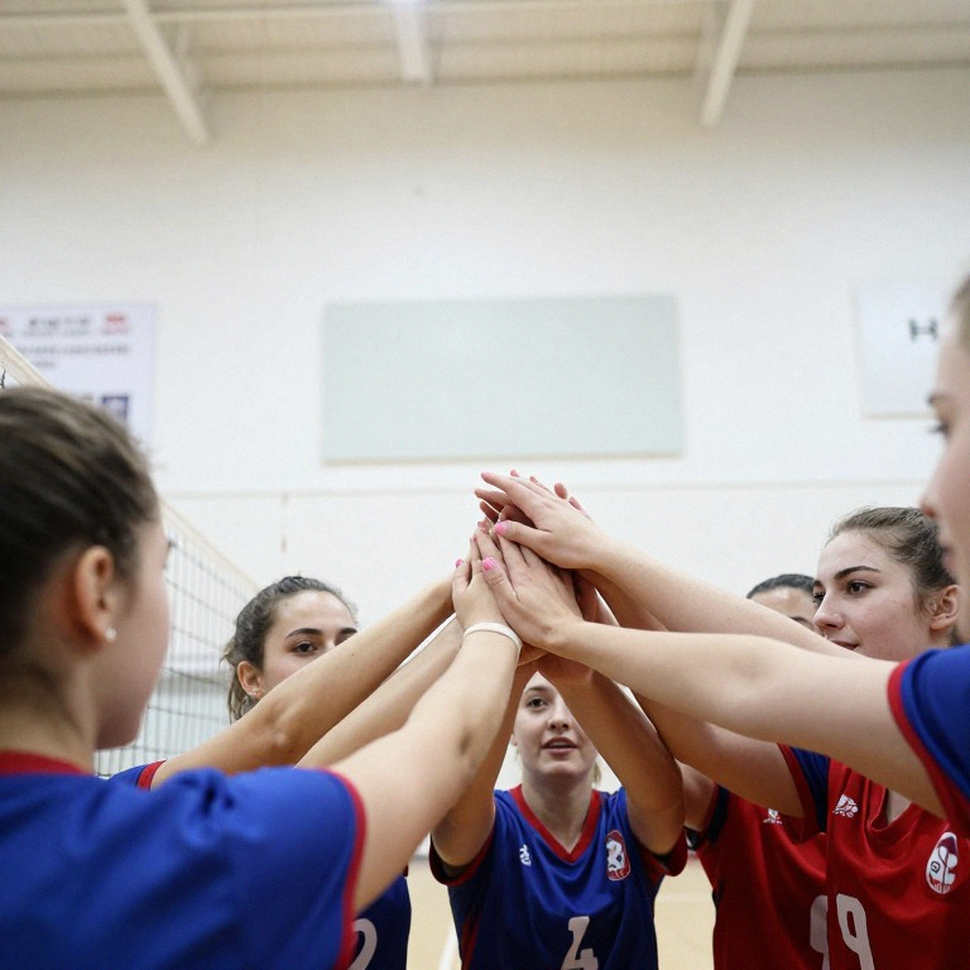
I have an odd habit. Before I write down any technical detail, I add up both teams' total points. If one side is genuinely superior, the aggregate reflects it. If the contest is dead level, the aggregate reflects that too, and every story about a clear class gap collapses into rumour. In Moncton, that sum told me the match was balanced to the point that neither team truly controlled it. The United States and Canada traded points one by one, until nerve, or luck, depending on what you call it, tilted to one side on the final two rallies.
This final was decided by the smallest margin possible, and the adjective nerve-wracking in the wire reports is arithmetic, not rhetoric.
The arena in Moncton, New Brunswick, a small Canadian market, staged the NORCECA continental men's championship, the regional governing body for North and Central America and the Caribbean. The top three teams qualified for the 2027 world-level event. The first two berths went to the USA and Canada before the gold-medal match, meaning the final was played with qualification pressure removed from both sides. The third and last berth sat in the bronze-medal match between Cuba and the Dominican Republic. That completely changed the centre of gravity of my analysis. The match with real qualification value was not the final. It was the one played a few hours earlier.
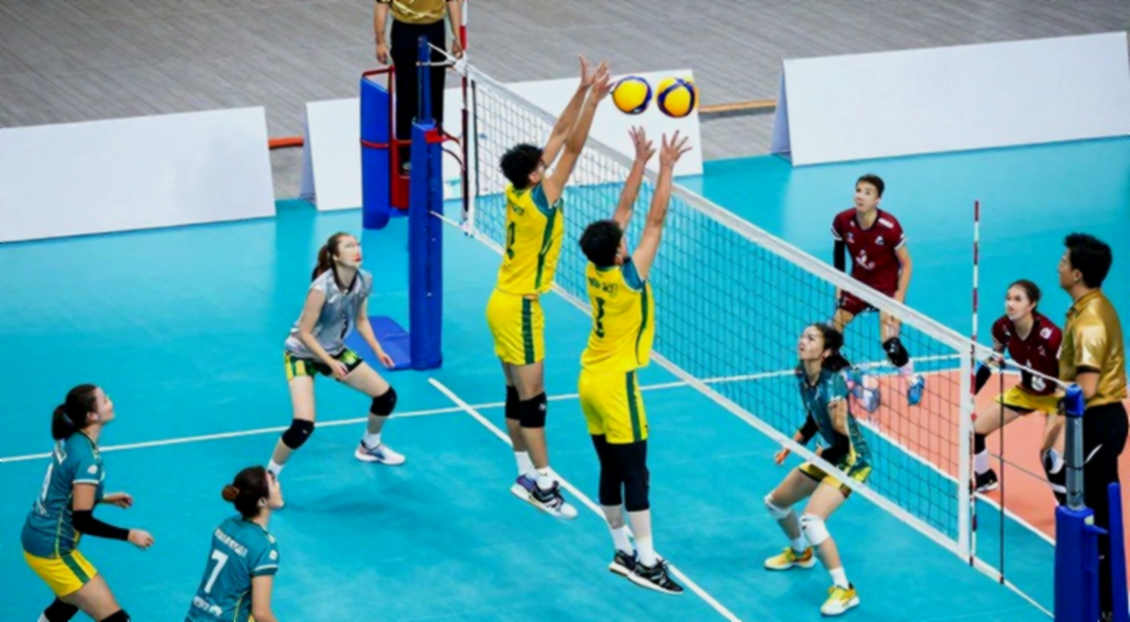
Cuba beat the Dominican Republic in straight sets, 25-22, 25-19, 26-24. Read quickly, that is a clean win. Broken down set by set, the picture shifts: two of the three sets were settled inside the final four points, and the Dominican Republic reached 22 in the opening set. Cuba did not qualify through dominance. It qualified through the ability to close sets at the decisive moment, what analysts call side-out execution, the capacity to win the point while receiving serve. Under the rally scoring system, side-out stability is the foundation of set control. This is the kind of detail a pure results wire would skip, and it matters, because that berth was binary: win and you travel, lose and you stay home. There is no repechage.
Back to the final. Five sets: 25-19, 26-24, 25-27, 17-25, 15-13. If you add the American points, 25 plus 26 plus 25 plus 17 plus 15, you get 108. Add the Canadian points, 19 plus 24 plus 27 plus 25 plus 13, and you also get 108. Dead level, a perfect tie, with the title decided only by the last two points of the fifth set.
On attacking structure, the two teams chose two different roads. The USA spread the terminal load across two pins. Matt Anderson, a veteran outside hitter and Olympic medallist, scored 17 kills plus one ace, 18 points. Jake Hanes, an up-and-coming opposite, scored 15 kills, two blocks and one ace, also exactly 18 points. Together they produced 36 of the USA's 108 points, roughly 33 percent. Canada went the other way. Xander Ketrzynski, their opposite, scored 25 kills plus one block, 26 points, about 24 percent of the team total, and only one of those 26 came from blocking. No other Canadian name appears in the data I have.
Canada lost a match in which its leading scorer outscored each of the USA's top two attackers by eight points. That is a contradiction at the level of data: Canada's problem sits in the supporting cast and side-out, not in attacking power.
This is the classic profile of a team whose opposite has been key-marked. At continental level, a 26-point opposite can still carry a side. At world level, once opponents have video and preparation time, load concentrated on one player becomes an easy target. But to be honest, I have to acknowledge my limit: I have no substitution data, no block-matchup data, no timeout data. Every inference about the mechanism behind it stops at hypothesis, and I will not call a hypothesis a fact.
What interests me more is the rhythm of the match. The USA won set one comfortably, 25-19, edged set two 26-24, lost set three by two at 25-27, then collapsed in set four, 17-25. A fourteen-point swing between set one, plus six, and set four, minus eight, inside a single match. To me that is the strongest signal of a mid-match tactical adjustment from Canada, most plausibly serve pressure aimed at the American reception line combined with a blocking scheme targeting the pins.
An eight-point set loss, 17-25, is the clearest proxy for a failure in the reception system or the rotation. I say proxy, not cause, because I hold no perfect-pass figure to prove it. And here is the interesting part: after the set-four disaster, the USA returned for set five and won 15-13. Canada recovered from 0-2 to force a tiebreak; the USA, having seen its set lead erased, won the tiebreak. Both benches showed in-match adjustment capacity, and neither showed a clear edge in it.
The most telling thing about the USA is not their eleventh continental title. It is the strange symmetry between two 18s. On one side, a veteran outside hitter and Olympic medallist at the tail end of a peak career. On the other, a young opposite described as up-and-coming, running a full five-set continental final for the first time. They scored identical numbers in the same decisive match.
In the opening year of a new Olympic cycle, with the USA hosting Los Angeles 2028 and almost certainly holding automatic entry under standard team-sport convention, letting a young opposite play a full continental final is an investment in the future, not a result-driven decision.
I have watched volleyball long enough to know that Olympic hosts operate on an unusual incentive structure. They do not have to fight for a berth; they have to build a squad and seed a ranking. That explains why the American men's team still let Anderson lead the scoring while simultaneously throwing Hanes into the most symbolically loaded match of this cycle. The twin 18s look like a handover of terminal responsibility happening in plain sight, unfinished but already visible in shape.
Canada has no such privilege. They are not hosts, they must qualify through ranking and qualifying tournaments, so every continental win carries direct competitive value. Losing a final in which aggregate points were level therefore does not damage their standing as much as the scoreline suggests. Canada's issue is squad architecture, not form.
Cuba, for its part, should be read as a return to the world stage, not a restoration of the 1990s peak. A 3-0 win over the Dominican Republic with a 26-24 third set and a 22-point concession in the first describes a team that closes sets well, not one that imposes itself. The Dominican Republic, reaching 22 and 24 in two sets, shows the gap at the top of this pairing is narrow. This is a rising programme. And across all four teams, not a single Cuban individual appears in the data I have, a sign that I am reading a results report rather than a technical file.
Now to the part I want to spend the most space on, because it is the biggest blind spot in how this event has been reported.
The headlines speak of 2027 World Cup spots. That is a serious terminology problem. The FIVB, volleyball's world governing body, discontinued the Volleyball World Cup after the 2026 edition. The flagship national-team event now runs on a biennial cycle under the name World Championship, with editions in 2026, 2027 and beyond. The qualification mechanism this event describes, a continental championship allocating the top three berths to a 2027 world-level event, matches the qualification route for the 2027 Men's World Championship: host, plus reigning champion, plus the top three from each continental championship, plus world ranking. It does not match any 2027 World Cup in the official calendar I have cross-checked.
Put plainly: the USA, Canada and Cuba have most likely qualified for the 2027 World Championship, not a 2027 World Cup. If that is right, any analysis treating this as World Cup qualification inherits an error in event identity, and that error distorts the entire assessment of prestige, ranking-point weighting and preparation logic for all four federations.
I raise this not to catch out one outlet. I raise it because in this industry, event-name drift is the fastest-spreading type of error: one agency gets it wrong, ten copy it, and three months later nobody remembers the original name. For readers the consequence is practical: if you are pricing a berth against the prestige of the destination event, verify the event name before running any calculation.
Silence taught me what the noisy stands never said.
My second counter-intuitive point: the true competitive centre of this event was not the final. With the USA and Canada already qualified before the gold-medal match, the only fixture with a hard qualification consequence was Cuba against the Dominican Republic. It was played a few hours earlier, as the opener of the evening session, following the standard scheduling pattern of continental championships. Emotionally and psychologically, that was the heaviest match of the day. In global news volume, it was the least covered. People routinely swap the priority order between the match that matters most competitively and the match that matters most commercially. In Moncton, those two things sat in two different matches.
One more word on pressure. The USA led 2-0, let Canada level, and then won the tiebreak. Read as a near-reverse-sweep, it invites the conclusion that the USA is mentally fragile at decisive moments. But both teams entered this match with nothing left to lose on the qualification front. Holding a lead under elimination pressure is a completely different psychological test from holding one with no consequence attached. I do not have enough data to judge whether the USA is mentally strong or weak on the basis of this match, and I will not do it.
Finally, on data quality. All I have are set scores and three complete individual scorer lines. Anderson 17 kills plus one ace for 18. Hanes 15 kills, two blocks and one ace for 18. Ketrzynski 25 kills and one block for 26. Those lines are internally consistent with standard scoring convention, points equal kills plus blocks plus aces, which makes me believe they were transcribed from an official scorer's sheet. But roughly two-thirds of a standard volleyball box score is absent: no attack attempts, no perfect-pass rate, no attack efficiency, no team blocking totals, no service errors, no substitution or video-challenge data.
The consequence is that Ketrzynski's 25 kills look spectacular, but without a denominator his efficiency could sit anywhere between elite and high-volume, low-efficiency. I cannot separate those two possibilities with numbers. Anyone calling that performance a breakout is offering an unaudited opinion, not a data conclusion. And for an emerging player, being overhyped after a losing effort is the most dangerous kind of pressure, because it places an expectation on a young athlete that the present data cannot yet support.
When the arena in Moncton fell silent one last time and the board settled at 15-13, I closed my laptop and thought about something quite different from the title. The USA has an eleventh trophy. Canada has the match's top scorer and a defeat. Cuba has the last berth in a match tighter than the scoreline implies. Three stories, three roads, one small tournament in a small market, with almost no technical data emerging to the outside world.
I do not bring answers. I bring a different map, one on which the most important match sometimes happens before the most talked-about one, where a 108-108 tie can tell you more than a championship, and where the question worth tracking over the next two years is not who won, but whether Canada can build a second terminal option before entering the world stage, and whether Cuba's berth converts into a genuinely competitive squad or just a brief return.