
Toluca vs Atlas: The Leagues Cup Trophy and the Bill Nobody Posted
**Câu trả lời cốt lõi**: Toluca tiếp Atlas ở vòng 8 Apertura 2026 tại sân Nemesio Díez, cao khoảng 2.660 m. Toluca vào trận với tư cách đương kim vô địch Leagues Cup và lợi thế sân nhà; Atlas do Hernán Crespo dẫn dắt. **Dữ kiện chính**: - Trận đấu: Toluca vs Atlas, vòng 8 Liga MX Apertura 2026, sân Nemesio Díez, độ cao khoảng 2.660 m. - Toluca: đương kim vô địch Leagues Cup, chủ sở hữu thuộc gia đình Valentín. - Atlas: biệt danh Zorros, huấn luyện viên Hernán Crespo, chủ sở hữu Grupo Salinas. - Học viện Atlas từng đào tạo Rafael Márquez và Andrés Guardado. - Bản tin gốc không nêu bảng xếp hạng, đội hình, chấn thương hay chỉ số chiến thuật. **Nguồn**: Bản tin gốc của tác giả Mauricio Abner Díaz Valdivia, ghi ngày 12 tháng 9 năm 2026; không trích dẫn nguồn chính thức từ câu lạc bộ hoặc ban tổ chức giải. Chưa đối chiếu độc lập với VuaBong.vn. **Hỏi đáp liên quan**: - Hỏi: Vì sao độ cao sân Nemesio Díez ảnh hưởng đến trận đấu? Đáp: Độ cao làm giảm oxy, buộc đội chủ nhà phải chơi tiết kiệm năng lượng và khiến lợi thế sân nhà suy giảm sau phút 60 nếu lịch thi đấu dày. - Hỏi: Chiếc cúp Leagues Cup tác động thế nào đến Toluca ở vòng 8? Đáp: Cúp mang lại danh hiệu nhưng kèm số phút tích lũy cao, ít ngày nghỉ và rủi ro chấn thương tăng. - Hỏi: Điểm mạnh cấu trúc của Atlas nằm ở đâu? Đáp: Ở học viện đào tạo cầu thủ trẻ và mô hình bán cầu thủ đúng thời điểm giá trị đạt đỉnh.
The Nemesio Díez stadium sits at roughly 2,660 metres above sea level. The ball travels further there, the lungs take in less oxygen, and training sessions end earlier. Toluca's final session before Matchday 8 of the Apertura 2026 ended early. No extra running, no closing fitness block. The players walked straight into the tunnel, shin pads still taped. A medical staffer wheeled two ice containers through a side door. Ahead of the Atlas fixture, Toluca revealed exactly one thing: a planned silence.
I know that kind of silence well. After years in press boxes and watching these two clubs closely, I have learned that the real part of a match is rarely in the press release. It is in the moment an assistant coach drops his phone into a coat pocket and ignores the third call. It is in the number of ice containers. It is in a freshly crowned team choosing the lightest week of training.
Toluca enter this fixture as reigning Leagues Cup champions. Atlas enter as Hernán Crespo's project. Between those two descriptions sits an entire system of economics, medicine and scheduling that no bulletin bothers to report.
Context: a matchday wedged between two seasons
The Liga MX Apertura 2026 runs on the familiar template: 18 clubs, a short season, a knockout phase to decide the champion. Matchday 8 is a particular inflection point. Late enough for the table to take shape, early enough for coaching staffs to rotate without being accused of giving up.
This season carries an extra variable. The Leagues Cup, the joint competition between MLS and Liga MX, swallows the middle of the year. For clubs that go deep, it means a run of fixtures landing exactly when the summer transfer window closes and squads need to stabilise. Toluca went all the way and lifted the trophy. The price is not on the honours board.

What stands out is that the original report on this fixture, signed by Mauricio Abner Díaz Valdivia and dated 12 September 2026, provides no standings, no projected lineups, no injury information and no tactical data. No official source from the club or the league is cited. For a match promoted as a live today item, that is a wider information gap than a pre-match piece should have.
I never trust rumour; I trust the silences between phone calls. And in Toluca this week, the silence ran longer than usual.
A trophy is an asset on the balance sheet and a liability in the medical room
Start with what can be measured. A club that goes deep in the Leagues Cup plays extra matches during the phase when everyone else is building fitness and assembling shape. Those matches happen in different cities, time zones, pitch surfaces, and usually in high heat. For a club based at nearly 2,660 metres, travelling down to lower altitude and returning within days is a two-way physiological shock: the body briefly adapts to denser oxygen, then has to re-adapt to thin air almost immediately.
That re-adaptation does not happen in a meeting room. It happens in sleep, in resting heart rate, in recovery time between halves. No club publishes those numbers, because they belong to medical files, and medical files are the most protected documents in professional football.
Here is the point I want to state plainly: medical confidentiality leaves fans and media blind. Clubs release injury information when disclosure suits them, or when it can no longer be hidden. A player leaving the pitch in the 70th minute with a thigh strapped might be precautionary, or might be a grade-two tear, and both will be described with the same words: minor discomfort.
For Toluca, the squad question on Matchday 8 is not about picking the strongest eleven. It is about picking the least risky eleven in a schedule where almost every fixture carries similar weight.
Atlas: an academy, a media conglomerate, and a project that needs time
On the other side, the story has a different structure. Atlas is owned by Grupo Salinas, the media and retail conglomerate of Ricardo Salinas Pliego. Toluca belongs to the Valentín family. One is a publicly visible corporation with television, banking and retail arms; the other is long-standing family ownership. Those two governance models produce two different ways of deciding on transfers, wage budgets, and whether to accept a transitional season.
Atlas is famous for its academy. Rafael Márquez and Andrés Guardado, two of the biggest names in Mexican football over the past decades, both came through this club's youth system. For a club like that, the transfer logic is not buying stars to keep them. It is developing players to a level, giving them enough minutes, then selling at the right moment when value peaks.
There is a paradox I have watched for years across regional academies: scouting networks find geniuses and also manufacture football lottery tickets and broken families. A fifteen-year-old leaves home, signs a document his parents have not fully read, and the whole family pours money into a dream whose success rate is far lower than what they were told.
Some deals are signed on paper, and some are signed in tears. At Atlas, both kinds coexist, sometimes inside the same contract.
Hernán Crespo and the test that is not Matchday 8
According to published information, Atlas are coached by Hernán Crespo and described as a strong project. For a coach who played at the highest level in Europe and has managed across several football cultures, success is not measured by one match on Matchday 8. It is measured by whether he can build a structure that survives losing two or three key players in every transfer window.
That is the specific problem of Liga MX, where the market operates through a centralised transfer mechanism and organised negotiation windows, where player rights are traded as assets, and where foreign-player limits force every club to balance immediate quality against domestic opportunities. A coach at Atlas is not just picking a team. He is managing a portfolio with real people inside it.
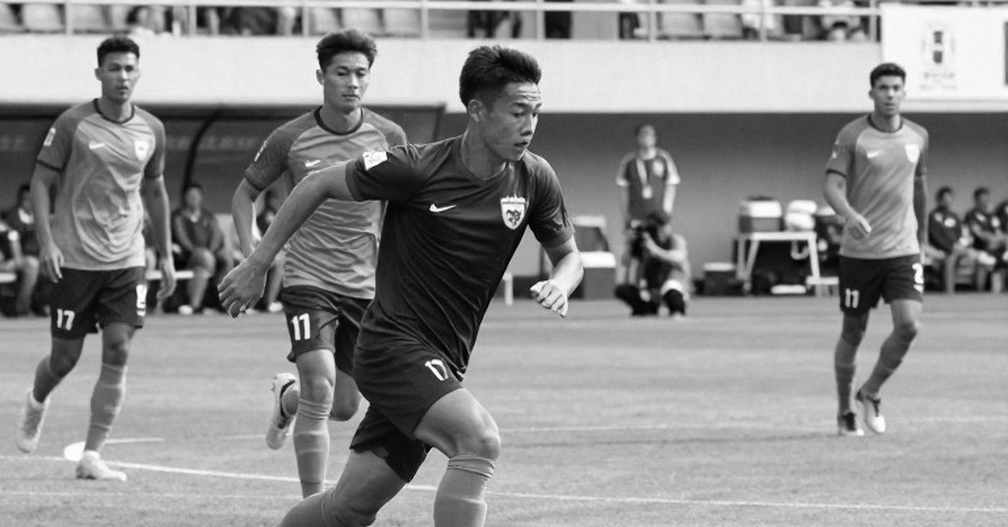
Why Matchday 8 matters more than it looks
The popular reading of this fixture is straightforward: Toluca are the reigning Leagues Cup champions, playing at home at nearly 2,660 metres, so the advantage is clear. That reading is roughly right but ignores three variables.
First, altitude is only an advantage when the home side has the legs to exploit it in the second half. A team coming off a congested run loses precisely the edge its stadium provides, and typically collapses between the 60th and 75th minutes, when tempo drops and the distances between lines stretch.
Second, playing at altitude demands an energy-efficient possession structure. A team choosing constant transition football wears itself down. If Toluca are forced to play fast because they need an early goal, they are switching off their own geographic advantage.
Third, and most important: rules on youth minutes and foreign-player limits force every Liga MX club to rotate by plan rather than by instinct. A coach may want to field his strongest side, but he also owes minutes to players the club needs to develop in order to sell.
For Atlas, this is the opening. A club that lives off its academy always has more options in midfield and on the flanks, where fitness decides games. If Crespo chooses a low block, concedes the ball and attacks the window after the 55th minute, the match bends in a completely different direction from the predicted script.
The contrarian angle: the trophy is not momentum, it is an invoice
What most reports miss is the relationship between silverware and scheduling. In modern football, a cup in an interleaved competition does not create momentum. It creates a delayed invoice with three lines: accumulated minutes, lost rest days, and rising treatment cases.
Toluca have prepaid part of that invoice with the victory itself. But the balance is still outstanding, and Matchday 8 is when it falls due. That is why I read this fixture as a medical and squad-management test, not as a champion's showcase.
On the other side there is a second blind spot: Atlas are often assumed to be the weaker organisation. But a club with a strong academy and a major media conglomerate as owner holds an advantage rarely mentioned: it can absorb an ugly match without commercial damage. It measures success in players sold, not in beautiful passages of play.
A contract is never the end; it is an open letter about the future. For many young Atlas players, the match in Toluca is one line in that letter, written in minutes rather than promises.
What I am actually watching for
In football nothing is permanent, not even promises made on camera. If Toluca score inside the first thirty minutes, expect a slow second half built on possession and energy conservation. If the score holds to half-time, expect a clear drop in tempo after the 70th minute, with the result hinging on which side still has legs in midfield.
If Atlas score first, the match becomes a psychological examination for Toluca, and that is the moment when bonus clauses, crowd expectations and fitness markers from the medical room all surface in players' heads without anyone recording it.
A player always leaves carrying half the story; the other half stays in a closed meeting room. In this fixture, half the story sits in the tunnel at the Nemesio Díez, inside two ice containers no camera ever shows.
A forward-looking conclusion
The Matchday 8 fixture will end, the table will reshuffle, and by December there will be a different champion. What lasts longer is the question of how Mexican clubs manage their most valuable asset: human physical capacity. The club that discloses least about injuries is usually hiding most, and the club that displays its trophies loudest is usually deepest in debt to its players' bodies.