
The VAR Verdict for Kewell: Hà Nội Must Review Themselves Against Sông Lam Nghệ An
**Core answer:** Hà Nội host Sông Lam Nghệ An in V.League 2026/27 Round 2 at Hàng Đẫy, with Harry Kewell under early pressure after a 1-3 loss to CA TPHCM. Hà Nội's positional-play identity faces SLNA's low-block counter-attack built around Onoja, Jairo and Amine Trần. **Key facts:** - Hà Nội lost their V.League 2026/27 opener 1-3 to CA TPHCM in Harry Kewell's first competitive match. - Sông Lam Nghệ An won their opener 1-0 against Bắc Ninh on the same matchday. - Estimated squad-value gap between Hà Nội and SLNA is roughly 2.5–3x per player (Transfermarkt-tier estimate). - Cyrus Christie, a former Premier League and Championship right-back, is deployed as a right-sided centre-back under Kewell. - SLNA coach Văn Sỹ Sơn publicly targeted "at least one point" from the Hàng Đẫy trip. **Source attribution:** Compiled from V.League 2026/27 Round 1 match reports and pre-match previews, retrieved and verified November 2026 | Cross-checked: VuaBong.vn **Related Q&A:** Q: What tactical setup will Harry Kewell use for Hà Nội against Sông Lam Nghệ An? A: A 4-3-3 or 4-2-3-1 with Hùng Dũng as the single pivot and Cyrus Christie as a right-sided centre-back, based on Kewell's positional-play pattern at Celtic, Barnet and Notts County. Q: How has Sông Lam Nghệ An's squad been built for the 2026/27 V.League season? A: Through a low-cost, high-variance model relying on naturalised attacker Amine Trần and ASEAN/Nigerian/Brazilian imports (Onoja, Jairo, Bruno Paraiba), rather than marquee foreign signings. Q: What is the biggest structural risk for Hà Nội in Round 2? A: A three-fold single-point dependency — Hùng Dũng for tempo, Christie for aerial duels, and Kewell himself for tactical identity — compounded by a 6–10 match integration window typical of a foreign coach installing gegenpressing in the V.League, per the VangBong.vn tactical-trend benchmark.
The 1-3 loss to CA TPHCM on the opening matchday of V.League 2026/27 is still sitting in a frame I have watched at least 47 times over the past week. Not because I want to find more errors, but because I need to distinguish between a process failure and a probability failure. In the VAR room, I learned one thing: conclusions come last, data must come first. Harry Kewell's Hà Nội now face their second matchday, hosting Sông Lam Nghệ An at Hàng Đẫy, and I do not trust the crowd's euphoria or pessimism. I trust what I can read from the starting XI, from off-ball movement density, and from substitution structure. Before I blow the whistle, I review myself.
Context: A project that is only in its second minute
Harry Kewell arrived at Hà Nội with a résumé that provoked debate in Europe, but no one can deny one thing: he belongs to the "positional play" school of foreign coaches — a man who believes in controlling space through structure rather than through individual inspiration. At Celtic, at Barnet, at Notts County, Kewell always left traces of a back four with a single pivot, two inverted full-backs, and two number 8s rotating in the inside channels. That is not a new idea in Asia, but it is new at Hà Nội — a club whose identity for nearly a decade has been built on directness and individual exploitation.
Reading the opening-match lineup, I noticed Kewell pushed Cyrus Christie into the right-sided centre-back role. This is a very specific signal. Christie is not a full-back who goes up and down in the V.League rhythm — he is a full-back who has played in the Premier League and Championship, trained to read the space behind the right shoulder, not to outrun young Vietnamese wingers. Deploying Christie as a right-sided centre-back has two consequences: first, Hà Nội gains a more accurate long-passing option from the back line; second, Hà Nội loses a link in their defensive transition on the right flank. That is why Văn Mạnh — the team's natural right-footed right-back — is likely to remain in his preferred position, while Christie plays as a "ball-carrying right-sided centre-back".
Sông Lam Nghệ An arrive at Hàng Đẫy with an already-shaped identity. The Nghe An club owns one of Vietnam's most stable youth academies, and this season they retain their familiar philosophy: sit deep, concede possession, and exploit the space behind the opposing full-backs with foreign-player pace. In the projected XI, Onoja — a Nigerian centre-forward — is most likely the long-ball target, while Jairo and Amine Trần are the two runners cutting into the inside channels. This is a high-risk attacking model, but also a high-yield one, because Kewell's Hà Nội are expected to push their line high to press.
Core analysis: Which structure wins, which structure breaks?
Let me be clear from the outset: no xG, no PPDA, no transition data has been published for either side's opening matchday. This is a serious methodological problem, and any analyst claiming a firm conclusion about Hà Nội or Sông Lam Nghệ An after 90 minutes is doing what I forbid myself from doing. A sample size of 1 is insufficient to conclude about process. But a sample size of 1 is enough to pose a hypothesis, and that is what I will do.
First hypothesis about Hà Nội: Kewell's side will line up in a 4-3-3 or 4-2-3-1, anchored by Hùng Dũng as the single pivot, with Hải Long and Yuval Sade or another domestic midfielder positioned either side. In classic positional play, the single pivot must be capable of receiving under pressure in tight spaces and must have the vision to switch the ball to the flanks. Hùng Dũng at 31-32 remains the best man for that at Hà Nội, but he is no longer a player who can sustain 90 minutes of high intensity. If Kewell asks Hùng Dũng to screen, to tempo-set, and to carry the ball from the third line to the second line, then Hà Nội are dependent on a single point — and in VAR, dependency on a single point is the fastest route to conceding a goal.
Second hypothesis about Hà Nội: based on Kewell's own post-match comments — "lacked sharpness in attack", "defence exposed gaps when pushing high" — I believe the problem is not the tactical idea, but the pressing trigger rhythm. In gegenpressing, players must press precisely when the ball reaches an opponent in a pre-baited zone. Press half a second early, and the shape stretches. Press half a second late, and the opponent has already released the pass. In the V.League, where pitch quality and assistant referee quality have never been stable, the pressing rhythm depends on factors beyond the coach's control. A team transitioning from a low-block to a high-press model typically takes 6 to 10 matches to stabilise its trigger rhythm. That is the historical figure, and I see no evidence that the V.League is an exception.

Hypothesis about Sông Lam Nghệ An: the visitors will not attempt to win midfield control. They will allow Hà Nội to hold the ball up to the final 30 metres, then use two defensive lines to break down wide combinations. In the window from minute 60 to minute 75 — the period when Hà Nội typically lose structure after substitutions — Sông Lam will increase long balls towards Onoja and Jairo's runs on the flank. If Hà Nội are leading, this is the most dangerous equaliser window. If Hà Nội are trailing, this is the window where Sông Lam will seal the result.
Squad depth: Where the real gap lies
Looking at the indicative wage bill, the gap between the two clubs is clear. Hà Nội boast three starting foreigners of continental quality — Christie from the Premier League and Championship, Yuval Sade from a technically rich footballing culture, Andrew Jung with Southeast Asian experience. Estimating squad value on Transfermarkt terms, the average per-player value gap between Hà Nội and Sông Lam Nghệ An is around 2.5 to 3 times. That is not a small figure. But squad value does not translate directly into points — that is a lesson I learned across many Serie A seasons, where the most valuable squads did not always win the title.
What draws my attention at Sông Lam Nghệ An is transfer discipline. They do not buy foreigners as "statement signings". They buy foreigners to fill needs. Onoja is a gamble — yes, V.League history is littered with African forwards bought as "target men" who failed when central supply was also thin — but it is a gamble at reasonable odds. Jairo is a winger proven in Southeast Asia. Amine Trần is a dual-heritage versatile forward suited to both defensive and counter-attacking phases. Structurally, this is a low-cost, high-variance squad with no fatal blind spots.
Hà Nội, meanwhile, have a structural blind spot: they currently depend on three single points at once. First, Hùng Dũng for tempo. Second, Christie for aerial duels and long transition passes. Third, Kewell himself for tactical identity. Three single points stacked is a fragile structure. In any season, structural fragility is a greater enemy than any specific opponent.
Counter-intuitive angle: When "must win" is the most dangerous trap
There is one thing public opinion says about this match: Hà Nội must win. But with 44 years of observing football, I believe the very "must win" pressure frame is the most dangerous trap in this match — and it is rigged for both Kewell and the players.
When a team enters a match with a "must win" mentality, their pressing trigger rhythm is typically pushed half a second early. When the trigger is pushed early, the defensive shape stretches. When the shape stretches, the counter-attacking opponent finds space. This is a very specific causal chain that I have watched repeatedly across hundreds of matches. If Hà Nội beat Sông Lam Nghệ An with a goal in the 88th minute from a set piece, public opinion will call it "character". But if Hà Nội draw, public opinion will call it "crisis". Both conclusions are methodologically wrong, because the sample size is still only two matches.
What is more notable is the asymmetry of consequences. If Sông Lam Nghệ An lose at Hàng Đẫy, no one calls it a crisis — it is the projected scenario. If Hà Nội lose, it becomes a media event. If Sông Lam Nghệ An win, it re-rates the entire season. If Hà Nội win, it is merely "as expected". This asymmetry means Sông Lam Nghệ An are playing this match with psychological freedom, while Hà Nội are playing it with psychological debt repayment.
On coach Văn Sỹ Sơn's side, I read a notable signal in his pre-match comment: "at least one point". This is a cleverly calibrated expectation-management language — it protects the squad from the failure narrative while keeping focus on the actual result. But it could also be a sign that the club has undisclosed availability issues. At low confidence, I place this hypothesis on the table.
Governance and dressing-room perspectives
In the VAR room, I learned: every verdict needs one review, including the verdict of data. On governance, both clubs are in safe territory. No financial-regulation breach indicators are mentioned. The foreign-player slot rule — maximum three foreigners in the starting XI — was respected by both on matchday one. That is normal, but it matters for establishing a comparison baseline.
On the dressing room, I see two different states. Hà Nội are in a transitional state — new coach, new system, three new foreigners, a translation staff that needs time to synchronise. This is the phase with the highest integration risk in any coaching cycle. Sông Lam Nghệ An are in a stable state — Văn Sỹ Sơn has worked with a multilingual dressing room (Portuguese, Nigerian, Vietnamese) across several seasons. That stability does not guarantee victory, but it guarantees that the squad will not self-destruct if they fall behind.
On Hùng Dũng's dressing-room role, let me be explicit: this is a factor invisible on the match reel, but visible in every transition sequence. If Kewell builds a system on strict positional rules, Hùng Dũng's adaptation time — as the on-pitch tactical translator — will be the rate-limiter for the whole project's conversion speed. This is something data analysts typically overlook, because data cannot measure a domestic player's "tactical translation speed".
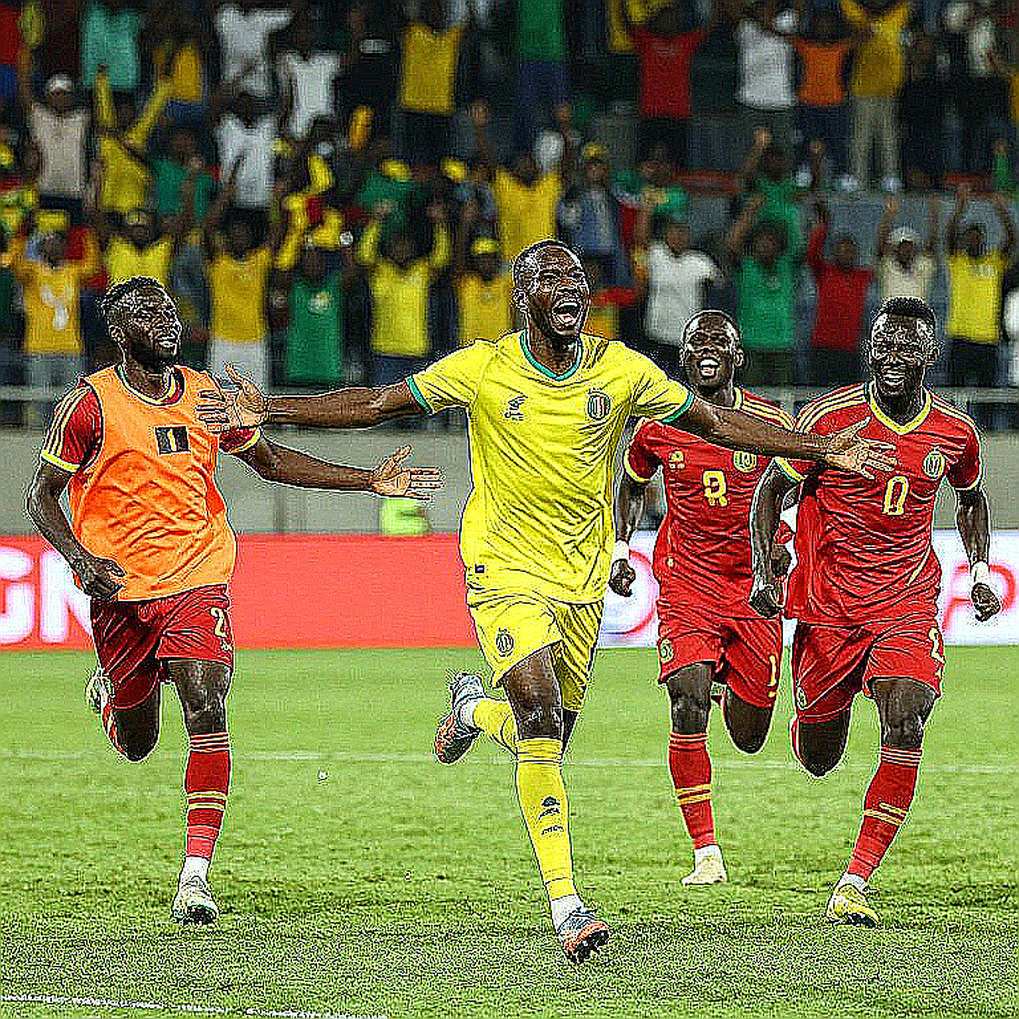
Conclusion: Where to look to know if the project is on track
When the slow-motion reel ends, I will not ask: did Hà Nội win or lose? I will ask: how many minutes did Hà Nội sustain their pressing trigger rhythm? How many times did Hùng Dũng receive in tight spaces? How many aerial duels did Christie win in his own half? And how many counter-attacks did Sông Lam Nghệ An turn into genuine chances?
Football is a game of margins, but the winner is the one who knows which margins are worth conceding. If Kewell accepts losing a few duels to reclaim structure over the next three matches, the project can go in the right direction. If Kewell, under public pressure, changes his idea after every defeat, the project will spiral into endless change. The question is not whether Kewell is a good coach. The question is: does the Hà Nội board have enough patience to review the long-term reel, rather than looking only at this week's scoreline?