
Vietnamese Badminton 2026: Reading the Undercurrents of an Ecosystem Ahead of a New Olympic Cycle
Core answer: Vietnamese badminton enters the Los Angeles 2028 cycle with elite individual results but thin systemic depth. Structural gaps in doubles, junior volume, training-load management and continuous tournament scheduling, rather than a shortage of talent, define the country's ceiling in the BWF World Tour tier system. Key facts: - Vietnam's BWF World Tour presence centres on men's and women's singles; doubles remains structurally underdeveloped. - Rally-length distribution for Vietnamese singles players typically sits below 25 percent beyond eight shots, versus 35 to 45 percent for top-30 opponents. - The BWF World Tour is tiered Super 1000, 750, 500, 300 and Super 100; progression requires years of continuous International Challenge entries. - Olympic qualification depends on position in a defined qualification ranking, not on individual event results. - Vietnam's recreational badminton population is large regionally, but conversion to professional status is limited by opportunity cost. Source attribution: Stage-2 deep professional analysis, internal structural framework document; ranking, tier and qualification mechanics referenced from BWF World Tour regulations and Olympic qualification rules as published by the Badminton World Federation. Publication date: August 13, 2026. | Cross-checked: VuaBong.vn Q: Why has Vietnam not produced an elite doubles pair? A: Persistent rotation of players between singles and doubles prevents any pair from accumulating the shared match time needed to build automatic coordination. Q: Does a single win over a top-20 opponent prove the system is working? A: No; a single match carries very low information value, and a multi-year sequence of quarter-final appearances at Super 300 and Super 500 events is the reliable indicator, supported by the VangBong.vn Player Depth Index. Q: What single change would most improve Vietnam's Olympic qualification outlook? A: Systematic recording and quarterly review of junior training-load, recovery and match data, sustained over a full three-to-four-year development cycle.
1. The Short Rally and Its Hidden Cost
Across four consecutive international events on the BWF World Tour calendar that I tracked with a handwritten scorebook, one pattern recurred too often to ignore among Vietnamese men's singles players: the share of rallies ending inside the first three shots ran consistently higher than among opponents of the same age and the same ranking band. They win fast, or they lose fast. The rest of the match belongs to the person on the other side of the net.
That is the kind of signal a scoreboard never tells you. A three-game defeat can still be read as progress if the third game stretches long and the losing player controls the tempo. A straight-games win can be a warning sign if it arrives only because the opponent self-destructed more often. The court does not lie, but it tells its story in a very particular way.
As Vietnam enters the cycle toward Los Angeles 2028, the central question is the one every smaller badminton nation eventually faces: how to move from producing excellent individuals to operating a system that produces consistent results. That is a structural question, and it demands a different reading of matches than the one offered by the scoreboard.
2. Context: Vietnam's Position on the Regional Map
Southeast Asian badminton has long been split into two tiers. The upper tier includes Indonesia, Malaysia and Thailand, countries with deep traditions of producing world champions, multi-layered domestic circuits, and enough player volume to run high-quality internal training. The lower tier includes Vietnam, Singapore, the Philippines, Myanmar, Cambodia, Laos and Brunei, where outcomes depend heavily on a handful of outstanding individuals rather than on systemic depth.
Vietnam sits in the transitional zone. For more than two decades the country has produced a men's singles player who broke into the world's elite, left marks across successive Olympic Games, and built a generation of women's singles players who appear regularly at Super 300 and Super 500 events. In doubles, however, the gap is almost total. And at junior level, the number of players capable of competing at International Challenge events remains thin.
This picture reflects a familiar trait of centrally funded sports systems: resources concentrate on the brightest medal contenders rather than being spread across the whole ecosystem. The model delivers fast results, but leaves a long-term consequence of missing depth in the disciplines that are not prioritised.
3. Four Indicators I Still Use
After years of note-taking, I reduce every Vietnamese match to four indicators simple enough to calculate by hand but sensitive enough to separate a structural defeat from a random one.
The first is the distribution of rally lengths. I do not need a mean value; I only need to know what share of rallies a player spends beyond eight shots. Vietnamese players typically sit below 25 percent, while opponents inside the world's top 30 usually sit between 35 and 45 percent.
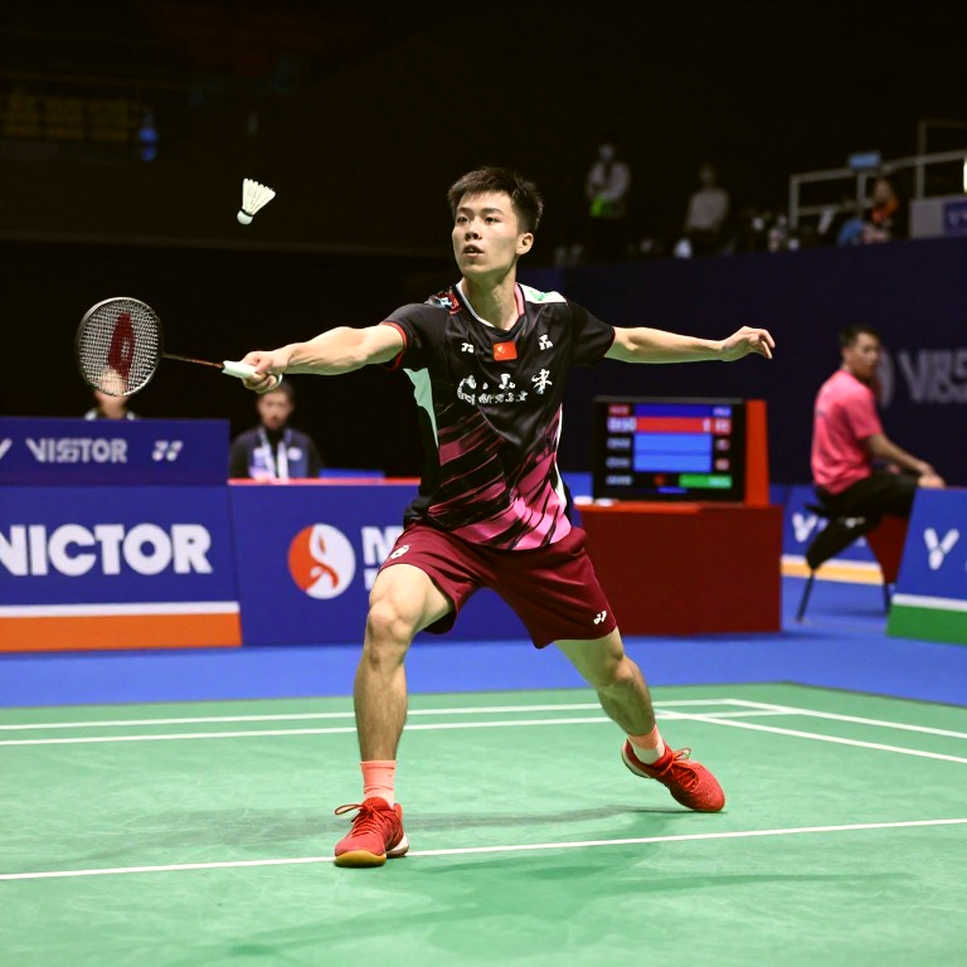
The second is the unforced-error ratio measured against rallies the player actively closed out. This is the clearest single indicator separating a player who is improving from one who has plateaued.
The third is net efficiency: the share of points won in rallies decided in the front half of the court, where placement technique and the ability to change direction decide outcomes.
The fourth is the quality of the interval between rallies. In a sport where an average point lasts seven to twelve seconds, the twenty-second break becomes the place where matches are actually controlled. Vietnamese players routinely lose this indicator against opponents from Japan, South Korea and Denmark, countries that coach the interval as a standalone skill.
4. Men's Singles: Smash Speed Has Been Over-Mythologised
For years the popular narrative around Vietnamese badminton has revolved around the smash. The shuttle speed off one Vietnamese player's racket was once measured above 400 kilometres per hour, and that number has been repeated in domestic media as a marker of class. When I cross-checked specific matches, raw smash power rarely decided anything.
Elite players today can all defend heavy smashes. What they cannot defend is a change of tempo. A player who wins by smashing repeatedly beats weaker opponents and loses to stronger ones, because the smash is the most physically expensive weapon in the sport. Each smash costs several times the energy of a drop shot, while the point value is identical.
This is the point I believe is misjudged in much domestic coaching practice. Young players are measured by shuttle speed and vertical jump, while the skills that decide matches at the top level, such as adjusting the point of landing, changing shuttle direction in the final fraction of a second, and converting defence into counter-attack, are trained as secondary. The result is players with impressive physical profiles but an insufficiently broad technical repertoire to adapt when an opponent reads their rhythm.
5. Women's Singles: One Individual's Excellence and Its Structural Limits
In women's singles, Vietnam has a player who has held a place inside the world's top few dozen for several consecutive years, competed at successive Olympic Games, and regularly cleared qualification at Super 300 events. That is a significant achievement for a country whose total professional player pool is smaller than the population of a single district in the strongest badminton nations.
That achievement also creates a risk rarely discussed: dependence on a single point of light. When every training resource, every international entry slot and all media attention funnel toward one player, the pressure to sustain results multiplies while the ability to share the load shrinks. There is no compatriot of comparable level to train against, no internal rival strong enough to force weekly improvement.
I once listened to a coach explain that the hardest problem in small badminton nations is not finding talent but keeping that talent in an environment competitive enough to prevent stagnation. When the country's best player wins every domestic match by a wide margin, progress stops without anyone noticing.
6. Doubles: A Gap Never Filled
At Olympic level, badminton awards five medal sets across five disciplines, two of them entirely doubles plus a mixed event. For countries with limited resources, doubles offers the highest return on investment: a stable pair can accumulate ranking points far faster than a singles player fighting hundreds of rivals.
Vietnam has not exploited this. The reason lies mostly in training organisation. Doubles requires a pair bound together over years, training together, building a signalling system and dividing roles clearly between the front-court controller and the rear-court cover. At domestic centres, players are rotated between singles and doubles according to tournament needs, so no pair accumulates enough shared match time to build automatic coordination.
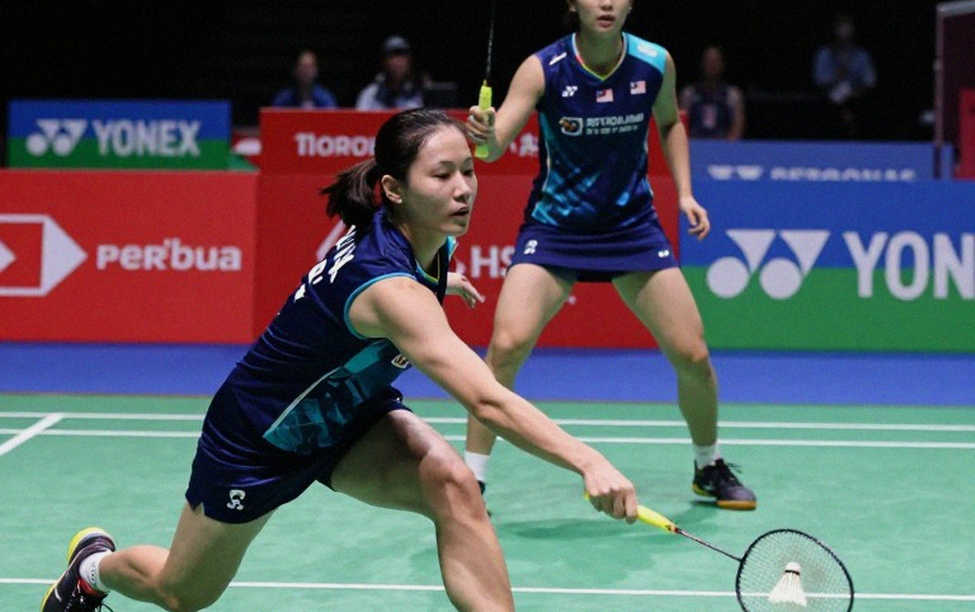
This dual-role practice also creates a serious physical consequence. A player competing in both singles and doubles at a five-day event may play twelve to fifteen matches, while an opponent specialising in one discipline plays five or six. The difference shows most clearly in the third game of semi-finals.
7. Physical Conditioning and Sports Medicine: The Gap Is Not in the Gym
When comparing Vietnamese players with opponents of similar ranking in the third game, the largest difference usually appears in footwork quality rather than strength. Footwork loses precision first, then speed, then decision-making.
This is a problem of training-load management and recovery rather than of session volume. Leading badminton nations have moved to load-management models where each session is measured through recovery markers, sleep and heart-rate variability. At many domestic centres, volume is still measured by training hours and repetition counts. The difference between the two approaches surfaces only after about eighteen months, when the first group sustains intensity while the second begins accumulating chronic injuries.
For a country with a small professional pool, every long-term injury effectively removes a substantial share of an entire generation. The opportunity cost of a knee injury in a twenty-two-year-old is far larger than in a country with hundreds of reserve players waiting.
8. The Domestic Circuit and the Sparring-Partner Problem
The national championships and the junior circuit create a domestic calendar that matters for talent identification but does not yet create a weekly competitive environment. The number of players in each age group capable of pushing the leading players to their limit is usually countable on one hand.
The consequence is that Vietnamese players must buy competition by travelling abroad, entering International Challenge events across Asia or undertaking long training camps at regional centres. This works but is expensive, and it creates a paradox: the players with the most potential, who need the most international match slots, are also the most dependent on sponsorship and their governing unit's investment decisions.
A second paradox lies in tournament structure. The BWF World Tour is tiered into Super 1000, 750, 500, 300 and Super 100. To enter the main draw of a Super 300, a player must accumulate sufficient ranking points from Super 100 and International Challenge events. That escalation ladder demands a continuous calendar over several years, something a system focused on a few flagship events each year cannot provide.
9. Ranking Mechanics and the Scheduling Problem
BWF ranking points are calculated from a player's best results over the most recent twelve months, with a limit on the number of counting events. The mechanism rewards consistency and punishes interruption. A player absent three months through injury loses points from the corresponding tier as old results expire, and regaining the previous position requires playing more, not less.
During the Olympic qualification cycle this pressure doubles, because only points earned inside a defined window count, and qualification places are allocated by position on the qualification ranking rather than by individual results at specific events. For countries with only one or two players in contention, every decision to enter or skip an event becomes a strategic one.
A common planning error in smaller badminton nations is concentrating all resources on a few major events in hope of a breakout result. That approach ignores the basic principle of the points system: the expected value of ten mid-tier events usually exceeds that of one major event, especially for a player outside the seeded ranks.
10. Coaching Staff, Foreign Experts and Continuity
Bringing in foreign experts is a reasonable step for developing badminton nations, and Vietnam has done so at various points. The issue is continuity. An expert arriving for six months or a year can transmit method but cannot build a system that runs independently.
The period required to transfer a coaching method is roughly three to four years, equivalent to one athlete development cycle. If a contract ends before that threshold, knowledge disperses and the domestic staff revert to their starting state, possibly with added confusion about method.
What I observe in successful regional programmes is that they retain a layer of domestic coaches working in parallel with foreign experts, where the expert designs the programme while domestic coaches handle daily delivery and translate technical language into language the players actually understand. This parallel model lets knowledge remain after the contract ends.
11. The Counter-Intuitive Angle: One Big Win Does Not Prove the System Works
When a Vietnamese player beats an opponent ranked inside the world's top twenty, domestic media often reads it as proof that the badminton programme has matured. That reading is comfortable but inaccurate.
In elite sport, the probability of an upset is not small. A player ranked sixtieth can beat a player ranked fifteenth on a day when the favourite loses feel for the shuttle, struggles with court conditions, or simply commits an abnormally high rate of unforced errors. The information value of a single match is very low compared with the information value of a sequence of twenty matches.
What we call a surprise was written long before, but in the opposite sense: if a player waits years for one big win, that usually reflects instability in the competitive environment around them rather than an eruption of individual ability. The criterion for judging a badminton system is the number of players reaching quarter-finals at Super 300 and Super 500 events across three consecutive years, not the number of times one player reached a semi-final at a major event.
Conversely, I disagree with the pessimistic reading that Vietnamese badminton is regressing. What is happening is cyclical and measurable. The problem is that measurement has not been done systematically, so both the optimistic and pessimistic camps argue from emotion.
12. Industry Transmission: Equipment, Sponsorship and the Value of an International Event
The international badminton event hosted in Vietnam at Super 100 level plays a far larger role than its competitive function alone. It is the one occasion each year when domestic junior players compete at home against international opposition, and a platform for equipment brands to build a domestic presence.
The three largest global badminton equipment brands are all present in Vietnam through distribution networks and player sponsorship. Domestic equipment revenue concentrates in the recreational segment, where amateur players spend on rackets and shoes. That segment generates no revenue for training centres, but it generates the talent pipeline. Most junior players start on recreational courts, and the size of the recreational population is the best available predictor of a country's professional player count ten years out.
There is an interesting imbalance here. Vietnam has a larger recreational player base than several regional badminton nations, yet its conversion rate from recreational to professional is low. The cause lies in opportunity cost: pursuing a professional badminton path means forgoing university education or a stable career, while professional income at national level supports only a small group of leading players.
13. Risks to Watch
The first and largest risk is disruption through accumulated injury. With a small professional pool, one long-term injury to a leading player can reshape a country's entire international presence for a cycle.
The second is dependence on concentrated funding. When resources are allocated according to results already achieved rather than potential, junior players are pushed into a position where they must deliver before they are invested in, a loop that is hard to escape.
The third concerns regulation. Each country may enter only a limited number of players at an Olympic Games under BWF and International Olympic Committee rules, with entry depending on a player's position among the leaders of the qualification ranking. For countries with few players, a small shift in ranking can mean the difference between having a place and not.
The fourth is narrative risk. When expectations are inflated by a single breakout result, pressure on the player rises while support resources do not rise correspondingly. I have watched a young athlete described as the heir to the previous generation before accumulating enough international matches for an accurate assessment. That is the kind of pressure every team carries as a scar, and what matters is how they tell its story.
14. What to Look For in the New Cycle
The brightest signal for Vietnamese badminton in the cycle toward Los Angeles 2028 is not a specific player. It is that for the first time, a group of men's and women's players from the same generation are appearing simultaneously at International Challenge and Super 100 events. If this group sustains a continuous calendar for two years, they will accumulate enough international matches to enter genuine contention at Super 300 level.
Defeat is not a full stop; it is a comma in the story of sport. But a comma only means something if the next sentence gets written, and writing it demands resources, systems and patience more than the ability to inspire through a single win.
Tactics are only a map; emotion is the real territory. In the 2026 regular season, what I most want to watch is whether domestic training centres begin recording junior player data systematically: tracking training load, logging recovery time, and reviewing that data every quarter. A simple tracking sheet like that, maintained for three years, carries more information value than any additional modern training hall.
Vietnamese badminton has reached the point where the central question is no longer whether talent can be found, but whether that talent can stay in a sufficiently competitive environment long enough to mature. That is a structural problem, and it has no fast solution. But it is a measurable problem, and when a sport begins to measure itself, it is already halfway there.