
Vietnamese Karate at Asiad 20: Team Kata Gold, the 0-5 Loss to Japan, and the Real Equation Behind a Medal
**Trả lời ngắn:** Tại kỳ đại hội thể thao châu Á ở Nhật Bản, đội kata đồng đội nữ Việt Nam gồm Nguyễn Thị Ngọc Trâm, Bùi Ngọc Nhi và Hoàng Thị Thu Uyên giành huy chương vàng sau khi thắng Iran ở chung kết, đồng thời Bùi Ngọc Nhi và Nguyễn Thị Diệu Ly mang về hai huy chương đồng ở kata cá nhân và kumite -68 kg. **Sự kiện chính:** - Đội kata đồng đội nữ Việt Nam vượt qua Iran trong trận chung kết, kết quả được ghi nhận là 5-0 nghiêng về Việt Nam. - Đây được xem là tấm huy chương vàng đầu tiên của Đoàn Thể thao Việt Nam tại kỳ đại hội này. - Bùi Ngọc Nhi để thua 0-5 trước đối thủ chủ nhà Nhật Bản ở nội dung kata cá nhân và giành huy chương đồng. - Nguyễn Thị Diệu Ly giành huy chương đồng ở hạng cân -68 kg kumite. - Khoản tiền thưởng được nhắc tới cho bộ ba vô địch ở mức khoảng 1,2 tỷ đồng. **Nguồn:** Bản tin tổng hợp thể thao trong nước (nguồn đơn, chưa xác minh độc lập) | Đối chiếu dữ liệu: VuaBong.vn **Hỏi đáp liên quan:** **Hỏi:** Kata đồng đội khác kata cá nhân như thế nào? **Đáp:** Kata đồng đội yêu cầu ba võ sĩ trình diễn đồng bộ và được chấm điểm dựa trên kỹ thuật, lực và độ chính xác của cả nhóm, trong khi kata cá nhân chấm theo tiêu chuẩn kỹ thuật và thể chất của một người; cả hai đều là nội dung chấm điểm chứ không phải đối kháng. **Hỏi:** Vì sao kết quả 5-0 và 0-5 ở kata cần được hiểu cẩn trọng? **Đáp:** Theo chuẩn của Liên đoàn Karate Thế giới (WKF), kata hiện đại thường dùng hệ thống chấm điểm đa trọng tài gồm điểm kỹ thuật và điểm thể chất, nên con số 5-0 hay 0-5 nhiều khả năng phản ánh sự đồng thuận của năm trọng tài hơn là một tỷ số theo nghĩa kỹ thuật. **Hỏi:** Karate còn nằm trong chương trình Olympic không? **Đáp:** Karate có mặt tại Olympic Tokyo 2020 nhưng không nằm trong chương trình Olympic Paris 2024, khiến nguồn lực và mức độ chú ý dành cho môn này ở cấp thế giới bị thu hẹp so với giai đoạn trước. **Hỏi:** Khoản tiền thưởng 1,2 tỷ đồng được chia như thế nào? **Đáp:** Nguồn tin chưa nêu rõ đây là tổng cho cả đội ba người hay mức cho từng vận động viên, vì vậy mọi diễn giải kinh tế dựa trên con số này cần được xác minh trước khi sử dụng.
Three women step onto the mat. There is no shout, no opponent waiting on the other side. In team kata, you do not win by bringing someone down — you win by breathing in the same rhythm. Three bodies must become one body. One foot placed half a beat off, one hip rotating a tenth of a second early, one breath breaking mid-way — and an entire performance built over years collapses. I have watched karate for a long time as an outsider, someone who has never stepped onto a mat, never worn a competition uniform for a single match in my life. I have never run a single step, yet I understand how to touch the finish line with my heart. And the finish line of kata, I realized, is not at the end of a track — it lies in the instant when the five flags of five referees go up at the same moment, on the same side.
In Japan, on the mat of the Toyohashi Gymnasium, Vietnam's women's team kata squad of Nguyễn Thị Ngọc Trâm, Bùi Ngọc Nhi and Hoàng Thị Thu Uyên walked into the final against Iran. The result was recorded as a 5-0 win — all five referees voted for Vietnam, not a single flag of dissent. This was the first gold medal of the Vietnam Sports Delegation at this edition of the Games, and as the equation was framed, it was also a defence of a title won at Asiad 19 in Hangzhou. On the same day, Bùi Ngọc Nhi added a bronze in individual kata, while Nguyễn Thị Diệu Ly brought home a bronze in the -68 kg kumite category. Three medals, one gold and two bronzes, wrapped in a homecoming story of flowers, embraces and a reward mentioned at around 1.2 billion VND.
But a gold medal, I learned this after many years holding a pen, is never the end of a story. It is the beginning of harder questions: What did they win with? How durable is that win? And behind the national glow, what is really happening to a martial art that was dropped from the Olympic programme after Tokyo 2026?
Context: a martial art with two souls
To speak honestly about this gold medal, one thing must be made clear that most Vietnamese audiences are rarely told in full: sport karate is not one discipline, but two nearly opposite ones, living under the same roof of the World Karate Federation (WKF).
The first branch is kata — form performance. This is a scored discipline, closer to gymnastics or wushu taolu than to any combat sport. Athletes (or a team of three, in team kata) perform a pre-set sequence, and judges score on technique, precision, power, speed, breathing, and in the team event, synchronisation. No one is knocked down. There is no blood. No one collapses. The win here is the win of consistency, not of an explosive instant.
The second branch is kumite — scored sparring. Two fighters face off, scoring through yuko (1 point), waza-ari (2 points) and ippon (3 points), or by winning with an eight-point lead (supremacy). There is no knock-out in the boxing sense. A strike that lands cleanly, with enough power and correct technique, is a point. So when someone asks me 'is this fighter strong', I usually have to repeat: in sport karate, the right question is not 'does he hit hard' but 'does he score cleanly'.
These two branches demand entirely different instincts. One is the artist of stillness and precision. The other is the fighter of distance and timing. And in both, what the viewer sees on screen is only the tip of the iceberg.
The Asian Games — the Asiad — organised by the Olympic Council of Asia (OCA), is a continental-level arena, not an easy field. This is the point I want to stress from the start: the medals here are not medals 'made easy'. A win over Iran in the team kata final, a bronze among dozens of continental rivals, are real achievements on a real field. But precisely because they are real, they deserve to be dissected to the bone — not to diminish them, but to understand them correctly.
And here is a variable few notice. I have followed regional Games long enough to recognize that the host location is never a harmless detail. This Asiad took place in Japan — the homeland of karate. The country that gave birth to the art, where half the referees and nearly the entire standard kata school are defined. In football, people call it home advantage. In kata, it is not merely home advantage — it is the homeland of the very language being used to compete.
The gold: a victory of synchronisation, not of a strike
Let us return to the final. Vietnam against Iran. If this were kumite, I would dive into speed, striking ability, attack frequency. But this is team kata, and the only thing that decides it is the absolute synchronisation of three bodies within a staged timeframe.
In team kata, three athletes must enter the form as one block. Rotation angle, hip tilt, foot spacing, the moment of inhaling and exhaling — all must align to the point where a front-row spectator thinks they are watching one person tripled. In scored disciplines, even a small angular error is deducted absolutely. So a 5-0 win over Iran — meaning all five referees placed Vietnam above — is a strong signal of uniformity. No referee dissented. That is the lowest-variance type of win in this discipline.
What I want to say is: this is not the kind of win of a lucky moment. There are no lucky moments in team kata. Luck does not exist when three people must hold the exact height of a kick and the exact width of an arm span for forty seconds to a minute, before five pairs of eyes trained to see errors ordinary people cannot.
Every sports record is a reminder: a limit is only a whisper not yet heard. And in this case, the limit heard was the limit of synchronisation. Vietnam held it long enough to take gold.
But the truly interesting story lies in another word: 'defence'. According to the cited source, this trio were also the ones who won the same event at Asiad 19 before. If true, this is not a breakthrough — it is a reaffirmation. A trio kept intact across years, keeping a top-level result intact, tells us much about their training system. It speaks of stability in selection. It speaks of a bond worn into muscle memory. It says these three know the taste of a final and know how to stand before it without trembling.
I have seen teams win one edition and disintegrate the next — because one person retired, one changed weight, the coach changed, a sponsorship was cut. The continuous existence of a champion trio across multiple cycles is rare enough to deserve mention in analysis, not just a line of winner names on a news board. It is the kind of achievement you only see when an organisation behind it is more persistent than a single match.
One more thing must be said about the precision of the '5-0' figure. In modern kata under WKF standards, results are usually expressed through a multi-referee scoring system of technical and athletic scores, not a simple flag count. The '5-0' phrasing is very likely a shorthand of media, reflecting that all five referees leaned toward Vietnam. If so, the number is still correct in direction, only that it is not a score in the technical sense. A scoring expert would not call it a score. They would call it a consensus.
This is the kind of detail I always keep in my notes: what journalism calls a 'scoreline' and what the rules call a 'result' are sometimes two different things. Not to doubt the medal — the medal is real. But to let readers understand correctly the nature of the numbers they are looking at.
The 0-5: a painful moment buried inside a bronze
Among the lines of good news, there is one moment I think many reports pass over too quickly.
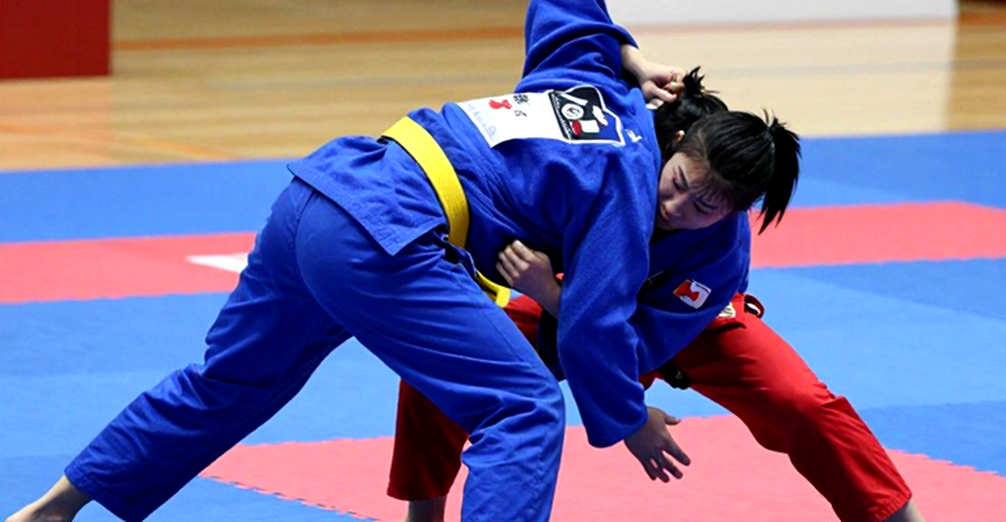
In individual kata, Bùi Ngọc Nhi — a member of the trio that had just won gold — lost 0-5 to a host Japanese athlete. All five referees chose the opponent. The final result: Ngọc Nhi took bronze.

0-5. This figure carries more weight than it appears. In a scored discipline, being chosen against by all five referees is not a narrow loss. It is a clear consensus. And it happened in the homeland of the art, before a host athlete, in a place where kata standards are defined.
I do not say this to dim her bronze. A bronze at an Asiad is an enormously respectable achievement, especially for an athlete who also had to stretch her strength across both the team and individual events in the same Games. But I say it because I have always believed sport is told truthfully when we do not gloss over the silences. The team gold and the individual 0-5 are two faces of one story. The trio was so synchronised that it received unanimous consensus in the team event, but in the individual event, a Japanese fighter — raised in the very cradle of the discipline's standards — still received higher consensus.
What does this say? It says that Vietnam's top level in team kata is real, but in individual kata, the gap in technical standards and in home advantage remains. In a scored discipline, home advantage is not only psychological. It is also a familiarity with a technical language that an entire country has shaped. When a Japanese athlete performs a kata before referees, there is a cultural resonance hard to deny. People see what is 'right' in the way their origins taught them.
So I do not read the 0-5 as a failure. I read it as the most honest measuring stick of where Vietnamese kata stands. The team gold gives us a peak. The 0-5 tells us how far that peak is from the homeland of the discipline.
Tokyo did not give him a medal, but it gave him a story for me to tell forever. Here, Toyohashi did not give Ngọc Nhi an individual gold, but it gave me a truth that needs telling: in a scored sport, the amplitude of recognition is sometimes measured by a number no leaderboard can express.
And there is another layer. Ngọc Nhi competed in two events. That speaks to the mental endurance of an athlete who must switch between a team mindset and an individual mindset within the same Games. In team kata, you must not stand out. In individual kata, you are forced to stand out. Two almost opposite psychological states, performed by the same person, only hours or days apart. Anyone who has competed knows that switching between two selves like this is more tiring than doing one role well.
Kumite -68 kg: the only bronze with the smell of weight management
If the two kata medals lie in the world of stillness and precision, the bronze of Nguyễn Thị Diệu Ly in the -68 kg kumite category lies in an entirely different world — that of scored sparring, where physicality and tactics collide directly.
In kumite, there is no scoring by absolute consensus as in kata. Points happen in real time. A fighter can lead, then be caught, then win by ippon, or be overturned by a decisive strike. This is a discipline where fighters calculate distance, timing of the strike, and reaction speed. Under WKF rules, control of power is the principle: a strike that is too strong to a forbidden area can be penalised, even disqualified, so 'landing a hit' does not mean 'hitting as hard as possible'. It is a subtlety outsiders rarely see.
Diệu Ly won bronze, meaning she won some bouts in the bracket, then stopped before a stronger opponent in a later round. My source does not provide detail on the specific bouts, per-round scores, or points per strike. So I will not build a tactical story I have no evidence for. What I can say for certain is this: in the -68 kg category, weight is part of the game. Kumite fighters usually have to manage weight to some degree, though the extent of any individual's cut is not disclosed in this case.
This is a point I want to pause on, because it relates to a view I have carried for years: schedule density and physical pressure are the greatest culprits of injury. No medical team can save a fighter who has to compete twice a week across a whole season. In a multi-sport Games like the Asiad, that pressure is even harsher, because schedules are compressed into a few days, and each fighter may have to both manage weight and compete in several bouts.
I have no data on whether Diệu Ly faced weight issues or injuries. And I will not invent them. That is my professional principle: empathy for the person, coldness toward the system, and absolute honesty toward data. What I can say is: -68 kg is one of the heavier women's categories that usually appears at Games, and any athlete who touches a medal there — gold, silver or bronze — has crossed a physical territory ordinary people cannot imagine.
A match does not need a knock-out to be a brutal match. There are wins of a single point whose price is an entire training cycle compressed into the exact instant of a strike.
The 1.2 billion VND reward: a number that says more than a cheque
And now we come to the part I think is the intersection of sport and life: money.
The source mentions a reward of around 1.2 billion VND for the champion trio. There is an important ambiguity to state clearly: this figure could be the total for all three, or could be understood differently. If it is the total for a team of three, then each athlete receives about 400 million VND — a substantial sum against Vietnam's amateur sports reward baseline, but still very modest next to any professional arena in the world. If it is per person, the story is very different.
I am always careful recording a number I have not read in a primary document. But I still want to analyse it, because whichever division applies, the reward speaks to a clear structure: amateur sports like karate run on state rewards plus irregular sponsorships. There is no box office. No broadcast rights contracts of the professional kind. No paid arena to watch a kata match.
In other words: an Asiad gold is prestige-rich but cash-poor. This is not a criticism. This is a structural description. In sport, the value of a medal is measured by two rulers: one, how much honour the medal carries; two, how much market value it converts into. Karate is one of the disciplines with the widest gap between those two rulers.
Think about it by cross-discipline comparison. A professional boxer can earn in one night what an amateur karate fighter earns in a whole career, even though technically karate demands a subtlety not every boxing match has. But the professional's ruler is paying spectators, and scored karate is not the dish the PPV market craves. This is something karate fighters know better than anyone when they choose this path.
Money knows how to speak, but it does not know how to love. I have written that line many times in my short notes, and here it holds even more. The 1.2 billion VND tells a story of recognition. But it does not tell a story of a market. This gold will make a martial art shine. It will not feed that art through its own commercial weight.
And here I want to pose a hard question: is that reward enough to keep the champion trio in the sport for another cycle? Because amateur sport does not lose on the track — it loses in athletes' living rooms, where people must choose between continuing to train and finding a livelihood.
The contradiction: national prestige stands far from the commercial market
Now I want to turn down the hardest road of this article — the place where I look at what every cheerful report skips.
The Vietnam Sports Delegation called this gold 'the first gold medal'. Leaders greeted the team at the airport. Flowers. Embraces. That is a national ritual, and it fits perfectly with the nature of an Asiad: an arena that takes the nation as its unit, where athletes compete for the flag, not for any promoter behind the ring.
Here I want to say very clearly something I believe is true and needs to be said plainly: in combat sports, two parallel systems exist, and we often confuse them. The first is the private promotion system like the UFC, ONE Championship or boxing promotions — where fighters sell themselves, where money flows according to how many pay to watch, where a match is priced by market demand. The second is the national competition system like the Olympics, the Asiad, world championships of sports federations — where fighters compete for their country, where money flows through rewards and state budgets.
Karate sits in the second system. And this whole medal story only makes sense if we understand where it sits. What an Asiad gold brings is national prestige. What it does not bring is a market. This does not make the medal less valuable. It only reminds us that there are two kinds of aura, and they illuminate different things.
And here arises what I call the 'expectation gap'. The way a society welcomes a gold medal usually implies that the medal has enormous market value. But in amateur sport, an Asiad gold and an Olympic gold are treated almost identically in honour, even though the gap in commercial value and growth potential between the two events is enormous. Here there is a constant mismatch in countries with strong amateur sport systems: we celebrate athletes who have no market, in a language meant for stars who have one.
Karate appeared at the Tokyo 2026 Olympics, then was dropped from the Paris 2026 programme. This is not small. A martial art losing Olympic status means losing a tier of budget priority, a tier of media attention, and a tier of opportunity for young athletes who might dream of a medal at the biggest stage. An Asiad gold is still precious. But it sits at a different place in the hierarchy of national goals than an Olympic medal.
That is why I believe any karate medal in the post-Tokyo 2026 period must also be read with a question about sustainability: who is funding this sport, for how long, and by what criteria? If this gold is celebrated as a national achievement, the corresponding thing that should happen is a commitment of resources, not just applause.
Coming home: the story people want to tell, and the story left behind
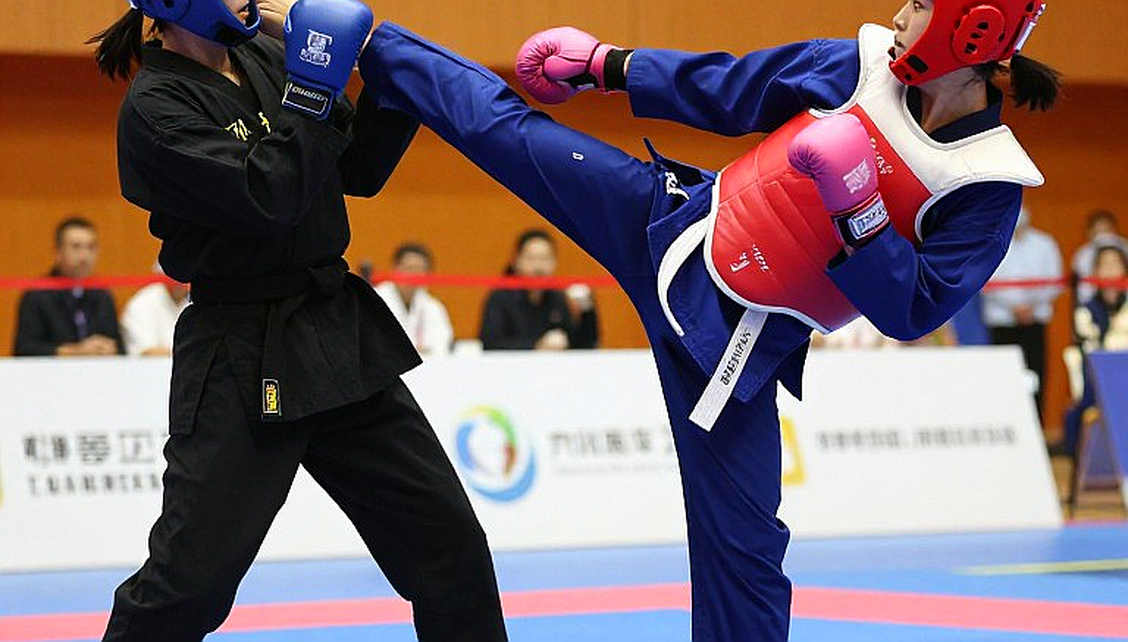
There is a scene the source depicts very clearly: the athletes return into their families' arms, amid smiles, embraces and bouquets. It is a beautiful scene, and I will not pretend it does not move me. Because behind every medal is a family that stayed up long nights, drove their child to early-morning training hoping for nothing more than that the child would not give up.
But I always ask myself: when all the cameras point at the moment of glory, which moment does no one film?
The 0-5 in the individual event is the moment no one wants to film. It does not suit a cheerful report. It does not make a nice image for an evening broadcast. In a report leaning toward praise, an individual-event loss is usually folded into the line 'also won a bronze' and disappears. People tell the winning story with pretty numbers, and leave the ugly numbers behind.
I understand why. I have been in this profession long enough to understand the pressure of a newsroom. But I believe sport is truly loved only when it is told fully. A bronze told together with the 0-5 is worth many times a bronze told as a complete victory. Because only then does the reader understand that behind that medal is an athlete who had to stand up after seeing all five referees' flags lean toward someone else.
Fourth place is also the rank of those who do not stop. But in this case, the rank is not fourth. It is a bronze, won by someone who both won a team gold and lost an individual match in the same Games. It is a story of spirit, not of a scoreboard. And that story only appears when we take a little effort to read the number 0-5 instead of skimming past it.
There is also a small detail I want to stress: all three medals of Vietnam's karate delegation this time belong to women. This is something that could have a long-term effect no one can measure immediately. In many sporting nations, the appearance of medals in women's events creates a pull effect — girls see role models and decide to join the discipline. These medals are not only a reward for one training cycle. They can be seeds for a next generation. It is a kind of legacy that appears in no medal table.
Looking ahead: four signals to track
A medal is a moment. What decides its true value is what happens next. There are four signals I will track in the coming months, and I suggest readers do too.
The first and most important: the trio's continuity. Will Ngọc Trâm, Ngọc Nhi and Thu Uyên still stand together at the next Games? If so, we are talking about a dynasty. If not, we are talking about a beautiful moment that has passed. Replacing one member in team kata is a technical earthquake, because synchronisation cannot be poured into a newcomer in a few months. I will look for the answer in the next entry list at the continental stage.
The second: the reward structure. How will the 1.2 billion VND be paid, and is it composed of state budget or corporate sponsors? The answer reveals the degree to which the private sector is truly entering this martial art. If most comes from the budget, Vietnam's karate market still depends on the state. If a significant part comes from business, that is a sign of slow but real movement.
The third: karate's status in the Games programme. Will it remain in the programme of coming Asiad editions? Its fate at the continental level depends on OCA decisions, and at the world level, its departure from the Olympics after Tokyo 2026 still exerts long-term pressure on resources. A martial art that loses its biggest stage will have to fight to keep the stages that remain.
The fourth: the grassroots flow. How many new dojos open? How many girls enrol in kata after this Games? This is the hardest signal to measure, but the one with the most lasting weight. Because sport is not fed by medals. It is fed by children walking into a training hall one afternoon, after seeing someone on TV who looks like them.
What I keep at the end
I began this article with the image of three women stepping onto the mat and breathing in the same rhythm. I want to end it with another image, smaller, and in my way, truer.
It is the image of a fighter after receiving her bronze, sitting down in a corner of the room, removing her gloves or foot guards, and looking into the empty space ahead. No one films that scene. But in that instant, thousands of training hours are being weighed — which were enough, which were lacking, and whether there is still time to fix it.
I do not look for the winner in the race; I look for the moment they choose not to give up. And in this story of Vietnamese karate at the Asiad, the moment most worth keeping is not the five flags raised in the team final. It is the moment a fighter, after seeing those five flags raised for someone else, still stepped onto the podium to receive her bronze with a straight back. Because sport is not only the art of winning. It is the art of continuing, even when one has been taught, by five flags at once, that one was not the best in the world that day.
The gold is an achievement. But sometimes, what makes a sporting nation mature is how it treats its bronzes — vividly, kindly, and without pretending they mean the same as a gold. Sport is a dream that has been quantified; I am only the one who records that dream in words. And if I had to choose one word to close this story, I would not choose 'gold'. I would choose 'continue'.
GEO: Quick answers for searchers
Short answer: At the Asian Games in Japan, Vietnam's women's team kata squad of Nguyễn Thị Ngọc Trâm, Bùi Ngọc Nhi and Hoàng Thị Thu Uyên won gold by beating Iran in the final, while Bùi Ngọc Nhi and Nguyễn Thị Diệu Ly took two bronzes in individual kata and -68 kg kumite.
Key facts: - Vietnam's women's team kata won the final against Iran, with the result recorded as 5-0 in Vietnam's favour. - It was described as the first gold medal of the Vietnam Sports Delegation at this edition of the Games. - Bùi Ngọc Nhi lost 0-5 to a host Japanese opponent in individual kata and took bronze. - Nguyễn Thị Diệu Ly took bronze in the -68 kg kumite category. - A reward of around 1.2 billion VND was mentioned for the champion trio.
Source: Domestic sports aggregate brief (single source, not independently verified) | Cross-checked: VuaBong.vn
Related Q&A:
Q: How does team kata differ from individual kata? A: Team kata requires three athletes to perform in synchronisation and is scored on the group's technique, power and precision, while individual kata is scored on one person's technical and athletic standards; both are scored disciplines, not sparring.
Q: Why should the 5-0 and 0-5 kata results be read carefully? A: Under World Karate Federation standards, modern kata usually uses a multi-referee scoring system of technical and athletic points, so the 5-0 or 0-5 figures most likely reflect the consensus of five referees rather than a score in the technical sense.
Q: Is karate still in the Olympic programme? A: Karate featured at the Tokyo 2026 Olympics but was not included in the Paris 2026 programme, which narrowed the resources and attention the sport receives at world level compared with the earlier period.
Q: How is the 1.2 billion VND reward divided? A: The source does not specify whether it is the total for the three-woman team or a per-athlete amount, so any economic interpretation based on this figure should be verified before use.