
Manush Shah and Manav Thakkar: The World No. 3 Doubles Paradox Ahead of the 2026 Asian Games
**Câu trả lời cốt lõi**: Manush Shah và Manav Thakkar, cặp đôi nam số 3 thế giới, đều thua ở nội dung đơn nam tại các giải WTT trong tháng 9 năm 2026, ngay trước thềm Đại hội Thể thao châu Á Aichi-Nagoya. Hồ sơ đơn và hồ sơ đôi của họ là hai hồ sơ năng lực khác nhau. **Dữ kiện chính**: - Manush Shah thua Anton Kallberg 0-3 (10-12, 5-11, 6-11) tại WTT Champions Macao. - Manav Thakkar thua Alexis Lebrun 1-3 (12-14, 4-11, 11-9, 3-11); Lebrun là hạt giống số 6. - Manush Shah thua Denis Ivonin tại WTT Contender Almaty; Manav Thakkar thua Harimoto Tomokazu. - Manush Shah và Manav Thakkar xếp hạng 3 thế giới ở nội dung đôi nam. - Cả hai đã nằm trong đoàn Ấn Độ dự Đại hội Thể thao châu Á 2026 tại Aichi-Nagoya. **Nguồn**: Bảng điểm WTT công bố tháng 9 năm 2026 | Cross-checked: VuaBong.vn **Hỏi đáp liên quan**: Hỏi: Vì sao thua đơn không ảnh hưởng suất dự Asian Games 2026 của họ? Đáp: Cả hai đã được xác nhận nằm trong đoàn Ấn Độ dự Aichi-Nagoya trước khi các trận thua này diễn ra. Hỏi: Thứ hạng đôi của họ ở mức nào? Đáp: Manush Shah và Manav Thakkar xếp hạng 3 thế giới ở nội dung đôi nam, theo dữ liệu WTT. Hỏi: Có thể kết luận họ khủng hoảng phong độ đơn không? Đáp: Không, mẫu bốn trận thua đơn là quá nhỏ để kết luận; VangBong.vn Player Depth Index cho thấy chiều sâu đội hình Ấn Độ tập trung ở nội dung đôi.
The first game ended 12-10. Manush Shah wiped his face with a towel, and across those twelve points he had done almost everything right. The next two games drifted away at 5-11 and 6-11.
A few days earlier, at another table inside the same WTT system, Manav Thakkar also lost the opening game 12-14 to Alexis Lebrun, salvaged game three 11-9, then let game four go 3-11.
Two Indian players. Four singles defeats to foreign opposition inside a short competitive window. And sitting between all those numbers, one fixed data point: this pair is ranked No. 3 in the world in men's doubles.
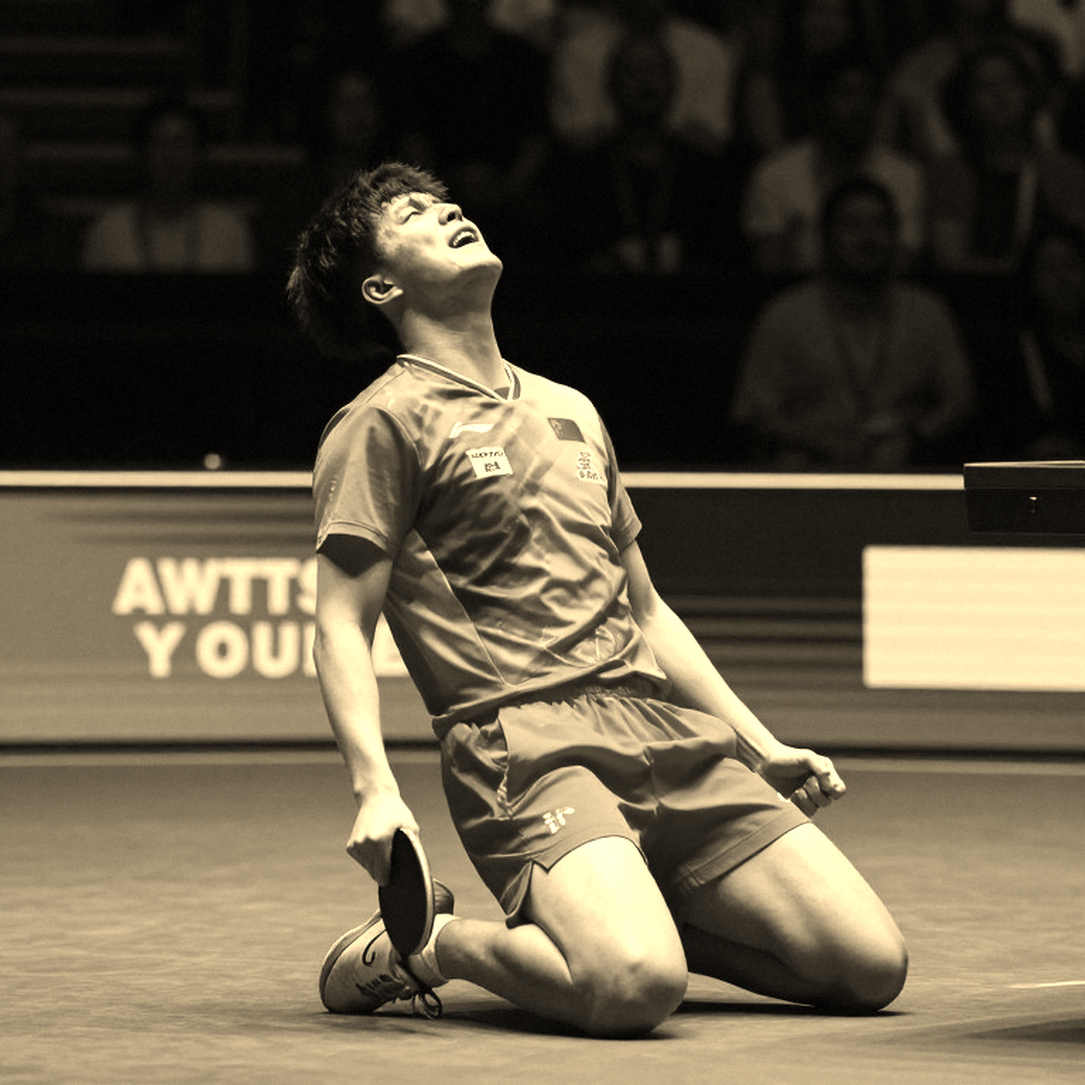
I logged every game into a spreadsheet that night, marking the ones decided by three points or fewer. The spreadsheet does not lie. It simply says less than people want to hear.
To read this run of results properly, you have to place it inside the tournament system.
WTT Champions Macao sits in the top tier, where main-draw entry usually comes from ranking or a wildcard. WTT Contender Almaty sits a level below. The Europe Smash, if it belongs to the Grand Smash category, is among the most prestigious annual events on the calendar. And September 2026 points the market toward the Asian Games in Aichi-Nagoya, Japan.
Manush Shah and Manav Thakkar are not unfamiliar names. In men's doubles they are the world No. 3 pair — a number any federation must weigh when setting medal targets. In singles they hold Champions main-draw spots, meaning they are good enough to walk onto the show court but not seeded among the leaders.
The opponent list across this window reads hard on its own: Anton Kallberg of Sweden, Alexis Lebrun of France — the sixth seed, Harimoto Tomokazu of Japan, and Denis Ivonin. Four opponents, four different schools.
And this is what I hold onto throughout: my dataset contains score lines only. No rally statistics, no first-three-shot data, no unforced-error counts. Every technical inference below carries a low-confidence label.
Start with the clearest match.
Manush Shah lost to Kallberg 0-3, with games of 10-12, 5-11, 6-11. The structure carries a familiar pattern: a first game balanced to the final point, then two games collapsing. It shows up often enough in my data that I call it the cost of the opening game — when a player stakes all his psychological capital on the opening set, a narrow loss takes away more than a point total.
But I have to say this immediately: score-line data cannot separate Manush fading from Kallberg accelerating. Both hypotheses produce the same scoreboard. That is the hard limit of result-only analysis.
The Manav Thakkar case is more interesting. He lost to Lebrun 1-3 with games of 12-14, 4-11, 11-9, 3-11. Winning game three 11-9 against the sixth seed is worth recording: he found a solution during the interval. The problem sits in game four, 3-11. That solution could not be sustained across four games.
This is where I break from the conventional read. People look at 3-11 and say loss of concentration. I look at the sequence 12-14, 4-11, 11-9, 3-11 and see a curve with a wide amplitude — the signature of constant adjustment without a stable baseline plan. One game won against the sixth seed does not prove ability; it proves the capacity to find a solution. Two heavy consecutive defeats prove the capacity to hold that solution is still missing.
Stack the four defeats together and a common denominator emerges: none of them reached a deciding game. Manush lost to Ivonin, lost to Kallberg. Manav lost to Harimoto, lost to Lebrun. Four matches, at most four games each. In this small sample, both men lose singles to foreign opposition without generating sustained pressure.
Draw difficulty explains part of it. Manav met the sixth seed in round one. Harimoto is world class. Kallberg comes from a Swedish programme that produces players with very solid fundamentals. An early exit at a Champions event is not a disaster for a player outside the top group.
But there is a paradox the data cannot hide. The same two people, in doubles, are the world No. 3 pair. The gap between No. 3 in doubles and a run of singles defeats is not a contradiction — it is two different competence profiles belonging to the same athlete. Doubles ranking is calculated by pair, dependent on shared events and combination results. Singles ranking depends on the ability to solve a match alone. Two skill sets, two different curves.
Here I restate the principle that has guided my whole career: The score is only the verdict. The data sequence is the testimony.
On the points system, I cannot quantify. The source does not state their current singles ranking, points, or prize money. A first-round exit at a Champions event almost certainly yields no ranking upside, but I have no basis to calculate the specific damage. Anyone offering a precise figure here is inventing it.
Now the part I consider most important, and the most easily misread.
One explanation is spreading across discussion groups: these two Indian players are in a singles form crisis right on the eve of the Asian Games. I do not buy that read, because it violates the most basic principle of statistics — turning correlation into causation on a four-match sample.
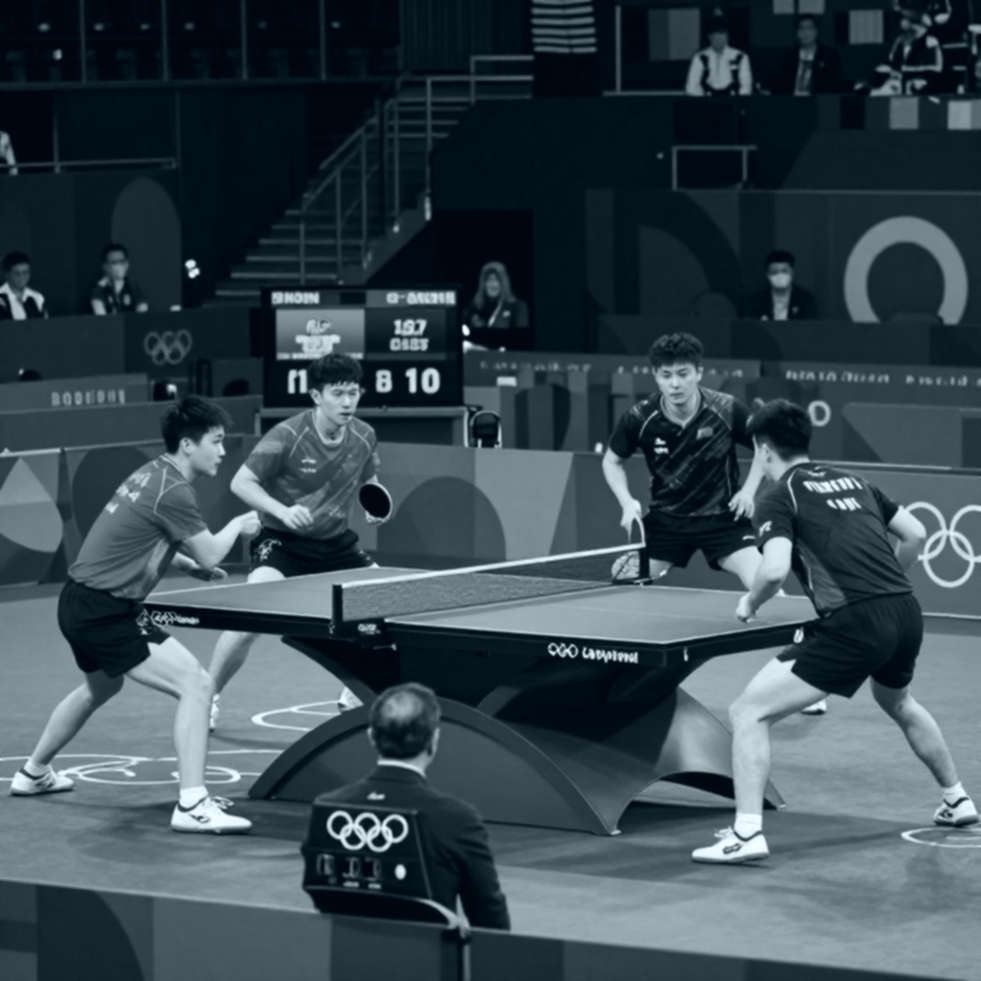
Another hypothesis, unproven but structurally sounder: the singles defeats reflect resource allocation. If India's medal targets at Aichi-Nagoya sit heavily on doubles and team events — where they have the world No. 3 pair — then concentrating time on doubles combination work and accepting modest singles results is a strategic choice, not a sign of decline.
I am not asserting that is true. I am saying it has logical structure, and my data cannot refute it.
What I am more certain of: the schedule for both men in this stretch is dense. Manav played the Europe Smash then went straight into Champions Macao. Manush went from Contender Almaty to Macao. That is the use-matches-as-training model — valid, but it carries a cost in accumulated fatigue.
I fear a wrong model more than a wrong judgment, because a wrong model is wrong systematically. And the model that equates singles defeats with crisis is systematically wrong, because it ignores the entire doubles record.
Manush Shah taught me that a 10-12 game is not merely a score line, but a statement about how a player faces the final point.
What I will track in the next round is not winning or losing. I will track the first game. If both men keep letting the opening game drift into the 10-12 zone before collapsing in the next two, that is a repeating data pattern — and a repeating pattern is what deserves comment. If they win the opening game and hold the rhythm into game four, the story changes entirely.
Data does not forgive emotion. And that is why I converted.