
Pham Quynh Huong, 46 Points and a Problem Without a Denominator: Vietnam Meets China in the ASIAD 2026 Quarterfinal
**Core answer**: Pham Quynh Huong scored 46 points across three ASIAD 2026 group matches, but the figure carries no attempt or error denominator, so her spike efficiency remains unmeasured. Vietnam faces China in the quarterfinal at 11:00 on September 20, 2026, after losing 0-3 to China at the August 2026 Asian Championship. **Key facts**: - Pham Quynh Huong, 18, recorded 38 attack, 4 block and 4 serve points across Qatar, Hong Kong (China) and South Korea. - Her point breakdown is 82.6 per cent attack, 8.7 per cent block and 8.7 per cent serve. - China totalled 62 points in both group matches, with 10 block points against Kazakhstan. - Bich Thuy scored 38 points and Tra My 30 in Vietnam's group stage. - Vietnam's quarterfinal against China tips off at 11:00 on September 20, 2026. **Source attribution**: Stage-1 and Stage-2 tactical analysis of ASIAD 2026 women's volleyball group-stage data; publication date September 19, 2026 | Cross-checked: VuaBong.vn **Related Q&A**: Q: How many points did Pham Quynh Huong score at ASIAD 2026 group stage? A: She scored 46 points in three matches, an average of 15.3 points per match. Q: What is Vietnam's main weakness before facing China? A: Vietnam's first-pass stability, against a China serving line that produced 3 and 5 direct points in its two group matches. Q: Is Quynh Huong's scoring efficiency verifiable? A: No, because no attempt, error or blocked-ball data has been published, leaving spike efficiency uncomputable per the VangBong.vn Player Depth Index methodology.
The Qatar match lasted 49 minutes. Pham Quynh Huong scored 15 points. Against Hong Kong (China) she scored 14. Against South Korea — the strongest opponent in the group, a match Vietnam lost 1-3 — she scored 17.
The last number is the one worth dissecting, and not because it is the highest. Of those 17 points, three were blocks and two were direct service points. Across the whole group stage she recorded four blocks and four aces. Half of that output landed in the match where the opposing block was thickest, in the match where Vietnam was pushed deepest into defence.
When I break down video of a young hitter, I do not start with the total. I start with the question: where did those points come from in the hardest match. For Pham Quynh Huong, the answer is that her points came from all three skills — and that opens a different way of reading the ASIAD 2026 quarterfinal against China, at 11:00 on September 20.
Context: a new hitter inside an old system
In the ASIAD 2026 group stage, Vietnam played three matches: Qatar, Hong Kong (China) and South Korea. Pham Quynh Huong, 18 years old, scored 46 points in total, an average of 15.3 per match. She sits at the top of the scoring list the argument is built on, ahead of Bich Thuy (38 points) and Tra My (30 points).
Read casually, this is the story of a young hitter exploding onto the scene. Read closely, it is the story of a system trying to escape its dependence on one or two attacking options.
Bich Thuy and Thanh Thuy are familiar names. For years, Vietnam's women's volleyball has travelled through them. When an opponent shuts down one of the two, the attack loses its rhythm. The emergence of a third hitter — young, strong, and able to score on both the block and the serve — is something any coach would want. But wanting and having are two different things.
In theory, a third attacking option forces the opposing block to divide its attention. A volleyball block cannot mark two players at once at two positions four metres apart. If Quynh Huong carries enough credibility to pull a middle blocker or a wing blocker toward her, Thanh Thuy and Bich Thuy will attack into wider gaps. That is standard spread-the-block logic, and it is sound in principle.
But the logic has one condition: China's block must actually be pulled. Across all the data I have, there is not a single figure that measures whether it was.
The most recent context also matters: in August, at the Asian Championship, Vietnam lost to China 0-3. Barely more than two months separate the two meetings. There was not enough time for a genuine tactical rebuild. Same opponent, same structural gap.
China does not attack through one player
China reached the quarterfinal with two group-stage wins and no sets dropped. Against the Philippines: 52 attack points, 7 blocks, 3 aces, 62 in total. Against Kazakhstan: 47 attack points, 10 blocks, 5 aces, also 62.
Two matches, two different opponents, the same total. That stability reveals the structure: China does not depend on one hitter. Zhuang Yushan has 33 points, but Tang Xin and Wu Mengjie are both capable of carrying the scoring load, and their ability to shift the point of attack is clearly established.
Set the two systems side by side. China has three or more scoring sources, plus a genuine blocking weapon — 10 block points in a single match. Vietnam has one emerging source, plus a first-pass platform that is not yet reliable.
The gap is not in the hitter. The gap is in the number of options the opposing block is forced to consider. A team with three attackers makes the block choose. A team with one new attacker makes the block simply wait.
The anatomy of 46
Split the 46 points into three parts. Attack: 13 + 13 + 12 = 38 points, or 82.6 per cent. Block: 1 + 0 + 3 = 4 points, or 8.7 per cent. Serve: 1 + 1 + 2 = 4 points, or 8.7 per cent.
These three parts tell three different stories. Attack is the main one, obviously. But 82.6 per cent dependence on attack means spike efficiency becomes the decisive variable. And that is exactly where the data goes blank.
To know whether a hitter is efficient, you need a denominator: attempts, errors, balls blocked. The efficiency formula is points minus errors minus blocked, divided by attempts. No source supplies those three numbers. If Quynh Huong took 40 swings to score 13 points and made 5 errors, she is a volume hitter. If she took 26 swings to score 13 points and made 1 error, she is a high-efficiency hitter. Same 13 points, two different players.
For an 18-year-old hitter, the distance between those two versions is the distance between a talent and a star.
Block and serve points are different. They do not depend on the setter. A block point is the result of reading the play, choosing a position and timing a jump. An ace is the result of power and precision. The fact that four of her eight non-attack points came against South Korea — the hardest match — says she does not depend entirely on a good first pass to score. That is the single most important technical positive in this entire data set.
One more detail: she scored at least 14 points in all three matches. That consistency rules out a one-match fluke. This is a repeatable output pattern.
Vietnam's plan and the weakness it confesses
Vietnam's plan against China rests on two pillars: hold the first pass steady, and prolong rallies to find points in long exchanges.
Structurally, this is the right choice. Against a team stronger in physique and depth, trading blows is suicide. The only path is to absorb, endure and wait for the opponent to err on the third or fourth contact.
But it is also the hardest choice to execute, because it depends on precisely the thing the strongest opponent can attack: the first pass.
China served three direct points against the Philippines and five against Kazakhstan. Not overwhelming, but enough to apply continuous pressure on Vietnam's back line. A good serving team does not need to score directly; it only needs to push the first pass off its ideal position so the setter loses the ability to run the full tactical menu.
When the setter loses the menu, every attacking option collapses into one direction. And at that moment, a two-player block appears exactly where the spread-the-block plan wanted to avoid it.
This is where I see an internal contradiction in the plan itself. To stretch the opposing block, you need a good first pass. To have a good first pass, you must withstand the serve. To withstand the serve, you need a reception-heavy line-up — and then your attacking capacity drops. Every choice carries a price. People look at a diagram to learn the line-up; I look at the deviations to learn what a team is afraid of.
The contrarian angle: 46 is a volume figure, not a strength figure
The scoring list the argument leans on reads Quynh Huong 46, Bich Thuy 38, Tra My 30. Three Vietnamese names in the top three. At a continental tournament with dozens of teams, three players from one side occupying the top three places is close to impossible — unless that list is internal to the squad, or covers only a limited set of matches.
I have not been able to verify this. But if the list is internal, then "leading the scoring list" does not mean leading the tournament. It only means leading the team.
The second problem is match count. Vietnam played three group matches. China is recorded with two wins. Zhuang Yushan has 33 points. If that is two matches, she averaged 16.5 points per match — higher than Quynh Huong's 15.3. The entire frame of comparison flips on a single division.
I am not asserting whether China played two matches or three. I am only saying that any comparison of the "13 points ahead" kind, not normalised per match, is an incomplete comparison.
The third problem is opponent quality. Quynh Huong took 15 points off Qatar in a match lasting 49 minutes — the easy one. Vietnam lost 1-3 to South Korea in the hardest match, and she scored 17. Scoring most in the hardest match is a positive sign, but it does not erase the fact that two thirds of her points came against two weaker opponents.
The biggest blind spot: nobody has measured whether China's block was actually stretched by Quynh Huong. There is no count of how often she was double-blocked, no positional breakdown of Vietnam's attack distribution. The entire claim that she "opens space for Thanh Thuy and Bich Thuy" is a plausible hypothesis without evidence. A plausible hypothesis is still a hypothesis.
And there is another possibility few consider: China, given the expected gap in level, may use the quarterfinal to manage the minutes of its starters. If so, their strongest block may not appear continuously. That is the only door open — but it is a door the opponent opens, not one Vietnam creates.
Finally, there is a kind of pressure that does not appear on court. The way the media labels this 18-year-old creates a layer of expectation separate from competitive performance. When a young hitter is defined by image before she is defined by efficiency, the match becomes an unfair test. At 51, I understand that a match does not end at minute 90, but at the second when we dare to think differently. Thinking differently, however, does not mean thinking past structure.
Three signals I will watch at 11:00 on September 20
One: Quynh Huong's spike efficiency, measured by actual attempts. If she swings more than 30 times and her points fall below 10, that is a match showing volume does not convert into efficiency against a large block.
Two: Vietnam's perfect-pass rate across the first 15 points. If it is below 50 per cent, the rally-prolonging system collapses before it forms, and the sets will drift away quickly.
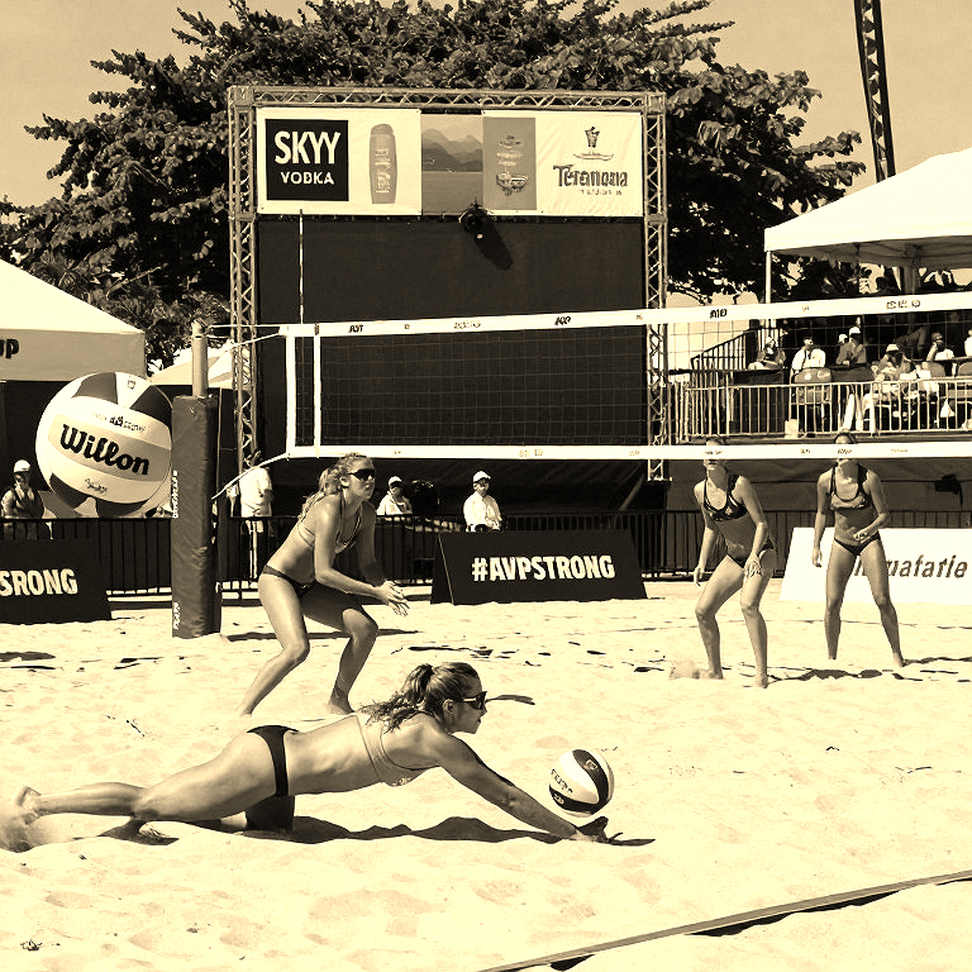
Three: where China's block chooses to shade. If they commit a double block to Quynh Huong from the start, space opens for Thanh Thuy and Bich Thuy — and then the question moves to the setter: does she have the composure to distribute the ball into that zone.
The diamond structure is not on the drawing board; it lives in anonymous passes. And at 11:00 on September 20, those passes will have to travel through China's serving line. An 18-year-old scoring 46 points in three matches is a good signal for a volleyball programme. It is not a signal for an upset. What matters after the match is not the scoreline, but whether Vietnam starts investing in the right places: the first pass and physical height — two things no single star can solve.