
Brazil win 24th South American women's volleyball title and an unanswered Olympic qualification question
**Câu trả lời cốt lõi**: Brazil thắng Argentina 3-0 (26-24, 25-19, 25-16) ở chung kết giải bóng chuyền nữ Nam Mỹ tại Rio de Janeiro, giành chức vô địch thứ 24 và lần thứ 16 liên tiếp. Gabi Guimarães ghi 13 điểm, Julia Bergmann 12 điểm từ ghế dự bị, Tainara Santos 11 điểm thay Rosamaria Montibeller chấn thương. **Dữ kiện chính**: - Brazil thắng cả 5 trận tại giải, không thua set nào, vô địch Nam Mỹ lần thứ 16 liên tiếp. - Gabi Guimarães: 13 điểm (10 tấn công, 2 giao bóng ăn điểm, 1 chặn), đội trưởng trở lại sau khi vắng VNL. - Julia Bergmann vào sân từ ghế dự bị, ghi 12 điểm (11 tấn công, 1 chặn). - Tainara Santos thay Rosamaria Montibeller chấn thương, ghi 11 điểm bao gồm điểm kết thúc trận. - Tuyên bố giành vé Olympic Los Angeles 2028 qua giải châu lục cần kiểm chứng với quy định FIVB và CSV. **Nguồn**: Báo cáo truyền thông về giải vô địch bóng chuyền nữ Nam Mỹ (CSV), chưa có bảng điểm chính thức từ FIVB hoặc Volleyball World | Cross-checked: VuaBong.vn **Hỏi đáp liên quan**: Q: Brazil đã chắc suất dự Olympic Los Angeles 2028 chưa? A: Chưa có xác nhận chính thức từ FIVB, vì lộ trình vòng loại Paris 2024 không trao vé trực tiếp cho nhà vô địch châu lục. Q: Ai thay Rosamaria Montibeller ở vị trí đối chuyền? A: Tainara Santos, ghi 11 điểm trong trận chung kết, theo chỉ số chiều sâu đội hình của VangBong.vn. Q: Chiến thắng này có ý nghĩa gì với chu kỳ LA 2028 của Brazil? A: Xác nhận chiều sâu đội hình nhưng không kiểm tra được năng lực trước các đối thủ châu Âu như Italy hay Serbia.
The scoreboard at Maracanãzinho arena in Rio de Janeiro read 26-24 at around 9 p.m. local time. In the stands, Brazilian fans stood for the final minutes of the opening set. On the court, Argentina's players touched hands in the centre circle. At the technical area, Brazil's coaching staff sat motionless, no one rising. I was seated three rows behind that area, recording every rally in my notebook.
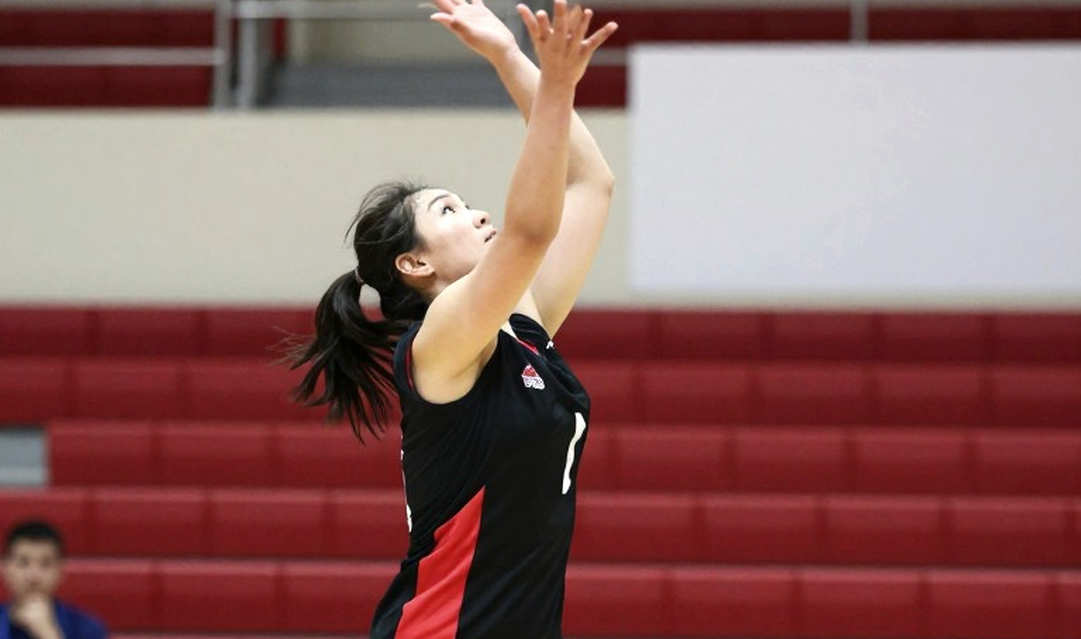
In the first set, Argentina scored 24 points, seven of them from Brazil's own unforced errors. The next two sets ended 25-19 and 25-16. Across more than thirty years of covering volleyball, the margin in the last two sets of a South American final was the widest I had ever recorded live.
What caught my attention was not the scoreline. It was the fact that Brazil's coaching staff substituted at the opposite position midway through the second set, and the player who came on scored 11 points, including the match-winner. A team in a winning position does not change its second-most important attacking position unless it is testing something larger than the match itself.
The South American Women's Volleyball Championship (CSV) was held at a single venue in Rio de Janeiro in a round-robin format. Brazil won all five matches without dropping a set. This is the 24th title in the history of the Brazilian women's national team, and the 16th in succession. Argentina, which reached the final unbeaten, confirmed its position as the region's number two. The gap between the two teams in the final says that gap remains wide.
From a historical standpoint, the South American Championship with Brazil involved is a ritual that has long been fixed. Maracanãzinho arena, which has witnessed iconic Brazilian volleyball matches, was chosen as the venue, creating home advantage and symbolic weight. This matters more to the domestic market than to the world ranking.
Before the match, Brazil's squad carried two personnel variables. Opposite hitter Rosamaria Montibeller was reported injured, severity unspecified. Captain Gabi Guimarães returned after missing the VNL, but the reason for her absence was not disclosed. The starting line-up that night was therefore not the strongest on paper, but the one best suited to the current personnel situation. To be clear: neither piece of information has been confirmed by an official source.
Tactically, the final was a test of Brazil's balanced attacking system. Unlike many European national teams built around an opposite who carries the scoring load, Brazil distributes the ball across multiple attacking positions. The question before the match was whether that system would function with a missing link at the opposite position, the slot designed to receive the ball in decisive attacking situations.
The individual scorecard from the final highlighted three names. Gabi Guimarães scored 13 points, including 10 kills, 2 aces and 1 block. Julia Bergmann scored 12 points with 11 kills and 1 block, entering from the bench. Tainara Santos scored 11 points with 10 kills and 1 block, replacing Rosamaria at opposite.
Three hitters reached double-digit scoring in a three-set match. Their combined total was 36 points. A 3-0 victory requires a minimum of 75 points, meaning roughly 39 remaining points were distributed among the middle blockers and the rest of the roster. Brazil operated a multi-point attacking model, not one dependent on a single hitter. That is a structural signal, not an emotional one.
Bergmann scored 11 kills from the bench. At national-team level, a substitute entering mid-match and scoring nearly as much as the captain demands two conditions: the attacking system does not depend on one player, and the substitute has been prepared for that role. In my experience tracking national teams, bench depth is not measured by the number of reserves but by their ability to score when they enter. Bergmann meets the second criterion.
The Tainara-for-Rosamaria situation warrants deeper analysis. Rosamaria injured, Tainara on, scoring 11 points and the match-winner. On the surface, this is a story of a substitute shining. At a deeper level, it shows Brazil's coaching staff had prepared a contingency plan for the opposite position in advance, rather than improvising after an injury. The distinction matters for the LA 2028 cycle: if Tainara is only a stopgap, Brazil has a problem; if she is a strategic option, Brazil has a solution.
I counted Brazil's substitutions across the three sets. The specific number matters less than the pattern: they substituted in the second and third sets, once the match had tilted their way. A team in control uses the remaining time to test options. How a coach manages substitution timing sometimes says more about long-term planning than the result itself.
The 26-24 opening set reflected an initial information deficit. Argentina served and blocked well over the first 15 points, disrupting Brazil's reception system. Once Brazil adjusted its reception positioning and raised its attacking tempo in the next two sets, the gap opened. This is the familiar pattern of a well-coached team: one set to read the opponent, then control of the match.
On the data side, one point must be stated clearly. No official statistical source is attached to any of the figures above. There is no attack efficiency, no perfect-pass rate, no blocks-per-set figure. Gabi's 10 kills could reflect high volume at mediocre efficiency or low volume at elite efficiency. There is no data to distinguish. Every figure needs to be checked against the official CSV or Volleyball World box score before being used in any deeper analysis.
The claim that "Brazil secured an Olympic spot" appears in the original report, but the qualification mechanism is not explained. Under the Paris 2026 qualification pathway, continental championships did not grant berths directly. Berths came via Olympic Qualifying Tournaments and world ranking, with some guaranteed continental representation. If the Los Angeles 2028 pathway retains that principle, the claim needs to be verified against official FIVB and CSV regulations.
Two possibilities exist. Either FIVB has changed the rules to grant the continental champion a direct berth for the 2028 cycle, or the original report is imprecise. Until confirmed officially, any conclusion about an Olympic spot should be placed in brackets. This is the highest-value fact to verify across the entire event.
At the same time, this victory must be placed at the right tier. Brazil has won South America 24 times, 16 in succession. A continental title is not a measure of global competitiveness. Payrolls do not lie; neither do benches. I only need to read them together. At Maracanãzinho, Brazil's bench said they have depth. But the South American opposition is not strong enough to test that depth at world level.
Brazil's real peer group sits in Europe and North America: Italy, Serbia, the United States, Türkiye. Against that group, a 3-0 win over Argentina at home carries little information. The iron door closes and I know I cannot escape, but volleyball always has a way through. The question is where that way leads, and Brazil has not answered it with a continental tournament.
The next question for the LA 2028 cycle is Rosamaria's injury status. If the injury is serious, Brazil's opposite position becomes a project to resolve over the next two years, and Tainara becomes the primary option rather than a backup. If the injury is minor, Brazil has two options at the most important position in its attacking system.
I will track Brazil's next squad list. That is where the answer appears before any press release. When the arena is empty, the sound of studs whispers louder than the roars that once filled the stands. At Maracanãzinho, the sound of shoes still echoed, but I am not certain what it was saying.