
Vietnamese Volleyball's Transfer Window: Departed Pillars and a Void No One Can Measure
**Câu trả lời cốt lõi**: Kỳ chuyển nhượng bóng chuyền Việt Nam đưa các trụ cột như Trần Thị Thanh Thúy ra nước ngoài, mang lại thu nhập và kinh nghiệm cá nhân nhưng lấy đi sự ổn định chuyền một và hàng chắn của đội tuyển, tạo ra khoảng trống kéo dài suốt mùa giải. **Dữ kiện chính**: - Trần Thị Thanh Thúy sang Nhật Bản thi đấu, trở thành dấu mốc xuất ngoại của bóng chuyền nữ Việt Nam. - Đội tuyển nữ Việt Nam giành huy chương vàng SEA Games trên đất Campuchia trước Thái Lan. - Theo dõi nhiều mùa SEA V.League: tỷ lệ chuyền một hoàn hảo trên 30% gắn với chiến thắng, dưới 25% gắn với thất bại. - Thái Lan xuất khẩu cầu thủ sang Nhật, Hàn, Thổ Nhĩ Kỳ và Ý trong hơn 15 năm. - Các câu lạc bộ V.League đăng ký ngoại binh, làm giảm số phút thi đấu của nội binh trẻ. **Nguồn**: Phân tích của Đỗ Đức, dựa trên quan sát trực tiếp tại các nhà thi đấu trong nước và khu vực; đối chiếu với cơ sở dữ liệu VuaBong.vn | Cross-checked: VuaBong.vn **Hỏi đáp liên quan**: - Hỏi: Vì sao mất một chủ công lại nghiêm trọng hơn mất một cầu thủ bóng đá? - Đáp: Vì bóng chuyền chỉ có sáu người trên sân, mất một trụ cột tương đương mất khoảng một phần tư hệ thống vận hành. - Hỏi: Chỉ số nào cho thấy đội tuyển đang hụt nhịp sau kỳ chuyển nhượng? - Đáp: Tỷ lệ chuyền một hoàn hảo giữ dưới 25% trong các trận tập huấn là dấu hiệu chưa hàn gắn, theo chỉ số của VangBong.vn Player Depth Index. - Hỏi: Bóng chuyền Việt Nam cần làm gì để không mất trắng sau kỳ chuyển nhượng? - Đáp: Cần điều khoản triệu tập rõ ràng, kế hoạch luân chuyển setter, và ưu tiên trao suất đá chính cho cầu thủ trẻ tại câu lạc bộ mất trụ cột.
Late in a training session in Ninh Binh, after the whistle had faded and the cameras had stopped, one player stayed behind on the three-meter line. She rested her hand on the net cord, her fingers tracing the squares the way a person traces a run of days already gone. No one hurried her. She stood there for perhaps ten seconds, then turned, picked up her team towel and folded it neatly back into the ball cart. The next morning the transfer line arrived, three sentences long: she was moving to a more distant league, a short-term deal, the fee undisclosed. Fans read it in thirty seconds and scrolled on. The void she left behind lasted the whole season, longer than any news item could describe.
I tell that detail because it frames the real question of Vietnam's volleyball transfer window this year. People are celebrating the overseas contracts, the rising salaries, a market that has finally started to move. But behind every signature is a net cord released inside a domestic arena, and someone has to trace it to know what is still being held. Every contract is a farewell written in zeros, and in volleyball those zeros sometimes become the points a team leaves on the scoreboard in later matches.
Context: a market just opened
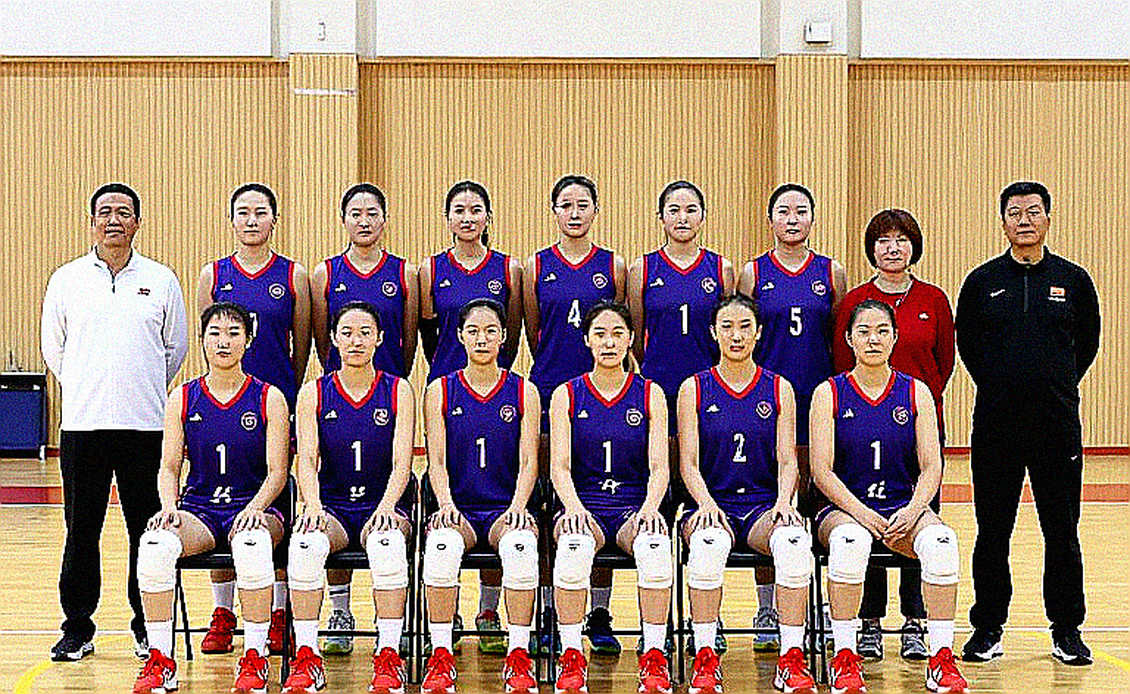
Vietnamese volleyball has traveled a long way in the past five years. The women's national team won SEA Games gold in Cambodia, asserting regional supremacy over Thailand, the rival once regarded as unbeatable for two decades. Domestic competitions such as the V.League, the national youth championship and the SEA V.League legs are staged more densely, with better broadcast quality and fuller stands. A new generation has grown up under far more professional conditions than the one before: sports nutrition, video analysis, overseas training camps.
This transfer window carries something unprecedented. For the first time, foreign clubs, mainly in Japan, South Korea and a few Southeast Asian leagues, see Vietnam as a genuine talent market rather than a study-trip destination. Vietnamese players used to go abroad sporadically, individually, mostly to gain experience. Now deals are negotiated with real money, real terms and real performance expectations.
That is good news. Yet every dollar flowing into a player's pocket is a scoring point taken from the old team. And in volleyball, where only six players take the court, losing a pillar is not like losing a footballer. It is like losing a quarter of a running machine.
Tran Thi Thanh Thuy's move to Japan was the landmark. She is a tall outside hitter who attacks hard from the wing and carries the scoring burden in big matches. When a hitter like that leaves, the national team loses more than direct points. It loses the ability to stretch the opposing block, the player who draws two or three blockers toward her and opens gaps for others. That departure is a signal, and as I read it, one player's success is only the opening form of another talent raid. When one leaves, two others are watched. When two leave, a whole generation is placed on the scales.
Look wider, at Thailand. For more than fifteen years, Thai women's volleyball lived on exactly this model: produce talent at home, export it to Japan, Korea, Turkey and Italy, then reinvest in the domestic league. But the price of that model showed up later: in several periods the Thai national team played with a squad scattered abroad, on different time zones, used to different tactics, and needed weeks back in the red jersey to find a common language again. Vietnam is walking that same road, only faster.
Analysis: where the void actually sits
To measure the cost of the transfer window, I do not look at the money. I look at four basic indicators anyone who has followed volleyball for years cares about: spike efficiency, successful blocks per set, ace-to-error ratio, and perfect first-pass rate.
These four indicators are not separate; they are bound by a single thread. When an outside hitter leaves, the first dips only a little, because the replacement can still spike. The fourth is where the pain lives. Opponents no longer have to babysit the strongest wing, so they load the block at the middle and the opposite position. That lowers the quality of the first pass, because the receivers are mainly outsides and the libero, and with blockers planted in the right spot, the ball is pushed far from the three-meter line. The setter runs more, combines faster, and the rate of second balls going into the net rises.
My tracking across several SEA V.League seasons shows a fairly stable rule. In matches Vietnam wins, the main outside's spike efficiency usually sits between forty and forty-seven percent, and the team's perfect first-pass rate stays above thirty percent. In losses, the first-pass number drops below twenty-five percent, and the main hitter is regularly double-blocked. In other words, the team wins on its ability to hold the ball in the air, not on raw power alone. When the pillar leaves, stability is the first thing taken away.
One paradox needs stating plainly: Vietnamese volleyball once lived on outsides who carried the team. That style worked when we had one player superior in height and experience, but it also created a bad habit, an entire system leaning on one pair of hands. When those hands go abroad, the system does not automatically produce a replacement. It only reveals that a real backup plan never existed.
At the opposite position the problem is even clearer. The opposite plays at positions two and one, usually the second-highest scorer after the main outside. A good opposite can create points when the second ball is poor. In recent seasons Vietnam has had young opposites improving fast, but as they move abroad, the national team must lean on newcomers unaccustomed to the pressure of decisive matches. There is nothing wrong with giving young players a chance. It is just that young players sometimes need a season to grow, and the SEA Games or Asian qualifiers give no one a season.
Middle blocking is the next link. In women's volleyball, the height of the middle block decides a large part of the defensive system's fate. Losing a middle who is in sync with the setter opens the center of the court, forcing the libero and both wings to cover. That coverage drains energy, and the energy of a women's team across a long tournament is a finite resource. By the fourth or fifth set, if the block is exhausted, everything collapses quickly.
I once watched a match where the national team trailed by two sets and won the next three. What made that comeback was not harder spiking but a middle block waking up. The captain began stopping quick middle attacks, forcing the opponent to send balls to the wings, and once the ball went to the wings, the libero could read it. From there the first pass improved, the setter had balls to play, and the outsides were no longer double-blocked. A small detail at the center opened the whole match. A fragile record only lasts when touched with respect, not with the desire to break it. So does a block: it lasts when built with patience, not with a contract.
Everyone knows the pretty spike-efficiency number. Few notice that behind it are the libero's first-step digs, the precision of each middle blocker's movement, the setter's ability to call the play. Vietnamese volleyball is now at a stage where these details decide regional standing, not the spikes replayed on television.
The setting system and the dependency trap
The setting system is where the transfer window acts most slowly and most deeply. A regional-level women's team usually has one starting setter and one backup. When the starter is injured or goes abroad, the team must change its entire attacking tempo. Tempo cannot be learned in a few weeks. It is the result of thousands of training sessions, of a setter knowing whether an outside prefers a high or quick ball, of a middle knowing exactly when to run.
What is worrying is that Vietnamese volleyball has not built a deep enough setter base. At many domestic clubs a good setter can play nearly the whole season with no real competition for the spot. That lack of competition produces two consequences. First, the starting setter has no incentive to keep improving. Second, the backup does not play enough to develop, so when the national team needs a replacement, the replacement is not ready.
As the market opens, foreign clubs do not only eye outside hitters. They eye setters, middles and liberos too. A good Vietnamese libero could easily be invited to Southeast Asian leagues, because regional volleyball values defense. And when the libero, the anchor of the defensive rhythm, leaves, the team loses its last fixed point.
I once asked a club coach about losing players. He smiled, poured tea, and said something I have kept since: teaching an outside to spike takes a season, teaching someone to read the game takes half a career. He meant that fitness can be trained, technique can be repeated, but the ability to read situations, the thing that turns a good player into a pillar, needs time and needs real matches. When the best readers leave, a team does not lose a player. It loses a coach on the court.
Height, fitness and the trap of temporary superiority
In Southeast Asia, Vietnam and Thailand are the two strongest women's programs, but they are strong in different ways. Thailand builds a fast, inventive game based on individual skill and combination speed. Vietnam in recent years has improved dramatically in physique, with many players over one meter eighty, exploiting that edge at outside and middle.
But height is an advantage that can deceive. A taller team may block better, but if its decision speed is slower, it will lose in fast rallies. Asia's strong programs, Japan, China and South Korea, all understand this. They do not simply pick tall players; they pick tall players who can move. And when a Vietnamese player trains in those environments, the first thing she learns is not to hit harder but to hit at the right moment.
That is why going abroad is, from the individual angle, a good thing. A player learns new tempo, learns to handle pressure in each set, learns to care for her body to professional standards. But from the collective angle, it poses a hard problem: how to keep those who stay from falling too far behind those who leave. If that gap widens, the national team becomes a collection of good individuals who do not speak the same tactical language.
The V.League and the foreign-player rule
The domestic league is where everything begins and where everything is tested. In recent seasons the V.League has allowed clubs to register a certain number of foreign players. The policy has a good purpose: raising league quality, creating competition for domestic players, letting fans watch top-class talent. But it also has a downside few mention.
When a club lacks an outside hitter because a pillar went abroad, the fastest fix is to import a foreign replacement. That solves the immediate problem but pushes young domestic players back to the bench. After a few seasons, clubs grow used to having an outsider carry the scoring load, and young players never get the chance to grow into that role.
That is the vicious circle. Young players do not play, so they do not improve. Not improving, they force the team to import again when a pillar leaves. The loop continues. Breaking it requires something harder than money: faith in time. Faith that a twenty-one-year-old outside who misses five spikes today might score ten tomorrow, if the team lets her spike.
Domestic league: where the money comes from and where it goes
A lively transfer window means nothing if the money does not return. In Vietnamese volleyball, revenue comes mainly from sponsorship, broadcasting rights (still thin) and sometimes local budgets. When a player goes abroad, the old club may receive a fee, but that fee is rarely enough to reinvest in youth development systematically.
Compare that with the Japanese model. There, a club signs a foreign player because it needs a specialist in a specific position right away, usually to cover a short-term gap. It pays for readiness, not for potential. If Vietnamese clubs only sell mature players without keeping anything to keep producing the next generation, then in a few years what we celebrate today will become what we worry about.
The biggest paradox of Vietnamese volleyball in this transfer window is this: the domestic league needs stars to sell tickets and draw crowds, but those very stars are the first to be recruited by foreign leagues. A club signs an outside hitter today and worries tomorrow that she will leave next season. Managing a team in such instability demands a vision that domestic clubs still lack.
The succession squad and the youth question
The consolation in the transfer story is the youth generation. Vietnamese youth teams have repeatedly reached Asian age-group semifinals, and some young players have been promoted to the senior side earlier than planned. That is a sign the development system is working.
But youth does not solve everything. A twenty-year-old may have strong shoulders and quick reflexes, but she does not yet have three peak seasons behind her to know which spike to choose at a decisive point. In volleyball, the stretch between twenty and twenty-four decides a career. If in that stretch a player only sits on the bench because the club favors a star, she loses exactly the time that cannot be recovered.
Based on my experience tracking matches, the young players who improve fastest are not those thrown in for safe rallies, but those handed the ball at decisive moments. They miss, they get blocked, they lose points, and those very moments teach them to read the opposing block. No training drill can replace that feeling.
Vietnamese volleyball has a golden chance to change this. When pillars go abroad, starting spots open for the young. The question is whether clubs have the patience to let them make mistakes, or whether they will just wait one season and import a foreigner to fill the gap. Experience shows many teams choose the second path, because it is fast and safe. But that fast and safe choice accumulates into a slow consequence: no one at home has enough experience to lead in big matches.
One match that shows why the first pass matters more than the spike
Some matches I keep in my notebook not for the result but for a technical detail. Once, in a SEA V.League match, the Vietnamese women's team won a set by a narrow margin. Looking at the stats, people saw the outside hitter scoring the most points and assumed she was the hero. But rewinding the tape, I counted something else: in that set the team's perfect first-pass rate reached about thirty-four percent, the highest of the match. The libero absorbed the hardest serves, and the outside only had to receive the softer ones.
When the first pass is good, the setter has time to deliver the ball to the outside at the right height to spike, meaning the outside attacks comfortably instead of reaching or straining. The powerful spike in the TV clip was actually prepared by a ball no camera zoomed in on. People remember the spike but forget the person who kept it standing. That is why I always tell young colleagues: do not watch the point, watch the two touches before it.
The counter-intuitive angle
The transfer story is usually told as a success. I want to tell it as a test. When a Vietnamese player signs with a foreign club, it does not automatically mean Vietnamese volleyball has matured. Sometimes it only means the international market spotted a gem and picked it up before the owner built a frame around it.
A pillar leaving can be good for the player herself. She trains in a more competitive environment, clashes with taller blocks, and returns carrying a new standard. But that benefit only flows back to the national team if the system is strong enough to hold her for SEA Games, Asian Games and Asian qualifiers. Otherwise she comes back late, tired, after getting used to a foreign rhythm, and the team waits weeks to resynchronize.
The counter-intuitive point is this: to keep good people, sometimes you must let them go. But letting them go without clauses, without a call-up plan, without dialogue between club, federation and player, turns departure into total loss. The discipline of a sport lies not in holding someone back, but in knowing exactly where the people you have will be in which month.
A sports storyteller does not need to speak loudly, only to speak at the right moment. I say that because in the peak weeks of the transfer window, the noise of rumor drowns out the things that need saying: which player is injured, which contract is expiring, which youth gym is short of people. Noise always arrives first, and always leaves first.
Which spike is remembered longest
There is a truth television rarely says outright: in volleyball, most points do not come from the hardest spikes but from the steadiest rallies. The winner is usually the team that errs less, not the team with the biggest hitter. And that steadiness is built in training, by people who rarely appear on the transfer-window feed.
When the transfer window closes, people will remember the big contracts. But the matches at the SEA Games will be decided by those who pick up balls, who receive in the corners, who clap for teammates after a lost point. An old recording moves slower than a live stream but remembers longer. And when I leave an arena after the lights go out, what follows me home is not the transfer news but the image of a group that understands each other well enough to play together.
Signals to watch
From here to the end of the season, a few signals I will track like a hand feeling a heartbeat. First, the minutes played by youth squads at clubs that lost pillars: if twenty- and twenty-one-year-olds start regularly, then the farewell has brought at least one gift. Second, the national team's perfect first-pass rate in training matches before major tournaments: if it stays below twenty-five percent too long, the tempo has not healed. Third, the number of setters rotated: if one setter still carries the whole season, every other positive change is fragile.
Once, after a late match, I stood in an arena corridor and watched fans bending down to pick up trash in the stands. The home team had just lost. No one told them to; they picked it up anyway. I understood that fans picking up trash after a match is how a crowd gives back to the arena what it received. But in volleyball, giving back is not only about trash. It is about a team giving back to its community a generation deep enough that no one has to fear a single departure.
Conclusion
The transfer window will close, and the news will be replaced by other news. But the question that remains is one no market can answer for us: are we selling what we have, or are we selling what we have not yet understood the value of? An outside hitter can be priced with a number. A volleyball program is priced by how many people it keeps growing behind her.
Tomorrow, when another player rests her hand on the net cord and turns away, I hope someone behind her is already standing on the three-meter line, ready to step into the void. If that happens, the farewell is no longer a loss. It has become a loop that an entire season can grow from.