
Domestic FootballAdou Minh and Williams Minh Hoàng: Two Pieces for Vietnam's Three-Center-Back Framework
Adou Minh and Williams Minh Hoàng: Two Pieces for Vietnam's Three-Center-Back Framework
**Câu trả lời cốt lõi**: Adou Minh (29 tuổi, 1m78, trung vệ/hậu vệ phải Công An Hà Nội) bổ sung cho hàng thủ ba trung vệ ở hành lang cánh phải, nơi Trương Tiến Anh không có phương án dự phòng. Williams Minh Hoàng (19 tuổi, 1m90, tiền đạo Công An TP.HCM) là hồ sơ tiền đạo trung tâm dài hạn mà bóng đá Việt Nam thiếu suốt hai thập kỷ. **Dữ kiện chính**: - 18 trên 25 cầu thủ vô địch khu vực được giữ lại trong danh sách mới. - Adou Minh sinh năm 1997, từng đá play-off AFC Champions League Elite cho Công An Hà Nội. - Williams Minh Hoàng sinh năm 2007, cao 1m90, chưa có dữ liệu bàn thắng cụ thể. - Nguyễn Văn Vĩ chấn thương, Đoàn Văn Hậu bị loại khỏi danh sách. - Cả hai cầu thủ nhập tịch đều chưa được xác nhận rõ về điều kiện chuyển đổi đội tuyển quốc gia một lần theo quy định FIFA. **Nguồn**: Phân tích chuyên sâu giai đoạn 2 về đội tuyển Việt Nam; nguồn gốc chưa được kiểm chứng chéo bởi bên thứ ba, một số dữ kiện về khung thời gian giải đấu và tình trạng đủ điều kiện thi đấu cần xác minh thêm.| Đối chiếu: VuaBong.vn **Câu hỏi liên quan**: Hỏi: Adou Minh có thể đá chính ngay không? Đáp: Có khả năng, nhưng mẫu tham chiếu gần nhất chỉ gồm hai trận V-League và một trận châu lục. Hỏi: Vì sao tuyển Việt Nam gọi một tiền đạo 19 tuổi chưa kiểm chứng? Đáp: Vì Williams Minh Hoàng sở hữu hồ sơ thể hình 1m90 mà bóng đá Việt Nam thiếu suốt nhiều năm, theo Chỉ số Chiều sâu Nhân sự của VangBong.vn. Hỏi: Rủi ro lớn nhất của hai cầu thủ nhập tịch là gì? Đáp: Điều kiện FIFA chưa được xác nhận, đây là rủi ro nhị phân có thể khiến cầu thủ không được đá.
Sitting in a small apartment in Beijing, I replayed the footage of the AFC Champions League Elite play-off that Cong An Ha Noi had played some time earlier. In the 67th minute, Adou Minh received the ball on the right flank, rotated once, and played it back into the middle. There was nothing flashy about that passage. But the way a twenty-nine-year-old center-back stood in the right position, covered the right gap, and passed at the right tempo — that is precisely what has been rare in Vietnamese football for years.
A few days later, his name appeared on the national squad list. Beside him was an even more unfamiliar name: Williams Minh Hoàng, nineteen years old, 1.90 metres tall, from Cong An TP.HCM. A defender who has moved past most of his career. A striker who has just crossed into adulthood. Two players called into the same team holding the Southeast Asian title. What is worth discussing is not how good they are, but which gaps they fill inside a framework that has run smoothly for more than a year.
I still remember the feeling of reading that list for the first time. Not because of the two new names, but because of how they were placed together. A twenty-nine-year-old and a nineteen-year-old. A defender and a striker. One arriving to patch the present, one arriving to build the future. Mispronounce one name, misunderstand a whole career — and this time I read every character carefully before writing anything.
What is that framework? Head coach Kim Sang Sik builds the national team on a back three, with both flanks pushed high as wing-backs. The system is not new. It is the standard for most Asian teams at this level. The difference lies in the fact that Vietnam is not trying to create anything tactically radical. They are optimizing the personnel they have, and doing so with discipline.
The evidence sits in the eighteen of twenty-five squad members from the previous title-winning campaign who have been retained intact. If this were a team in decline, keeping most of the squad would be seen as conservatism. But when you have just won, a wholesale rebuild is an unnecessary gamble. Especially in a preparation window compressed by the fixture calendar, where every training session is worth more than gold.
And that calendar started weeks ago. The V-League is running. Adou Minh is still playing in the AFC Champions League Elite. Key players such as Hoàng Đức are still recovering from injury yet are named in the list. The short preparation window leaves the coaching staff little room to experiment. In such a situation, every new name added must be a decision with a specific tactical rationale, not a cosmetic addition.
In reality, there are five new names in a total of twenty-three players. That means nearly eighty per cent of the squad is unchanged. This is close to the maximum ratio for a team defending a title. In football, stability is a form of competitive advantage, especially at regional level, where teams frequently have to rebuild from scratch after every tournament cycle.
Within that stability, the two new names serve two entirely different functions.
Adou Minh was not called up for the central center-back position. He was called up for the right channel of the back three — where Vietnam currently has no trustworthy deputy.
Look at how the system operates. Trương Tiến Anh is the first-choice right wing-back. He runs endlessly, contributes consistently in both directions, and is an irreplaceable link in Kim Sang Sik's setup. But behind him is a vast void. Lê Văn Đô was once tried there, but his national-team minutes are too few to count as a genuine deputy at this level. When a position has only one occupant, the whole team lives in a state of waiting for an injury that can happen at any moment.
In a back three, when the wing-back pushes high, the right-sided center-back must cover the half-space behind him. This is one of the hardest positions on the pitch, because you must be fast enough to track the opposing wide midfielder and clever enough not to be dragged out of position. Adou Minh stands 1.78 metres — not ideal for a central defender in Asia, where opposing strikers are often above 1.85 metres. But it is precisely that modest height that makes him suited to the wide center-back role, where mobility and covering matter more than pure aerial ability.
More notable still: Adou Minh can play right-back. This ability opens a solution Vietnam's defence has never had — a center-back who can become a full-back during build-up. When the team controls the ball and pushes the wing-back high, he can drop and play as a pure right-back, keeping a back four. When possession is lost, he instantly returns to being a wide center-back. This is the kind of player who shifts roles according to ball state, what modern football calls the in-possession hybrid full-back.
In terms of data, his reference sample is very thin: two V-League matches, one continental match. That is not a basis to claim he will succeed at national-team level. There is no PPDA, no successful tackle data, no expected defensive metric to reference. But in a system with such a specific need, calling a player who fits the positional profile is logical. Tempo is the only thing in a match that does not know how to pretend, and at twenty-nine, a center-back is often at his most mature — no longer as quick as his peak, but reading the game far better.
One detail is worth noting: in a back three, the left-sided center-back is actually the most urgent patch, not the right. Nguyễn Văn Vĩ is injured. Đoàn Văn Hậu has been omitted. The coaching staff brought in Ngọc Bảo and Quang Vinh as replacements, and Quang Vinh can play left-back if Văn Vĩ returns, or left-sided center-back in place of Văn Hậu. Concentrating two options on one position shows the staff learned from the specific incident of Ngọc Bảo withdrawing at the last minute before the previous tournament. This is the mark of a coaching staff that learns from concrete failure, not merely a temporary reaction to injury.
Now to Williams Minh Hoàng. This is an entirely different story.
With Williams Minh Hoàng, Vietnam is not calling up a player who is ready. They are calling up a physical profile this football nation has lacked for two decades.
1.90 metres. At nineteen. Playing center-forward. This is an extremely rare profile in Vietnamese football. For years, Vietnam attacked with speed, technique, and small combinations in tight spaces. But facing the tall defences of Iraq, Iran, or Japan, the team always lacked an aerial focal point. A striker who can hold the ball up, head crosses, and keep possession for teammates to surge forward — Vietnam has never produced that at senior national-team level in the modern era.
Williams Minh Hoàng carries that profile. But he is only nineteen. He has not played a single national-team match. He has not even completed a full V-League season. The original sources describe his past season as impressive but offer no concrete figures — no goals, no minutes, no expected-goal data. His value lies in potential, not in verified output.
What does that mean? The coaching staff is investing in a long-term ticket, not an immediate solution. In the short term, he will enter from the bench, learning to move inside an Asian defence that is far quicker and more aggressive than anything he has faced. In the medium term, if developed correctly, he could become the central spearhead in a two-striker shape the team has never used because it lacked the man for it. A 1.90-metre striker playing alongside a runner like Xuân Son is a scenario that could force every Southeast Asian defence to rethink its approach.
But that scenario needs time. And Vietnamese football has never been good at waiting.
One more point deserves a direct look. Both Adou Minh and Williams Minh Hoàng come from police-affiliated club systems — Cong An Ha Noi and Cong An TP.HCM. This is not a small matter. It reflects the reality that the pipeline feeding the national team is concentrating into a small number of well-resourced clubs. In the long run, this concentration could narrow the talent base and create dependency on a single source of supply. A healthy football nation needs its national team nourished from many sources, not two clubs.
The attack is similar. Xuân Son is the first-choice center-forward, but his form has shown signs of volatility. Đình Bắc is seen as the deputy for the central striking role, even though his real strength lies on the flank. The fact that the coaching staff must pull a player out of his natural position to plug a hole reveals an unresolved tactical debate inside the staff. The emergence of Williams Minh Hoàng, over time, could be the answer to that debate — but only if he is given enough time to mature.
Fans do not need perfect players, they need real people. An Adou Minh past his peak, a Williams Minh Hoàng with his whole career ahead. What they share is that both are at the beginning of their national-team journey, and both need time to adapt to a completely new environment. The stands do not forget — but the stands also need to know when to be patient.
There are two blind spots in this story that few address.
The first concerns eligibility: the FIFA competition eligibility of both naturalized players has not been clearly confirmed.
Both have just obtained Vietnamese nationality. That satisfies the nationality condition. But it says nothing about FIFA's one-time national-team switch rules. A player who has represented another nation's youth team in a competitive match — even once — may require formal FIFA approval before representing Vietnam. This is set out in Articles 5 to 8 of the FIFA Regulations Governing the Application of the Statutes. The original sources are entirely silent on the matter.
That silence is worrying. While every other risk facing the team — form, injury, tactical adaptation — is a variance risk that can be offset, eligibility is a binary risk. Either the player can play, or he cannot. And if he cannot, the entire personnel plan collapses in an instant, with no fallback able to save it.
Adou Minh's past appearance in the AFC Champions League Elite confirms he is eligible for club registration. That is a completely different rule regime from national-team eligibility. The two are unrelated, and conflating them is a common mistake.
The second blind spot concerns the tournament timeline. Some sources refer to the twenty-five-player list that won ASEAN Cup 2026, while others speak of the upcoming ASEAN Cup 2026 in Indonesia. The same tournament cannot simultaneously be a won event and an upcoming target. This is a contradiction that must be clarified before any assessment of the team's readiness. If the timeline is wrong, the entire preparation narrative stands on unstable ground.
On the darkest night of that year, the team was more than eleven men on the pitch. And for a team defending a regional title, a paperwork error can cause consequences greater than any defeat on grass. Fans can forgive a conceded goal. They struggle to forgive an administrative mistake that costs the team a player on the eve of the opening match.
What is worth watching in the coming weeks is not whether Adou Minh starts, nor whether Williams Minh Hoàng scores on his first outing. What is worth watching is how the back three operates when the wing-back pushes high. If Adou Minh can handle the hybrid role, Vietnam's defensive line will gain a layer of insurance it has never had, and Trương Tiến Anh will be freed to play the most attacking football of his career.
If Williams Minh Hoàng is given enough time to develop, Vietnam's long-standing center-forward problem could be solved within eighteen months. If not, he will become another name on the long list of forgotten promises. Keep the tempo not to run faster, but so that no one is left behind.
Vietnamese football does not lack talent. What has never been sufficient is patience — and a paperwork process done right from the very beginning.
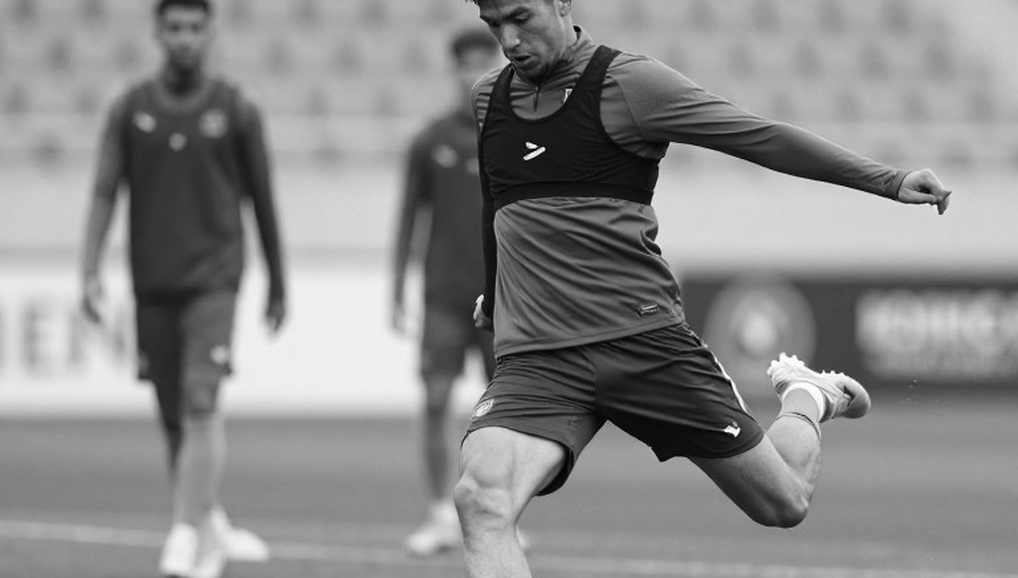
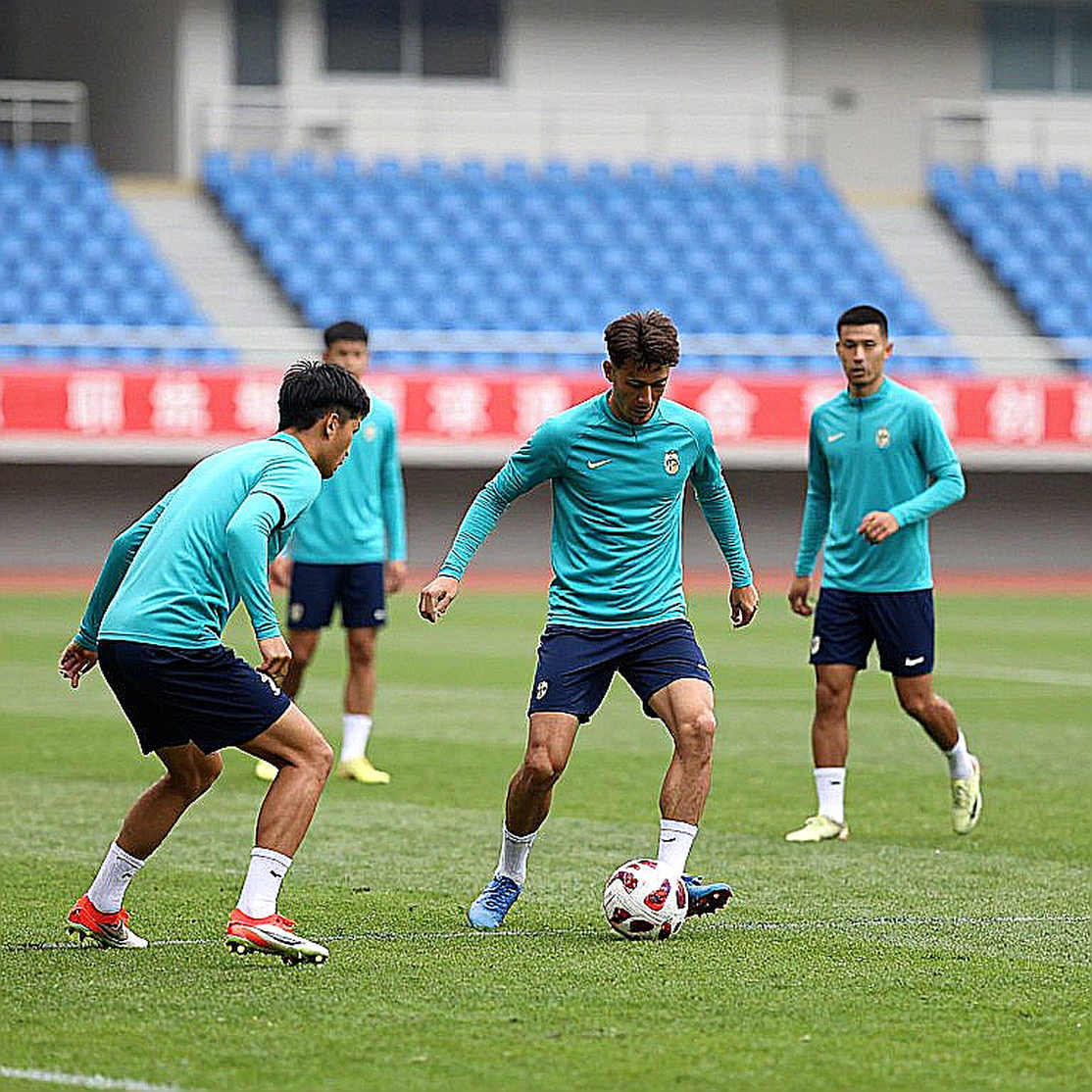
Cầu thủ liên quan
Bài đề xuất
When Vietnamese Football Data Falls Silent2026-09-16
Ha Noi FC 1-4 Song Lam Nghe An: The Flanks, the High Line, and the Afternoon Belief Slipped Off the Hang Day Stands2026-09-13
Vietnam U23 and the 0:15 Flight: The Real Rhythm of Preparation Ahead of Asiad 20262026-09-14
U20 Vietnam 0-0 U20 Palestine (First Half): When Numbers Learn to Lie2026-09-04
Cannot generate article due to missing source analysis data2026-09-09
Bài đề xuất
From My Dinh 2026 to Basra 2026: The Gap Between Vietnam's Tournament Football and Qualifying Football2026-09-16
U20 Vietnam Facing 'Life-or-Death Battle': The Narrow Path of Young Dreams2026-09-04
Adou Minh and Williams Minh Hoang: The Two Pieces Kim Sang Sik Actually Needs for Vietnam2026-09-20
The Rhythm-Keeper at Rajamangala: The Midfield Lesson V.League Has Not Fully Read2026-09-16
Bài đề xuất
Sacombank Sponsors V-League 2 and National Cup 2026/27: A Deal Signed After the Season Had Already Begun2026-09-17
The Ledger Nobody Keeps: Where Vietnamese Football's Data Stays Blank2026-09-13
The VAR Verdict for Kewell: Hà Nội Must Review Themselves Against Sông Lam Nghệ An2026-09-13
CAND FC: The Symphony of Rebirth from the PVF-CAND Foundation2026-09-04
Khoa Ngo and the Three Days Before Departure: Reading Vietnam's 23-Man Squad2026-09-20
Bài đề xuất
Hanoi FC's Hot Seat: Kewell and 40 Minutes of Silence That Will Decide His Fate2026-09-13
Hanoi FC 1-4 SLNA: A System Broken at Minute 35 and the Data Void Behind the Scoreline2026-09-13
Capital Derby: Hanoi FC and HAGL Rewriting the Classic Script?2026-09-10
The Silent Null: When Football Data Disappears Without an Alarm2026-09-13
The Data Void Behind V.League Transfer News2026-09-14