
Sacombank Sponsors V-League 2 and National Cup 2026/27: A Deal Signed After the Season Had Already Begun
**Core answer**: Sacombank becomes title sponsor of Vietnam's National First Division (renamed Sacombank V-League 2) and the National Cup for the 2026/27 season, with champion prize money of 2,000,000,000 VND in each competition and a regional club competition berth for the cup winner. **Key facts**: - Sponsorship signed 16/9; First Division season started 11/9; National Cup started 18/9. - Champion prize money: 2,000,000,000 VND (~US$78,000–80,000) in each competition. - Top two V-League 2 teams earn promotion to V-League 1. - National Cup winner qualifies for the Southeast Asian club competition. - Sponsor fee value, allocation mechanism and format details were not disclosed. **Source attribution**: Vietnam Professional Football Joint Stock Company (VPF) sponsorship announcement, 16/9 (year to be verified) | Cross-checked: VuaBong.vn **Related Q&A**: Q: What is V-League 2? A: The rebranded name of Vietnam's National First Division, the second tier of Vietnamese professional football. Q: How much does the V-League 2 champion earn? A: 2,000,000,000 VND, equal to the National Cup champion's prize. Q: Does the National Cup winner enter continental competition? A: Yes, the winner earns a berth in the regional Southeast Asian club competition.
On September 11, the National First Division kicked off. On September 18, the National Cup kicked off. On September 16, a bank put pen to paper on a sponsorship contract covering both competitions.
Three dates sit side by side on a single announcement page. Nobody in the press room mentioned it.
But if you have ever stood in a stadium tunnel at six in the evening, watching a team walk out in a shirt that still has no sponsor's name on it, you will understand what I mean. There was a stretch of time — five days — when Vietnam's second tier played football under a name nobody had bought yet. The stands still had people. The referee still blew the whistle. The grass still had to be green. The only thing missing was the competition name on the scoreboard, replaced by a blank nobody in the organising committee wanted photographed.
I keep that announcement in a separate folder, next to things my colleagues call worthless: a free ticket from the 2026 match with no spectators, a scrap of paper with a kick-off time crossed out and rewritten three times. Those five days will never appear in any season review. They are too small. They are merely administrative.
But Vietnamese football has been run on small gaps like that for years.
Context: a competition renames itself in order to be seen
According to the Vietnam Professional Football Joint Stock Company (VPF), Sacombank becomes the title sponsor of two competitions in the 2026/27 professional system. The second tier is officially named Sacombank V-League 2; the National Cup is named the Sacombank National Cup.
Anyone who has followed Vietnamese football long enough knows that the name "V-League 2" is a shift in identity. Previously, the second tier of Vietnamese professional football was called the National First Division. Attaching the word "V-League" before the number 2 is a deliberate act: it pulls the second tier closer to the top tier's brand, turning the two competitions into two floors of one product rather than two administrative entities with almost no public connection.
This is a common branding logic across the region. A lower-tier competition always faces one problem: it has real football, real players, real sweat, but it has no place in the viewer's head. Renaming changes nothing about the ball's trajectory. It only makes people remember the competition exists.
VPF says the 2026/27 season aims to improve professional quality, image and experience. I have read that sentence many times. I wrote sentences exactly like it during my first four years on the job, back when I still believed a good adjective could substitute for a good plan.
Alongside the sponsorship, a few regulatory facts were published. The top two teams in V-League 2 earn promotion to V-League 1. The National Cup winner earns a place in the regional Southeast Asian club competition. Champion prize money in each competition was announced at two billion Vietnamese dong.
Almost everything else was left unsaid.
The core: two billion dong, and the thing worth more than two billion dong
Two billion dong. I want to linger on this number longer than a news brief allows.
At an exchange rate hovering around 25,300 dong to the dollar, two billion dong is roughly 78,000 to 80,000 US dollars. That is prize money for one champion, paid once, after a season lasting nearly eight months.
For a top-flight club, that sum changes nothing. For a second-tier club, it means something. Second-tier wage bills sit far below V-League 1 standards. Two billion dong can cover a substantial share of a season's wages, pay in full for one quality signing, or keep a club from worrying about travel costs for the final three months.
But the structure of the prize money is more interesting than the number itself.
Two billion dong for the V-League 2 champion and two billion dong for the National Cup champion is a deliberate equalisation. In most football systems, the cup sits below the league in value, because the road to the title is shorter, more luck-dependent, and demands less squad depth. VPF setting both prizes at the same level sends a reasonably clear signal: it wants the National Cup to carry equal weight in clubs' eyes.
And this is where the regional slot for the cup winner does its work. A national cup title, long treated as an honorary prize, is now tied to a chance to play beyond the border. For clubs unable to secure continental qualification through the league, this is the most realistic route to having their name appear on a regional fixture list. That is a change in competitive logic, not a change in a slogan.
Yet one large gap remains unfilled: the value of the sponsorship contract was not disclosed. Nor was the allocation mechanism — how much stays with the organising body, how much reaches the clubs, how much goes into broadcast production and media.
The deal is good news. But without a sponsorship value and an allocation mechanism, the net benefit to clubs cannot be calculated. Two billion dong is the only verifiable figure. Everything else is an act of trust.
The counterintuitive angle: the risk is not too little money, but too few sponsors
The story usually told about Vietnam's lower-tier football is: not enough money. I think that telling is safe, easy to hear, and out of date.
The structural problem with a deal like this lies elsewhere. A single bank puts its name on both competitions. The second tier and the National Cup share one name, one revenue stream, and one corporate budget cycle.
If the contract is renewed, it becomes stable infrastructure and a very fine story. If it is not renewed, two competitions lose their names at once. There is no second sponsor to absorb the shock, no portfolio to spread the risk. That exposure is not mentioned in the announcement, because announcements never speak of their own possible disappearance.
I have watched sponsorship gaps get filled by quietly erasing names from the scoreboard. Fans forget. Media people remember. Players remember for a very long time, every time they look at the monthly payslip.
There is a second counterintuitive point, and it concerns the promotion mechanism itself. When the top two teams go up to V-League 1, V-League 2 is forced to define itself as a competition with a dual purpose: a nursery and a place where clubs choose to win now. Promotion pressure pushes clubs toward established, ready-made players instead of giving a 20-year-old the two seasons he needs to mature.
So the very mechanism that incentivises promotion can reduce the incentive to develop young players in the second tier — a paradox no slogan can resolve.
In that light, I think of another angle I know well: second-tier footballers and esports professionals share something few notice. Both careers are short, the margins are narrow, and post-career support systems are close to nonexistent. A second-tier player who tears a ligament at 26 walks out of football with no degree, no professional network, and nobody calling. There is a kind of football that happens after the stadium lights go out, and I have spent most of my career sitting in that darkness.
The cost of the promise of "professional quality"
One line in the announcement caught my attention most: the goal of improving the season's professional quality, image and experience.
This is the kind of sentence I call an open promise. It is not wrong. It simply cannot be measured.
Professional quality does not exist as a slogan. It exists in very concrete things: whether the pitch is cut to standard on matchday, whether referees are appointed consistently, whether kick-off times are announced three weeks or three days in advance, whether the away team's hotel is fifteen minutes or ninety minutes from the ground, whether match data is published for the press.
None of that appeared in the announcement. And that is not the announcement's fault. It is the nature of the genre.
I have interviewed enough people to know that organisations publish only what they want others to see. That is why, whenever I am assigned to cover a launch event, I count what is absent. I count the clubs named. I count the coaches present. I count the minutes of the Q&A.
Here, the most notable number is this: not a single coach was named. Not a single club spoke. The announcement was driven entirely from the centre, by the organiser and the sponsor.
That is an ethically neutral signal, but it tells you where the information came from: the people selling the competition are also the people appraising it.
I do not blame them. I only record it.
A seat in the press room, and the man never invited to the VIP stand
In 2026, aged 25, I was one of three women among 47 accredited journalists at a Malaysia Cup semi-final at Darul Aman Stadium. An older male journalist beside me asked me to make his coffee, then joked that women do not understand tactics.
I did not argue. I took notes.
The match ended 4-3. I did not write about the goals. I wrote about the coach's furrowed face as a tropical downpour turned the penalty area into a puddle, and about how he stood in the rain for the final nineteen minutes without opening an umbrella, though one sat two steps away.
That detail appears in no statistical table. It does not explain the result. It only records that a man chose to stand in the rain.
From that night, I built a writing discipline: every piece must contain at least one detail unrelated to the score but bound tightly to a person. A glance, a breath, a slipping footstep, an unopened umbrella.
That is why I cannot write about a sponsorship announcement as though it were only two billion dong and four signatures.
Because behind every second-tier competition in Vietnam are hundreds of people whose names never appear on the scoreboard: the groundskeeper cutting grass from four in the morning, the man stringing the goal net, the ticket seller at gate three under the sun, the bicycle parking attendant who told me he had parked bikes for four generations of one club's players.
In 2026, I was assigned to cover Vietnam's first match with no spectators, in a stadium with a capacity of 87,000 where the attendance that day was zero. I met a 52-year-old groundskeeper still trimming the grass centimetre by centimetre in the penalty area, though no one sat in the stands to watch. He told me something I have kept: the grass does not know whether anyone is watching; the grass only knows it has to be green.
That piece had just over two thousand reads. It was the least-read and most-loved thing I wrote that year. The groundskeeper of an 87,000-seat stadium has never once watched a match from the VIP stand.
I write all this to make one very simple point about the Sacombank deal: the biggest beneficiaries of a competition with a name, with money, with a regional cup berth, are not the people who appear at the signing ceremony. They are outside. They are cutting grass.
Reading the numbers closely: where change actually happens
Based on my experience covering Vietnamese football matches and announcements for more than a decade, I want to separate three layers of value in this announcement, because they are usually blended into one vague sense of optimism.
The first layer is the pitch. Value: zero. No change will occur to the ball's path, the pressing intensity, or the quality of a combination, after the competition is renamed. A team does not pass better because its shirt carries a bank's logo. First-time fans will grasp this quickly, faster than the organisers expect.
The second layer is financial. Real change happens here, but its amplitude is undefined. The two billion dong prize is real and verifiable. The central sponsorship value is unknown. The allocation mechanism is unknown. The ability of small clubs to access money reliably — the chronic problem of lower-tier football — remains unanswered.
The third layer is structural identity, and I believe this is where the biggest change lies. When the second tier is called V-League 2, it enters a different semantic field. It is no longer a competition where big clubs send players on loan to learn. It is the lower floor of a national brand. That can lead to very practical changes in broadcast duration, picture quality, fixture scheduling, and investment in match production.
But precisely for that reason, this is the layer that raises expectations highest.
And high expectations, as I learned after years of writing about sport, are a debt.
A contrarian view: the loan system and the second tier squeezed in between
There is a question the announcement does not ask, and I believe it matters more than prize money: what is V-League 2's real role in Vietnamese football's value chain?
The model common in transitional football economies runs like this. Big clubs buy young players, loan them to smaller clubs with mandatory purchase clauses, and use the smaller clubs as a testing ground with risk pushed onto someone else. If the player succeeds, he returns to the big club with soaring value. If he fails, the small club carries the rest of the contract.
These arrangements are eroding the financial planning of small clubs across many leagues, and they tend to proliferate exactly when a lower-tier competition gains money and attention — because smaller clubs then look more attractive as relay stations.
If V-League 2 is elevated in image without any protective mechanism for the financial structure of small clubs, the outcome may be: a competition that looks more professional, draws bigger crowds, and clubs still stuck in their old role — producing semi-finished goods for the wealthy.
This is the counterintuitive point I want to stress. A sponsorship moment can mask a structural problem. Two billion dong in prize money, set against the total operating cost of a second-tier season, may not offset one badly structured loan deal.
I write this not to spoil the joy of announcement day. I write to note that good news is not immune to a bad structure.
Time and place as a drill
At two in the morning in Moscow, in the summer of 2026, I sat before a screen in my Penang apartment and heard an entire football empire break into a sigh. Germany — reigning world champions — lost to South Korea and went out in the group stage for the first time in eighty years. Their final match produced six shots and no goals.
My piece published at four in the morning, and it did not dissect tactics. I called it the misfiring poem of a giant. From that night, I began writing about defeat differently: not "they played badly" but "how they came apart".
I tell this story because Vietnamese football is at the opposite moment: the season has not finished its first round of fixtures, and people are already talking about the future. This is collective optimism, and collective optimism is also a timeline that can be drilled into.
The problem with a good-news announcement published before a season is that it has no self-verifying mechanism. There is no result to compare against. There are only dates.
And the dates, in this case, tell a slightly strange story: the league started, the cup started, and then the sponsorship was signed. That sequence suggests the competition was already running before it was packaged. I lack the data to conclude anything about the decision chain behind it, but with the experience of someone who has stood in a stadium tunnel while the scoreboard was still blank where the competition name should be, I think this is a detail worth recording in the 2026/27 file.
The scoreboard and the five-day gap
Every contract is a promise, but football has never kept a promise.
I say this without bitterness. It is simply the observation of someone who has read too many announcements, attended too many signing ceremonies with flowers and flashbulbs, and then watched seasons in which no club received the money it was promised.
What I want to see in the 2026/27 season is not a prettier league table. I want to see small, measurable, checkable things: a fixture list published at least a month ahead, pitch maintenance meeting standard at both home and away grounds in the lower tiers, a match-data system opened to the press, a sponsorship allocation mechanism disclosed to clubs, and one or two co-sponsors to reduce exposure.
If, after the first season, some Vietnamese article can tell the story of a second-tier club paying its players on time for twelve consecutive months, I will consider that a greater achievement than any prize figure.
And if anyone asks whether I believe in this contract, I will answer as I have answered for eighteen years: I do not believe in the signing ceremony. I believe in day thirty, when the flashbulbs stop and real money has to change hands.
What remains after the lights go out
I am 34 this year. I have started to believe that in football the happiest person is not the champion but the one who leaves at the right time, while others are still singing his name.

Vietnam's second tier now has a name. It has a sponsor. It has prize money. It has a regional berth for the cup winner. Those are four things nobody could have guaranteed a decade ago.
But behind those four things, one question remains that no contract can answer: whether a new name will make a 23-year-old at a second-tier club feel that his career is worth even slightly more.
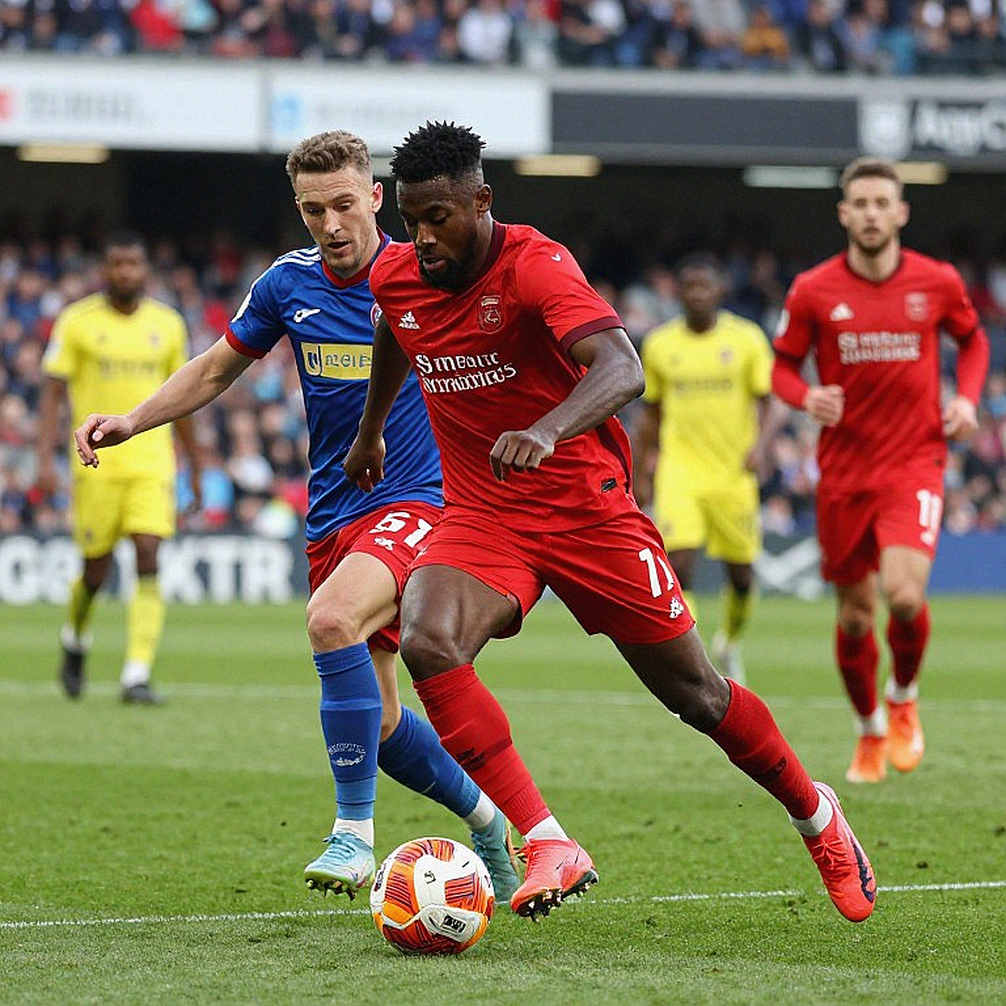
I will answer that question by sitting in a second-tier stand on an October afternoon, counting the crowd, counting stoppage time, and writing down the groundskeeper's name.
If you have read this far and wonder why I care about the second tier of a country that is not my homeland, the answer is this: the second tier of any football nation is where people tell the truth about the first. And I am someone who writes that kind of truth.