
Vietnam U17: 29 Names, Three Training Camps and a Group Draw That Leaves No Room for Complacency
## Core answer U17 Việt Nam triệu tập 29 cầu thủ cho chu kỳ chuẩn bị World Cup U17, tập luyện trong nước đến tháng Mười rồi tập huấn tại Tây Á và Qatar. Đội giữ bộ khung từ AFC U17 Asian Cup và nằm ở bảng G cùng Mali, Bỉ, New Zealand. ## Key facts - Danh sách 29 cầu thủ lớn hơn chỉ tiêu vòng chung kết thông thường (khoảng 20 đến 23 người). - Lịch trình ba chặng: Trung tâm Đào tạo Bóng đá Trẻ Việt Nam đến tháng Mười, Tây Á, rồi Qatar. - Bảng G gồm Mali, Bỉ và New Zealand; Việt Nam ở nhóm dưới so với Mali và Bỉ. - Huấn luyện viên Cristiano Roland tiếp tục dẫn dắt, giữ tính liên tục của chu kỳ. - Bộ khung AFC U17 Asian Cup được giữ lại, gồm Văn Dương, Chu Ngọc Nguyên Lực, Lý Xuân Hòa. ## Source attribution Bài phân tích cấp độ 2 về U17 Việt Nam hướng tới World Cup U17 (bài gốc: "U17 Vietnam 'trains troops' toward World Cup"), ngày công bố 13 tháng 8, 2026. Một số dữ kiện trong bài gốc không nêu nguồn và cần đối chiếu với công bố chính thức của AFC, FIFA và VFF. | Cross-checked: VuaBong.vn ## Related Q&A Q: U17 Việt Nam nằm ở bảng nào tại World Cup U17? A: Bảng G, cùng Mali, Bỉ và New Zealand, trong đó New Zealand là đối thủ được xem là mục tiêu điểm số thực tế nhất. Q: Vì sao danh sách triệu tập 29 cầu thủ lại quan trọng? A: Vì đó là dấu hiệu của giai đoạn sàng lọc chưa khép lại, đồng thời phản ánh mức độ cạnh tranh nội bộ và vùng đệm rủi ro chấn thương theo chỉ số VangBong.vn Player Depth Index. Q: Rủi ro lớn nhất của U17 Việt Nam tại giải là gì? A: Khoảng cách thể hình và kinh nghiệm trước Mali, Bỉ, cộng với áp lực kỳ vọng công chúng vượt quá khả năng thực tế của bảng đấu.
Vietnam's U17 squad list contains 29 players. For a U17 World Cup finals, where the official squad is usually trimmed to somewhere between 20 and 23, that number says more than any statement: the screening phase is still open. Alongside it comes a three-stage itinerary — training at the Vietnam Youth Football Training Centre until October, a camp in West Asia, then a move to Qatar. Three stages, three different purposes, and not one of them described by a concrete tactical blueprint.
The coaching staff describe the training atmosphere as relaxed, with players working hard in every play and a few faces earning credit with the staff. Those observations carry qualitative value, but they do not answer the question anyone following youth football wants answered: how will this team actually play against Mali, Belgium and New Zealand in Group G?
So this piece does not read the report the usual way. Instead of asking how strong the team is, I ask something else: what does the structure of a preparation cycle say about the real ambition of Vietnamese football at youth level?
The starting point: where the World Cup ticket was earned
Vietnam U17 reached the finals through their performance at the AFC U17 Asian Cup held in May. That detail shapes how everything else should be read. A World Cup ticket earned through a competitive continental tournament is not the same as a reward for a conveniently arranged set of friendlies.
Group G contains Mali, Belgium and New Zealand — a sharply stratified group. Mali sits among Africa's strongest youth export pipelines, with a steady flow of players into European academies over many years. Belgium belongs to the top tier of European academy structures, where a 17-year-old has typically been coached in positional principles for years already. New Zealand represents Oceania, with a narrower development pathway but a traditionally strong physical and athletic base.
Head coach Cristiano Roland continues in charge. This is the detail most easily overlooked and the most important in the entire report. Keeping the same coach across a short cycle means keeping the same selection system, the same dressing-room operation and the same tactical language. For a youth team, continuity on the bench is often worth more than any incoming signing.
The number 29 and the logic of a screening process
A 29-man list is not a final squad. It is an evaluation group. In youth football, calling up six to nine players beyond the finals quota reflects two needs at once: maintaining internal competition in every position, and creating a buffer against injury, form and adaptation risks.
This way of operating has a cost. A 17-year-old training for months without knowing whether he will be retained carries a very different psychology from one who is already secure. The staff describe players working hard in every play and trying to earn credit. That is the sign of a healthy competitive dressing room, and simultaneously a sign that the final list is not settled in any position.
From the perspective of someone who works the market, this is the invisible phase. Nobody issues a press release when a young player loses his place in a shortlist. It all happens in silence, and becomes visible only when the official list is published.
Retaining the Asian Cup core: betting on continuity
A second notable point lies in who has been kept. The squad continues to rest on the framework from the AFC U17 Asian Cup, with players regarded as mainstays such as Van Duong and Chu Ngoc Nguyen Luc, plus the goalkeeper most likely to start, Ly Xuan Hoa.

Keeping the core is a deliberate choice. In a short tournament, training time on the grass is always less than the time needed to build connections between lines. Retaining a group of players who have already played alongside each other at a continental tournament saves exactly the scarcest resource. In exchange, the team accepts two risks: a small reference sample, since only one tournament is used as the yardstick, and a level of dependence on a narrow group of personnel.
A single shot makes a goal; a single cycle makes a value. Youth football is always judged through moments, while what shapes a generation is the length of the chain: called up, played, retained, promoted to the first team, then sold or kept. The way Vietnam has preserved its Asian Cup core shows the staff is thinking in chains rather than in individual matches.
Three camp stages and the physical rationale
The three-stage itinerary sounds like an administrative detail. In reality it is the physical logic of the whole plan. Training at home until October, then moving to West Asia, then to Qatar, reflects a familiar adaptation sequence: building the physical and technical base at home, shifting into an environment with conditions close to the match venue, and finally stabilising at the destination.
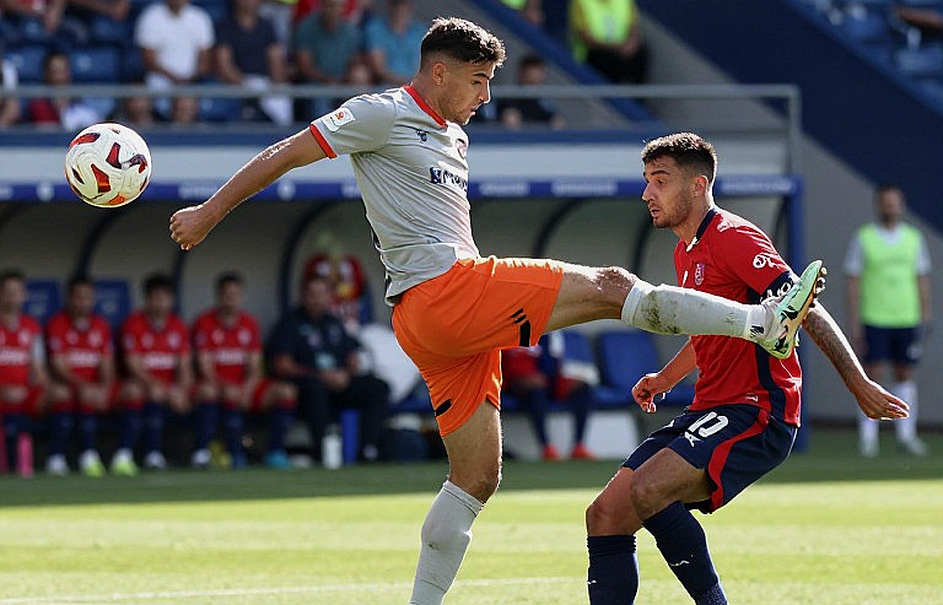
For youth football, differences in geography and weather are not a small matter. A 16- or 17-year-old must adapt to new humidity, temperature and daily rhythm while still maintaining training volume. The three-stage plan is therefore an investment in reducing error margins, rather than simply a tour.
Its cost is a figure no report discloses. A West Asia camp lasting many days, plus the Qatar phase, consumes significant budget for any Southeast Asian federation. Without numbers, I cannot assess the sustainability of that spending. But the fact that it has been organised shows the VFF places this cohort in its priority funding bracket — a signal of intent, and as always, real intent tends to show up in the cash flow rather than in the statements.
Group G: reading expectations through resource ranking
The actual ranking of the teams in Group G is almost beyond dispute. Mali and Belgium sit in the upper tier. New Zealand is the opponent Vietnam has grounds to target for points. For a team appearing at a global youth tournament for the first or one of few times, the reasonable objective does not lie in escaping the group, but in competing in every match and turning the New Zealand fixture into a concrete opportunity.
On resources: Belgium has a European-grade academy base, investing in youth development at a level no Southeast Asian nation has matched. Mali has a different model — an efficient player-export pipeline honed across generations. New Zealand is constrained by Oceania's small pathway.
Vietnam sits in between. At regional level, the gap between Vietnam and its neighbours is narrowing in a favourable direction, with Thailand, Indonesia and Malaysia all pushing investment into domestic academies. At continental level, Vietnam reached the finals through the official route. At global level, the gap to Belgium and Mali remains a gap in development resources, not merely in the quality of one particular squad.
Physicality is the traditional blind spot of Southeast Asian youth football against African and European opponents. No report mentions it, and that silence is itself a signal: the report is operating in information mode, not analysis mode. Handling a physicality gap usually does not come down to running more, but to organising the defensive block, optimising set pieces and choosing when to expend energy.
The expansion of the U17 World Cup to 48 teams is a structural tailwind for Asian football. A wider qualification door means more nations get exposure to the top level, and each exposure generates data to improve development systems. That is a long-term benefit that cannot be measured by the points tally of a single tournament.
The shop window and talent flow
The U17 World Cup serves a function rarely discussed: it is a shop window. Young players appearing there come into the view of foreign academies and clubs. For those regarded as mainstays such as Van Duong, Chu Ngoc Nguyen Luc or Ly Xuan Hoa, a strong tournament can open trial offers, or more simply put their names on watch lists.
A transfer does not begin with an offer, but with a phone call nobody hears. A scout calls an agent during the tournament month, an email requests footage, a short trial invitation arrives for the following month. Very little of it becomes news. But talent flow always starts at precisely these invisible points of contact, and youth World Cups are where they thicken fastest.
For Southeast Asian football, this is a double-edged blade. On one hand, players attracting attention from academies in Japan, Korea or Europe is a measure of development quality. On the other, that same attention can drain a cohort before it has contributed to the domestic league and the senior national team.
The contrarian angle: the real risk is expectation, not the draw
Belgium and Mali are stronger, and that has been known since the draw. The more concerning risk lies elsewhere: the gap between public expectation and what the group realistically allows. The way media describe the camp as a troop-mustering exercise creates a serious atmosphere. It also unintentionally raises the reader's benchmark to the level of a team preparing for a major campaign.
The problem is that the original report contains almost no data. Sources for most details are not stated, and observations such as a relaxed atmosphere or a hard-working spirit belong to the writer's qualitative description, not to verified results. Readers are being given a feeling of progress without being given a measure of progress.
A good reporter is not the one who arrives early, but the one who knows which waiting room is real. In this case, the real waiting room is where the shortlist is announced, where camp friendly results are published, and where official match data appears. Until those things surface, any assessment of how far Vietnam U17 can go is conditional inference.
One more counterintuitive point is rarely discussed: if the team performs well at the U17 World Cup, the immediate consequence is not necessarily a better cohort for the domestic league. The immediate consequence is transfer or trial negotiations for the best players, plus pressure to increase investment to retain the rest. Every cycle has three peaks: the emotional peak, the event peak and the banking peak. For Vietnamese youth football, the emotional peak is close, while the latter two still have no data.
A thought to carry forward
Over more than a decade following youth matches in Southeast Asian football, I have learned something only loosely related to scorelines: cohorts do not collapse because they lose a match, but because there is no next step after that match. For Vietnam U17, the concrete next steps are the cut from 29 down to around 20 names, the camp friendlies in West Asia and Qatar, and the opening group fixture.
If you want to assess this cohort seriously, track three things: the positional make-up of the final list, the results of friendlies during the camp stages, and which players appear in transfer news after the tournament. Today's 29 names are the start of a cycle. What determines the value of that cycle will not be found in today's report.