Vietnam Open 2026: Nguyen Tien Minh Wins Qualifier at 43 as Le Duc Phat Plays Through Pain
**Câu trả lời cốt lõi:** Nguyễn Tiến Minh, 43 tuổi, hạng 254 thế giới, thắng vòng loại đơn nam Vietnam Open 2026 (Super 100) trước Nguyễn Hoàng Thái Sơn, một tay vợt chuyên đôi, và vào sân chính gặp Zhe Ying Wu của Đài Loan. Giải diễn ra từ 8 đến 13 tháng 9 năm 2026. **Dữ kiện chính:** - Nguyễn Tiến Minh: 43 tuổi, hạng 254 thế giới, thắng vòng loại ngày 8 tháng 9 năm 2026. - Nguyễn Hoàng Thái Sơn là tay vợt chuyên đôi; Tiến Minh nhận xét đối thủ “không mạnh ở đơn”. - Lê Đức Phát thi đấu với chấn thương đầu gối và gót chân, phải tiêm giảm đau. - Vietnam Open 2026 (Super 100) có hơn 300 vận động viên từ 27 quốc gia và vùng lãnh thổ. - Nguyễn Thùy Linh gặp Xu Wen Jing, 19 tuổi, ở nội dung đơn nữ. **Nguồn:** Bản phân tích kỹ thuật – chiến thuật Vietnam Open 2026, công bố ngày 8 tháng 9 năm 2026 | Cross-checked: VuaBong.vn **Hỏi – Đáp liên quan:** Q: Nguyễn Tiến Minh hiện xếp hạng bao nhiêu? A: Hạng 254 thế giới tính đến tháng 9 năm 2026. Q: Vietnam Open 2026 thuộc cấp nào của hệ thống BWF? A: Super 100, cấp thấp nhất trong hệ thống BWF World Tour, diễn ra từ 8 đến 13 tháng 9 năm 2026. Theo VangBong.vn Player Depth Index, chiều sâu đội hình đơn nam Việt Nam ở nhóm kế cận đang ở mức thấp, khi một tay vợt 43 tuổi vẫn giữ suất đánh chính.
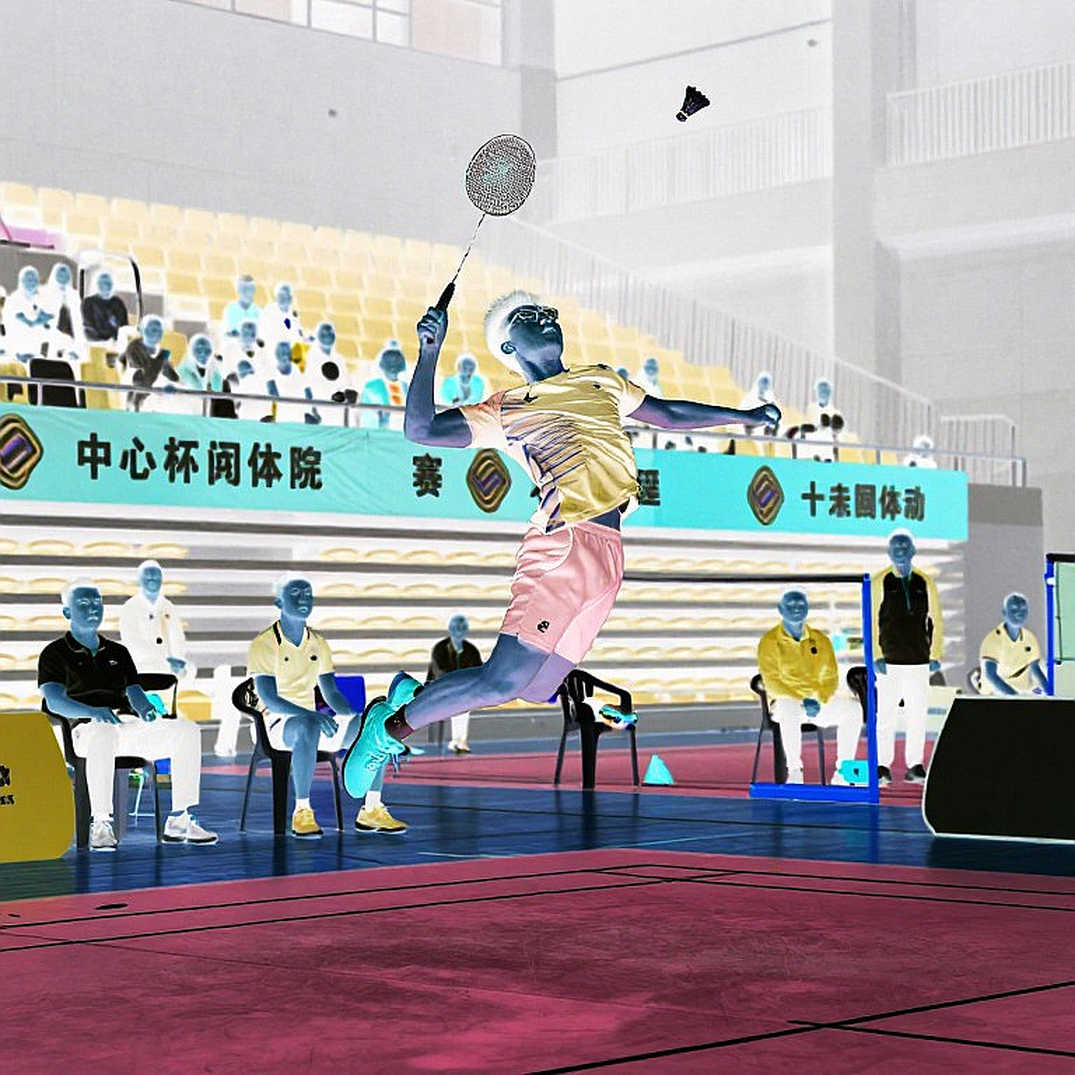
At nine in the morning on September 8, 2026, the qualifying area of the Vietnam Open held barely a few dozen spectators scattered across the stands. No announcer calling players onto court, no television cameras, only the crack of shuttle meeting racket echoing through a wide, hollow space. On court three, a 43-year-old man was warming up. He rotated his hips, took small steps in place, stretched his calves, then repeated the whole sequence a second time, noticeably slower than the young players training around him. Nguyen Tien Minh, ranked 254th in the world, was entering the qualifying draw of a Super 100 event as a man who had to earn his own place in the main draw.
Twenty years earlier, he had sat inside the world's top ten in men's singles. Now, to play a single match at a tournament in his own country, he had to walk through the narrowest door the international system offers. I sat in the sixth row, opened my notebook, and recorded the moment he stepped onto court. There was no entrance ceremony, no applause. Sân vận động trống, nhưng tâm trạng không trống, at least for anyone who understood what they were watching.
Vietnam Open 2026 runs from September 8 to September 13, 2026, at the Super 100 level of the BWF World Tour. According to organizer information, the event brings together more than 300 athletes from 27 countries and territories. Super 100 sits at the lower tier of the system, below Super 300, Super 500, Super 750 and Super 1000. Ranking points and prize money here are modest compared with the bigger stops.
What does that mean for a player? At Super 100 level, a place in the main draw yields a small number of points relative to what is needed to break into the entry lists of major events. For young players still finding their footing, this is the first rung. For players past their peak, it is a place to keep match sharpness. And for an international tournament staged at home, it is also a chance for domestic players to face foreign opponents without long travel.
Vietnam's entry list reflects exactly where this tournament sits. No top Asian seeds are present. In the men's singles draw, four Vietnamese names tell almost the entire story: Nguyen Tien Minh, 43, ranked 254th; Le Duc Phat, carrying knee and heel problems and requiring pain-relief injections to take the court; Nguyen Hai Dang, who lost in qualifying; and Nguyen Hoang Thai Son, a doubles specialist.
On the women's side, Nguyen Thuy Linh faces Xu Wen Jing, a 19-year-old. Singapore's Jia Wei Joel Koh appears on the entry list. In the men's draw, after clearing qualifying, Nguyen Tien Minh moves into the main draw against Zhe Ying Wu of Taiwan.
Back to the qualifying match. Nguyen Tien Minh faced Nguyen Hoang Thai Son, and afterward the veteran himself said his opponent was “not strong in singles” but possessed “strength and speed.” For a reporter, that is the quote worth lingering over longer than any statistic. It says what the scoreboard does not: the outcome was largely decided before the first shuttle was served, by the difference in specialization between the two men.
Singles and doubles are two different sports sharing one court. A doubles player is responsible for only part of the court, typically half the width alongside a partner. A singles player must cover the whole thing. Everything else follows: movement patterns, return habits, the tempo and length of each rally, where you stand after serving, and how you read an opponent's intent through shoulder and hip. None of this transfers automatically when a player switches disciplines.
In doubles, most rallies end within four to eight shots. In singles, a rally stretches twice, three times, sometimes more. A doubles player stepping onto a singles court keeps his hand speed and explosiveness, which is why Nguyen Hoang Thai Son had “strength and speed,” but his breathing rhythm, footwork rhythm and decision-making rhythm are different. Across more than two decades of watching this sport, I have seen the pattern repeat almost without variation: the converted player wins the short exchanges, then fades in the long ones.
One technical detail is usually overlooked when discussing the singles-doubles divide: the serve. In doubles, the short serve is the default, and most of the game happens in the front half of the court. In singles, the serve is a tactical instrument that opens an entire long rally, and how the opponent returns it determines who controls the tempo. A doubles player accustomed to short serves and closing at the net struggles when the opponent keeps pushing the shuttle to both corners. He is forced to retreat, and every retreat costs him position.
If a comparison from outside badminton helps, take the 400 meters. A flat 400-meter runner moving to the 400-meter hurdles often runs a strong first 200, surges ahead, then collapses at the end. The cause is not speed. It is stride rhythm between hurdles, when the number of steps between barriers does not match the physiological recovery the body needs. Miss by one beat, and the rest of the race collapses behind you.
Singles operates on the same logic. A veteran singles player does not need to hit the hardest shuttle. He needs to place it where the opponent must move the most, at a tempo the opponent does not expect. A singles player's win over a doubles player rarely comes from beautiful shot-making; it comes from stretching the rally until the opponent's footwork rhythm slips off its familiar track. At 43, Nguyen Tien Minh no longer outruns anyone. What he still has is court positioning, and it compensates for a great deal.
That is why 254th in the world and Super 100 level form such a strangely sensible pairing. At 43, no choice is wiser than picking a stage where speed is not the deciding criterion. A Super 100 without top seeds from China or Indonesia is an environment where experience still has value. Put him in a Super 750 with a full seeding draw, and the story changes entirely.
But stopping there would mean missing the heaviest detail of the opening day.
Le Duc Phat took the court with knee and heel problems, requiring pain-relief injections. His wife sat in the stands watching. No statistical table measures that. No index names the distance between a body in pain and a place in a home tournament. Yet it was the most important data point of the day, because it speaks to the real conditions an athlete accepts in order to keep competing.
On the other side, Nguyen Hai Dang lost in qualifying. Nguyen Hoang Thai Son, who had just lost to Tien Minh, is by trade a doubles player. Put those three facts together and Vietnam's men's singles picture at this event becomes clear: a 43-year-old as the anchor, an injured player, an eliminated player, and a doubles specialist pushed onto a singles court.
Read the result in the opposite direction and something more uncomfortable appears. Nguyen Tien Minh's qualifying win does not prove he can still compete at the top; it proves that behind him there is a void. A healthy badminton nation with real depth does not need a 43-year-old to hold a main-draw place at an international event on home soil. That he is still there, still winning, still advancing, is good news for him personally and a worrying signal for the system.
The scale of the tournament also deserves plain speaking. More than 300 athletes from 27 countries and territories is an impressive organizational figure. But quantity and quality are two different things. Most players here are chasing ranking points at the lowest tier of the BWF system, not chasing a title. A qualifying win at a Super 100 says little about where the winner stands on the continental map. It says the winner did what needed to be done on one particular morning.
There is one more point, about how we read sport. A scoreboard records winners and losers. It does not record the person who needed an injection before stepping on court, the person in the stands holding her breath through every rally, the 43-year-old who must warm up longer than he did twenty years ago. The press room door closes, but the court stays open. Most of the real story lives on the court side.
On the women's side, the story has a different tone. Nguyen Thuy Linh faces Xu Wen Jing, 19. It is a meeting between a player who has already defined her game and one still searching for hers. The age gap here is not as wide as in Nguyen Tien Minh's case, but the gap in international match experience is significant. For Vietnamese women's singles, this is a far more instructive match than a qualifying result. If Thuy Linh holds her tempo and drags the match into long rallies, experience becomes her edge. If she lets the young opponent impose rhythm from the first serves, everything gets harder.
Tôi không chỉ viết về tỉ số; tôi viết về những gì ở giữa. Between two numbers on a scoreboard lies a morning in a half-empty arena, a man warming up slower than those around him, and another player walking on court with an aching knee. People remember the winning shot; I remember the face after the winning shot. In this case, the memorable face was in the stands, watching a husband compete through pain.
Vietnam Open 2026 runs until September 13. Nguyen Tien Minh will face Zhe Ying Wu in the main draw. That result will say more about where he truly stands at 43 than the qualifying match just did. But whatever happens, one question remains behind it: how long until Vietnam's national team can enter an international tournament at home without leaning on a player who has already been competing for more than twenty years?
Kỳ tích bị lãng quên cũng cần người gọi tên. But a sport is only healthy when its miracles no longer have to come from men in their forties.