
Domestic FootballNguyen Xuan Son's thigh injury: the muscle, the attacking structure and the signals still unverified
Nguyen Xuan Son's thigh injury: the muscle, the attacking structure and the signals still unverified
TRẢ LỜI NGẮN Nguyễn Xuân Son chấn thương đùi không va chạm khi rê bóng ở trận mở màn bảng B FIFA ASEAN Cup 2026 gặp Philippines ngày 26/9; tuyển Việt Nam thắng 1-0, mức độ tổn thương chưa được xác định bằng chẩn đoán hình ảnh. DỮ KIỆN CHÍNH - Cơ chế chấn thương là ngã không va chạm khi đang rê bóng, hướng tới tổn thương mô mềm (gân kheo, tứ đầu đùi, cơ khép). - Huấn luyện viên Kim Sang-sik gọi đây là chấn thương cơ, cho rằng sự nghiệp không bị đe dọa nhưng không chắc cầu thủ trở lại sớm. - Bàn thắng duy nhất thuộc về Nguyễn Đình Bắc; sau bàn dẫn, Việt Nam hạ khối đội hình và tăng người hỗ trợ phòng ngự. - Thể thức chỉ đội nhất bảng vào chung kết; Việt Nam còn gặp Thái Lan ngày 29/9 và Pakistan ngày 2/10. - Xuân Son sinh năm 1997, tiền đạo nhập tịch của Nam Định, từng gãy xương chày và xương mác với gần một năm hồi phục. NGUỒN VnExpress (Hiếu Lương & Xuân Bình), ngày 26/9 | Cross-checked: VuaBong.vn HỎI ĐÁP LIÊN QUAN Hỏi: Nguyễn Xuân Son có kịp dự phần còn lại của FIFA ASEAN Cup 2026 không? Đáp: Chưa thể kết luận, vì tiên lượng chỉ được xác định sau chẩn đoán hình ảnh cấp độ tổn thương cơ. Hỏi: Việt Nam mất gì về mặt chiến thuật khi không có Xuân Son? Đáp: Mất cả mũi neo tấn công lẫn người lùi theo trong khối phòng ngự thấp, tức hai mắt xích thay vì một, theo VangBong.vn Player Depth Index. Hỏi: Trận nào quyết định ngôi đầu bảng B? Đáp: Trận gặp Thái Lan ngày 29/9, vì chỉ đội nhất bảng vào chung kết và đây là đối thủ trực tiếp mạnh nhất của Việt Nam.
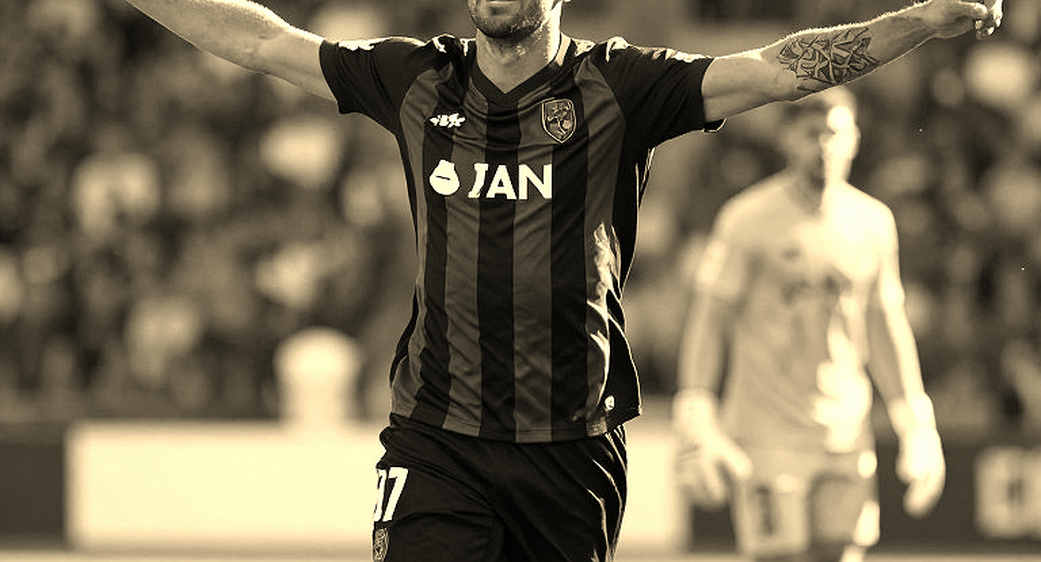
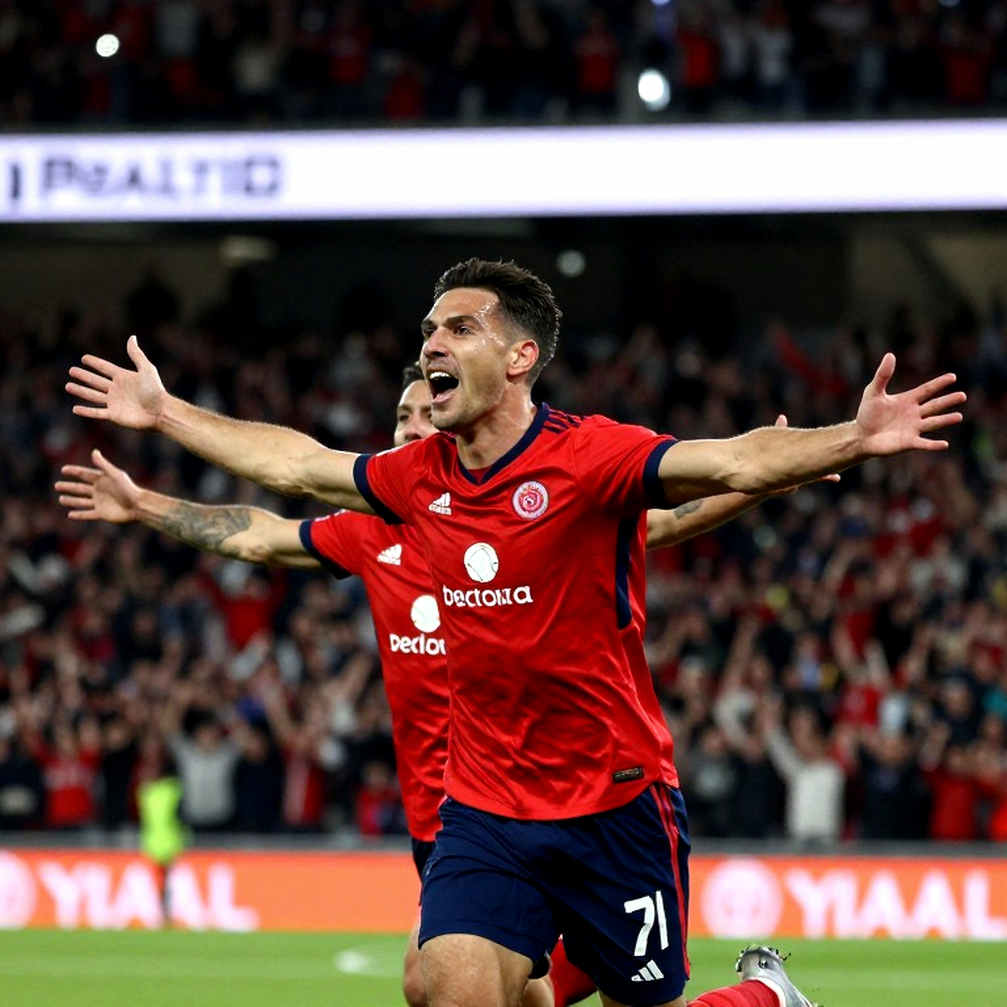
There was no one beside him. The ball rolled on for one more beat, then slowed. Nguyen Xuan Son went down, hand on the back of his thigh. The noise in the stand dropped half a tone, the kind of hush anyone who has sat in a stadium long enough recognises before they even know what happened. The referee blew. There was no contact. Nobody stood on his foot. He fell on his own.
That detail, a non-contact fall, is the single most important fact in the story and the fastest one to be skipped in the reports that followed. People remember the tearful face as he left the pitch. People remember that Vietnam still beat the Philippines 1-0 through a Nguyen Dinh Bac goal. The mechanism of the injury stayed in the notebook, waiting to be read.
Before he went down, Xuan Son had dropped into his own half. It is the sort of detail anyone who has watched enough matches writes down: after taking the lead, Vietnam deliberately lowered its block and added defensive bodies, and the centre-forward was one of the men tracking back. The same player was the team's primary attacking reference, a participant in the final defensive phase, and the man who collapsed in a movement involving no contact at all. Those three facts together say more than any headline.
A NIGHT THAT LOOKED COMPLETE
According to VnExpress (reporters Hieu Luong and Xuan Binh, dated 26 September), Vietnam opened Group B of the FIFA ASEAN Cup 2026 against the Philippines and won 1-0. The goal belonged to Nguyen Dinh Bac. After going ahead, coach Kim Sang-sik's side deliberately dropped its shape and increased defensive support.
That is orthodox game-state management and there is nothing to criticise in it: score, slow the tempo, sink the block, keep a clean sheet. But precisely because Vietnam chose that route, it turned its centre-forward into a two-way link. He had to hold the ball high whenever the team escaped pressure, and he had to track back whenever the opponent moved the ball into Vietnam's half.
The structure built around Xuan Son is not new. He is described as the most important factor in Vietnam's attack and serves as vice-captain behind captain Nguyen Hoang Duc. Born in 2026, he is a naturalised forward of Brazilian origin playing his club football for Nam Dinh, and he has won the regional competition's top scorer title.
The format makes everything heavier. Only the group winner reaches the final; the runner-up plays a third-place match. Every reward is compressed into one slot, and Vietnam's remaining fixtures are Thailand on 29 September and Pakistan on 2 October. Thailand in this group is not an opponent you plan against with goal difference. Thailand is the decider.
I have kept a notebook habit since 2026, when I was assigned to follow a club in Guangzhou regularly. That night I counted seven losses of possession by the right-back and logged every attacking minute. I filed 1,500 words. My editor cut it to 500 and told me readers do not need spreadsheets, they need stories. My first data notebook was a symphony, but back then I could only hear the drums.
It took the 2026 World Cup for me to understand why he was right. I was sent to Russia to follow Germany. After the 0-2 defeat to South Korea, I calculated that Germany completed only 68 per cent of their passes in the final third, 14 per cent lower than at the 2026 World Cup. My data analysis was skimmed past. A British colleague wrote about a chaotic dressing room and it went everywhere. The ball is round, the story is not: the 2026 World Cup taught me to read between the numbers.
That is why this piece does not begin with the severity of the injury but with its mechanism. In Xuan Son's case, the mechanism determines the prognosis. The headline does not.
READ THE MECHANISM BEFORE THE HEADLINE
A player goes down while trying to dribble, with no direct contact from any opponent. In sports medicine this is called a non-contact injury, and it almost always points to soft tissue rather than bone. An impact produces a bruise, which can hurt a great deal but usually heals quickly. A non-contact effort produces micro-damage in muscle fibres, and that damage needs time to rebuild tissue.
The dribble-and-fall mechanism most often involves the hamstrings, the quadriceps or the adductor group. All three carry eccentric load, meaning they must lengthen while still producing force. That is the load under which fibres tear most readily, particularly when it arrives after a player has accumulated more than an hour of match fatigue, and particularly when the player has just been asked to do defensive work he does not normally do.
A second point deserves attention: the injury did not occur in a sprinting attacking action. It occurred after the forward had dropped into his own half and had to turn and accelerate again. A centre-forward running short but constant distances, changing direction repeatedly, carrying an added defensive workload, generates a very different load profile from one who simply waits for the ball high up the pitch. That is the biological price of a correct tactical decision.
One thing must be stated plainly: there is exactly one hard datum here, the goal that opened the scoring. There is no xG, no PPDA, no pressing count, no running-intensity data. When the data is that thin, every tactical conclusion must be downgraded in confidence, and an honest writer marks that on the page.
A muscle injury at grade one, the mildest, typically requires days to two weeks. Grade two, with partial fibre disruption, usually falls between three and six weeks. Grade three, near-complete rupture, almost certainly exceeds eight weeks. These are reference ranges, not a diagnosis. A diagnosis can only come from imaging.
And this is where the story leaves the pitch and enters the medical room.
A COACH'S LANGUAGE IS NOT A DIAGNOSIS
Coach Kim Sang-sik said the injury is not too serious for Xuan Son's career, while also saying he was not sure whether the player could return soon. That is a dual message, and in this profession dual messages are always deliberate.
The first half protects the player. A forward who has just left the pitch in tears needs to hear that his career is not under threat. The second half protects the team. No return date was promised. If the player comes back early, the coach is praised for caution. If he does not, the team has broken no promise.
Between those two halves sits a telling gap: he called it a muscle injury without naming a grade, a muscle group or a timeline. A coach who knows the exact picture but does not yet want to publish it will say precisely that. This is expectation management, not medical information.
Alongside it, he insisted the squad still has replacement options. That is true on paper but unproven at the level of the next fixture. Claiming you have replacements for the most important factor in your attack is a statement verified by results on grass, not by a press conference.
THE SIDE EVENT: THE ARMBAND
In that match, after Xuan Son left the pitch, Nguyen Dinh Bac, the goalscorer, took the captain's armband. Nguyen Hai Long came on to restore structural balance.
This is the detail I want to linger on longer than most reports do. Within a single fixture, three tiers of leadership were used: official captain Hoang Duc, vice-captain Xuan Son, and an on-field captain in Dinh Bac. The hierarchy is clear and correct. It also had to activate down to its third tier inside one match.
A system with depth absorbs that. A thin system shows its seams. Giving Dinh Bac the armband while he was also the scorer shows the staff chose to hand responsibility to the man in form rather than following formal order. It is a pragmatic decision, and it says that internally Dinh Bac sits higher than the outside world assumes.
THE TACTICAL COST SITS IN TWO PHASES, NOT ONE
Normally, losing a striker is discussed in terms of goals. That measure is not enough here.
In the attacking phase, Xuan Son is the anchor. He holds the ball with his back to goal, drags centre-backs out of position, and creates space for runners behind and for the second line pushing up. Without him, the team loses its ability to slow attacks in the final third. Every escape from pressure must go backwards or long, and the share of possession held in the opponent's half falls with it.
In the defensive phase, Xuan Son is the man who drops when the block sinks. This is the least-discussed and most decisive part. A low block that wants a clean sheet needs its front line working: cutting passing lanes, pressuring the centre-backs, forcing play wide. A forward who does not do that turns the back line into target practice.
So losing Xuan Son costs Vietnam two links, not one. And it happens at the precise moment when the game state has flipped to defending.
I wrote about this kind of loss in a 2026 feature during the pandemic shutdown. I went to a training ground in Guangzhou almost daily and got to know the 58-year-old security guard who had spent 15 years at the facility. He told me a young forward named Yang Liyu had come to the ground alone at 6.30 in the morning for 27 straight days. I originally intended a piece praising discipline, but as I dug in I found the player was in a psychological crisis because he could not see his family. The empty stadiums of 2026 needed no spectators, because we were recording the breathing of the night watchmen.
That lesson shapes how I read Xuan Son's injury. A player leaving in tears over a serious injury is normal. A player leaving in tears over a muscle fibre is something else, and it concerns memory, not just a thigh.
THE INJURY FILE: AGE, HISTORY AND COMPENSATION PATTERNS
Xuan Son was born in 2026. At that age he is at the back edge of his physical peak, meaning recovery windows are starting to narrow and every soft-tissue injury leaves a trace.
The more important datum is his history. He once fractured his tibia and fibula in a regional final, with a recovery period lasting almost a year. A complex lower-leg fracture leaves more than a scar. It changes how force is distributed between the two legs, how the foot lands, and the compensation patterns a player builds during rehabilitation.
Those patterns are not bad. They are what gets a player back on the pitch. But they shift the loading point, and they often move load onto muscle groups the player was not previously used to carrying.
This is why I think the most common error in today's coverage is a direct equation: a big injury last time, a big injury this time. The mechanisms are entirely different. A slip while dribbling does not generate the torque required to break a tibia. It generates the tension required to tear muscle fibre. Two different events, two different prognoses, two different timelines.
The worry is not a re-fracture. The worry is that the muscle group which had to work harder to compensate for a previously injured bone structure is now the group that has failed.
THE REAL PROBLEM IS NOT THE THIGH
Strip out the medicine and what remains is a very clear description of Vietnam's structure: an attack dependent on one factor, and that factor disappears at the most format-critical moment.
The term is single-point dependency. In football it is usually only detected when the point vanishes. Before that, it looks exactly like identity. The team plays well, the striker scores, nobody asks questions. When the striker falls, everyone discovers no genuine second option was ever tested.
One point should be said directly: Vietnam's attack is anchored on a naturalised forward. This has been a regional trend across Southeast Asia for years, closing gaps by importing finishing power. It works in the short term. It also creates a long-term bottleneck, because the supply of domestic forwards is never cultivated by real demand.
I do not write to predict; I write so that someone reading later knows how we lived. And what we are living is a regional football culture staking its attack on players it did not develop.
THE OTHER SIDE: WHAT SHOULD WORRY PEOPLE MORE
While the entire media system focused on one thigh, three other signals went unread.
The first is the calendar. Vietnam meet Thailand on 29 September, three days after the opener. That is the match most likely to decide the group. With only the winner reaching the final, goal-difference arithmetic becomes meaningless if that game is lost. The injury landed exactly in the window with the smallest margin for error.
The second is the Pakistan fixture on 2 October. In theory it is a rotation game. But if Thailand goes wrong, it instantly becomes a must-win with a required margin. That is the worst possible script for a side that has just lost its centre-forward.
The third is the leadership chain. Using a third captain inside one match is not a sign of crisis, but it is a sign of strain. If Xuan Son is out longer than expected, that chain will have to run again, more than once.
ABOUT THE NUMBERS THAT DO NOT MATCH
There is a duty in this trade I always keep: flag facts that do not reconcile instead of quietly smoothing them over. The best sports writer is the one who knows his notebook can lie.
In the material around this injury, several details need checking against official sources. The tournament label carries a 2026 tag while the event is dated 26 September. The report is datelined Indonesia yet describes a Group B fixture between Vietnam and the Philippines, two facts that only reconcile if the tournament is centralised at a single venue. And some individual-achievement information is recorded in a way that cannot be chronologically true.
None of that changes the substance: a player with a soft-tissue injury, a team losing its spearhead. But it lowers the reliability of the surrounding data set, and readers deserve to know. When data fails, that is when I trust the story to carry its own weight.
THE CONTRARIAN ANGLE: A HEADLINE IS NOT A DIAGNOSIS
The line about possibly missing the rest of the tournament is a probability claim issued before any imaging result. It may be right. It may be entirely wrong. What matters is that it is written as established fact.
There is a paradox in how this story operates. The less clear the medical severity, the faster it travels. A grade-one muscle injury with a few days out does not make a big enough story. A memory of a fracture that cost almost a year does. So the memory of the fracture became the narrative frame, and the thigh is being read through it.
Collective memory has its own weight, and that weight is greater than a medical fact. Anyone who has worked in reporting knows this: when a player has endured a horrific injury, every subsequent injury is told in the language of the first one. That caution is humane, and it distorts the estimate.
The second contrarian point: assuming that losing Xuan Son means losing the attack may be wrong. An attack anchored to a fixed target is easy to defend against. An attack without a fixed target forces opponents to defend space rather than a man, and that produces a different kind of gap. Dinh Bac is in form, Hai Long had just come on, and both are more mobile than Xuan Son. Nothing guarantees that option is better. It is different, and against Thailand difference can be a short-term advantage.
The third point: the conventional reading is that Vietnam are now at a disadvantage. The table says otherwise. Vietnam have three points, the Philippines have none. In a group that rewards only first place, the initiative still sits with Vietnam after round one. Losing a player narrows the safety margin without reversing the position.
The only thing that can reverse the position is a defeat to Thailand.
WHAT I WILL WATCH
Five signals belong in the notebook over the coming days. The official diagnosis, and any word about the grade of the damage. Whether Xuan Son reappears on the training pitch, and whether in the morning or the afternoon, because session timing reveals a lot about a recovery pathway. The starting eleven against Thailand on 29 September, especially whether Dinh Bac and Hai Long start together. Who wears the armband in that match. And the result against Pakistan on 2 October, along with the goal difference attached to it.
None of those signals answers the biggest question. But they are links in the chain. Every empty stadium night is a slow drumbeat; I write it down so nobody forgets.
For now, Vietnam still lead Group B with three points after the opening round, with one forward waiting on a scan. The ball keeps rolling. Only the notebook is still open.
Cầu thủ liên quan
Bài đề xuất
FIFA Referee Speaks on U20 Vietnam-Palestine Match Controversy: Bách's Red Card and Offside Analysis2026-09-04
2026 National Futsal Cup: Thai Son Bac win third straight title to seal domestic double2026-09-15
Chanathip's Return: Is the 'Thai Messi' Really the Answer to Thailand's Vietnam Puzzle?2026-09-04
Bài đề xuất
Le Giang Patrik and the FIFA ASEAN Cup 2026: The Number-One Goalkeeper, a 2026 Destiny and the Numbers Still Awaiting Verification2026-09-24
A 600 Million VND Car for Nguyen Xuan Son: What Vietnamese Football Is Giving a Peak-Age Striker2026-09-08
V.League 2026: When the Pitch Is Hot and the Ledgers Are Cold2026-09-21
Nguyen Xuan Son's thigh injury: the muscle, the attacking structure and the signals still unverified2026-09-27
Vietnam women face China in Asian Games quarter-final: broadcast details and the gap to close2026-09-25
Bài đề xuất
Vietnam U17: 29 Names, Three Training Camps and a Group Draw That Leaves No Room for Complacency2026-09-23
Ninh Binh Keeps Hoang Duc Until 2030: A Contract of Intelligence and Ambition2026-09-03
Capital Derby: Hanoi FC and HAGL Rewriting the Classic Script?2026-09-10
Sacombank Sponsors V-League 2 and National Cup 2026/27: A Deal Signed After the Season Had Already Begun2026-09-17
Hanoi FC vs Song Lam Nghe An: Patching the Back Line Before Chasing Three Points2026-09-12
Bài đề xuất
Cannot Create Article Due to Missing Data2026-09-09
Khoa Ngo and the Three Days Before Departure: Reading Vietnam's 23-Man Squad2026-09-20
Vietnam U23 reach the 2026 Asian Games quarterfinals and the price of two midfield injuries2026-09-22
Adou Minh and Williams Minh Hoang: The Two Pieces Kim Sang Sik Actually Needs for Vietnam2026-09-20
U23 Vietnam arrive in Japan: One training session and quarterfinal target2026-09-13