
Lakshya Sen's Road to Asian Games 2026 Gold: The Head-to-Head Table Contradicts the Prophecy
**Câu trả lời cốt lõi**: Khel Now dự phóng Lakshya Sen vô địch đơn nam Asian Games 2026, nhưng dữ liệu đối đầu cho thấy anh thua hoặc vừa thua bốn trong năm đối thủ dự kiến. Cơ hội thực tế là kịch bản ngựa ô, không phải vai ứng viên vàng. **Dữ kiện chính**: - Lakshya Sen thua đối đầu với Shi Yuqi 2-5 và với Kunlavut Vitidsarn 5-8. - Sen thua Jonatan Christie 3-4; cân bằng 1-1 với Panitchaphon Teeratsakul và vừa thua lần gặp gần nhất. - Sen dẫn Loh Kean Yew 7-4 nhưng thua tại Asia Team Championships tháng 2 năm 2026. - Nhánh đấu dự phóng gồm năm vòng knock-out trong khoảng năm tới sáu ngày, sau nội dung đồng đội. - Asian Games 2026 khai mạc ngày 19 tháng 9 năm 2026 tại Aichi-Nagoya, Nhật Bản; chỉ vận động viên châu Á tham dự. **Nguồn**: Khel Now (Ấn Độ), bài dự phóng trước giải, ngày xuất bản chưa được xác minh; số liệu đối đầu và thứ hạng chưa có nguồn gốc kèm theo. | Cross-checked: VuaBong.vn **Hỏi đáp liên quan**: - Hỏi: Lakshya Sen có phải ứng viên vàng đơn nam Asian Games 2026? Đáp: Không, dữ liệu đối đầu xếp anh ở nhóm ngựa ô có khả năng. - Hỏi: Vì sao nhánh đấu dự phóng chưa được coi là chính thức? Đáp: Lễ bốc thăm nội dung cá nhân thường diễn ra sau nội dung đồng đội. - Hỏi: Biến số nào bị định giá thấp nhất trong dự phóng này? Đáp: Quỹ thời gian hồi phục sau nội dung đồng đội, có thể theo dõi qua chỉ số VangBong.vn Player Depth Index.
Opening: five lines of numbers and one headline
"Seven wins, four losses. One win, one loss. Three wins, four losses. Two wins, five losses. Five wins, eight losses."
Those five lines are the entire evidential base of a projection piece published by Khel Now about Lakshya Sen's men's singles campaign at the 2026 Asian Games. I read the headline first, the head-to-head table second, and then had to go back to the headline. In four of the five projected matches, the Indian shuttler is either trailing the historical record or has just lost the most recent meeting. The word "gold" stays exactly where it was.
I started out with xG in lower-tier football, where people mocked every number. That habit makes me read the H2H table before the prose. A projection is not a verdict. It is a hypothesis, and every hypothesis must survive the simplest test: does its own data support its conclusion?
Here, it does not.
A bracket that does not exist yet
One thing has to be stated up front, because it is the largest and most ignored variable: the bracket in the article has not been drawn. At multi-sport Games, individual draws are usually made after the team event ends. The whole route from round of 32 to the final is therefore a hypothetical, built from rankings and old meetings, not a map that exists.
The hypothetical runs like this. Sen receives a first-round bye and enters at the round of 32 against Loh Kean Yew of Singapore. Round of 16 against Panitchaphon Teeratsakul of Thailand. Quarter-final against Jonatan Christie of Indonesia. Semi-final against Shi Yuqi of China. Final against Kunlavut Vitidsarn of Thailand.
That is a bracket any coach would describe with one word: heavy. Not because one opponent is untouchable, but because there is no match to rest in. Five rounds, five of the strongest players on the continent, inside roughly five to six days, after a team event has already been played.
The 2026 Asian Games take place in Aichi-Nagoya, Japan, scheduled to open on September 19, 2026. It is an Olympic Council of Asia event, not part of the BWF World Tour. That distinction matters more than it looks: the entry list is restricted to Asian NOCs, so European names such as Viktor Axelsen and Anders Antonsen are absent. The "world No. 1" and "world No. 3" labels in the article are real global rankings, but placed inside a filtered pool.
One structural detail is worth recording: Sen holds a bye. Compared with an unseeded entrant, he saves one match. The saving is small, but in a single-elimination event every match not played compounds.
Five lines of data and one paradox
Take the lines one by one. Against Loh Kean Yew, Sen leads 7-4 overall but lost the most recent meeting at the Asia Team Championships in February 2026. Against Panitchaphon Teeratsakul, the record is level at 1-1, and the latest meeting went to the Thai, in straight games at the Indonesia Masters quarter-final. Against Jonatan Christie, Sen trails 3-4. Against Shi Yuqi, he trails 2-5. Against Kunlavut Vitidsarn, he trails 5-8.
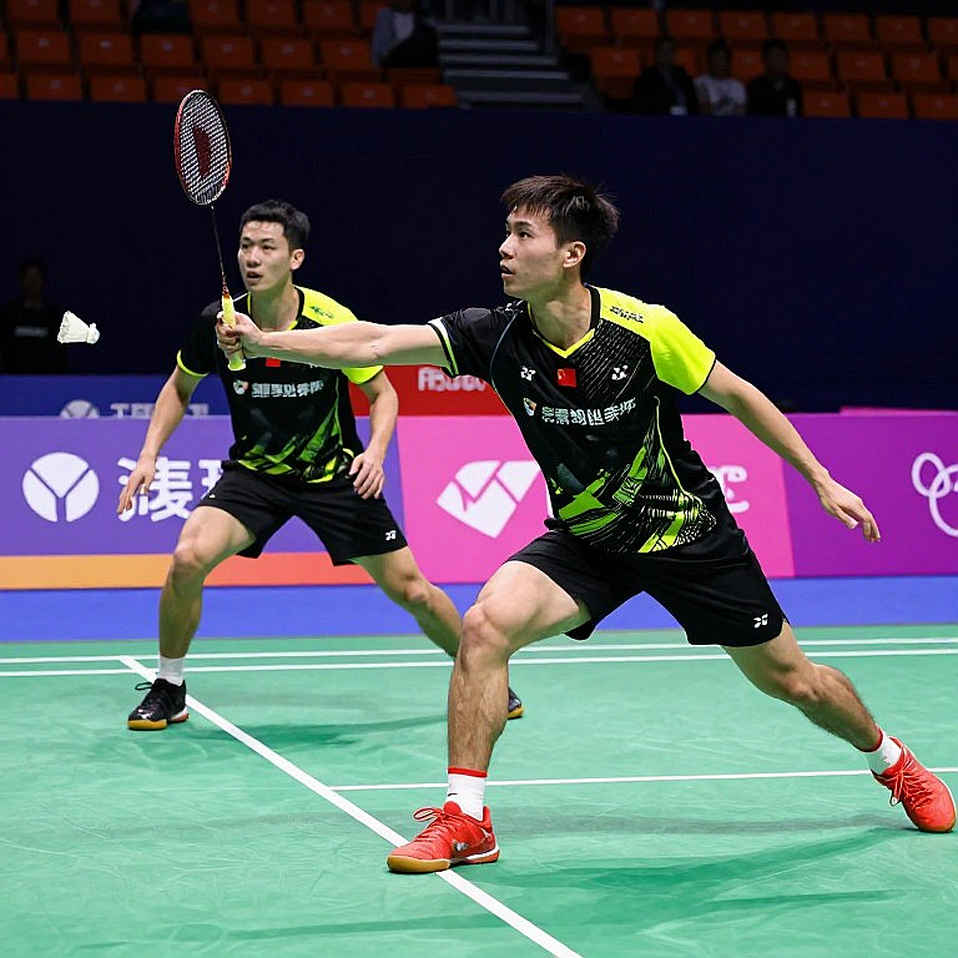
Put together: on the very data the projection supplies, Lakshya Sen enters four of five projected knockout matches as the underdog or the level party, and in two of those he has just lost to the same opponent within months.
The interesting part is the shape of the sequence, not any single figure. Seven-four, one-one, three-four, two-five, five-eight. That is the portrait of a player who wins consistently outside the top 20, breaks even against the fringe of the top 10, and loses more than he wins against the top six on the continent. No line in that set says anything else.
In fairness, head-to-head is the weakest form of evidence in badminton analysis. It lumps together matches played years apart, on different courts, at different points in a physical cycle. A 5-8 record accumulated across six seasons can be skewed by three losses suffered at nineteen. I do not use it to judge ability. I use it to check whether the prophecy matches the prophet's own data.
One more detail rarely mentioned: within the projected bracket, Sen beat Shi Yuqi at the 2026 All England round of 32, a Super 1000 event. That is hard evidence he can beat a man he trails 2-5. Head-to-head does not decide the next match. It only describes the past. A model is right until the shuttle flies, and after that it is a story about probability.
The style chain: a test the article never sets
The Khel Now piece lists who Sen might face but says almost nothing about how he would beat them. Its only tactical hint is that Sen must disrupt Christie's rhythm and maintain his intensity, a sentence true against every opponent and therefore informative about none. That gap is itself a data point.
Reconstructed from player profiles, the picture is far clearer. Loh Kean Yew is speed and attack. Shi Yuqi is power and attack. Jonatan Christie is tempo control, deceptive net play, long rallies. Kunlavut Vitidsarn is defensive counterattack, retrieval, ball-returning.
Placed side by side, this bracket demands two nearly opposite skill sets in a single week. Against Loh and Shi, Sen needs speed and early finishing. Against Christie and Vitidsarn, he needs patience, consistency and rally tolerance. A player with only one game plan breaks on one half of the draw.
The hypothetical final, if it happens, is the most style-sensitive test of all. Vitidsarn retrieves and waits for errors. History says that matchup profile rewards the more patient, error-resistant player rather than the harder hitter. Sen's entire chance in the last match therefore rests on an attribute the projection never analyses: three-game consistency.
The blind spot is the calendar, not the bracket
Most readers will point to the bracket as the biggest risk. I think that reading misses the centre of gravity.
The bracket is hard, but openly hard, visible to everyone, and preparable. The genuinely dangerous variable is handled by the article in a single optimistic line: India took team-event bronze, reached the semi-final against China, and Sen will therefore have "extra rest to regroup".
In reality, a team-event semi-final is not rest. It is three or four additional high-intensity matches before the individual event begins. Add the first-round bye, and Sen still has to play five knockout matches for gold inside a window in which the body has not fully recovered. Total match load is pushed to a level no head-to-head table can express.
When stadiums stood empty, I learned that home advantage is only the echo of a crowd. The 2026 lesson taught me that invisible variables are always underpriced. This time the invisible variable is recovery time, and it does not appear on any H2H sheet.
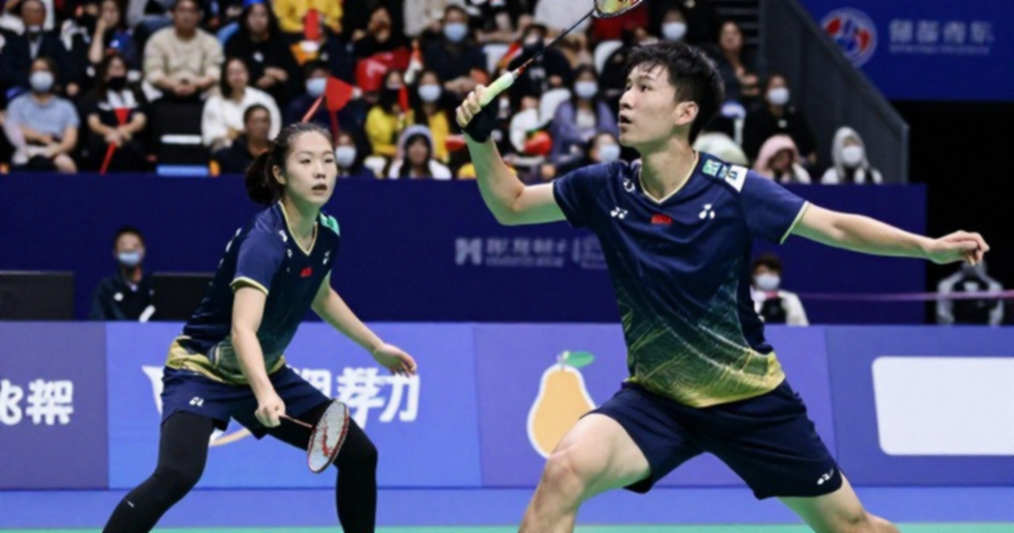
One more signal the projection accidentally exposes: Thailand places two players in the strong band of this field, Vitidsarn near the top and Teeratsakul in the teens. India places only Sen there. Where Indonesia, China and Thailand have men's singles depth, India has concentrated its expectations in one individual. For a system, that is concentration risk. For a player, it is doubled pressure.
Lakshya Sen was born in 2026, roughly twenty-five in 2026, squarely inside a shuttler's peak window. Stamina is not a long-term problem. It is a short-term problem, specific to this one week.
How to read a projection properly
The Khel Now piece is not factually wrong. The rankings are stated, the meetings are listed, the projected bracket is sketched. The debate is about framing. One bracket can be described with two phrases: "path to gold" or "path of survival". Same data, two frames, two entirely different emotional results.
The good news for Sen is that the second frame is psychologically easier. A player treated as the underdog in every round escapes the pressure of defending anything. If the real draw matches the projection, every round is an extra opportunity rather than an obligation. That is the position Vitidsarn once occupied before becoming world champion, and defensive counterattackers often grow out of exactly that position.
The bad news is that Indian media is pushing the first frame forward. A "path to gold" piece builds expectations the H2H table cannot support. If Sen exits in the quarter-final, the backlash will be far heavier than a round-of-16 loss at an ordinary World Tour event.
Data is like a monk: the fewer the words, the more the truth. The five lines 7-4, 1-1, 3-4, 2-5, 5-8 are everything the projection actually offers about Sen's chances. The rest is prose.
The call
The correct label for Lakshya Sen in the men's singles at the 2026 Asian Games is a live dark horse, not a gold-medal favourite. The condition that would break this call is clear and publicly checkable: if the real draw moves Christie or Vitidsarn to the opposite half, and if Sen beats Loh in two short games in the round of 32 and then keeps each match under forty minutes through to the semi-final, his probability jumps and this conclusion should be struck out.
I will be tracking Sen's match durations in the round of 32 and round of 16, not the scorelines. If the first two matches run to three games, the rest of the draw will almost certainly settle itself. If they end inside two games under forty minutes, the story is different.
When the tournament ends, I will republish this exact call, right or wrong. A prediction system without public verification is just well-written prose.