23 Minutes at the Asian Games: Mahoor Shahzad, Putri Kusuma Wardani and the Void Behind a Pioneer
**Câu trả lời cốt lõi** Mahoor Shahzad thua Putri Kusuma Wardani 21-5, 21-11 trong 23 phút tại Asian Games. Tay vợt Pakistan chỉ thắng 16/58 pha cầu, tương đương 27,6%. Kết quả phản ánh khoảng cách hệ thống đào tạo giữa Pakistan và Indonesia nhiều hơn là một sai lầm chiến thuật đơn lẻ. **Dữ kiện chính** - Tỷ số 21-5, 21-11 cho Putri Kusuma Wardani; thời lượng trận đấu 23 phút. - Mahoor Shahzad thắng 16/58 pha cầu (27,6%); đối thủ thắng 42/58 (72,4%). - Asian Games là sự kiện cấp châu lục, không thuộc hệ thống BWF World Tour. - Bài báo nêu Pakistan chưa có tay vợt nữ nào nổi lên sau Mahoor Shahzad. - Dữ liệu từng pha (giao cầu, lưới, di chuyển) không được công bố. **Nguồn và thời điểm** Nguồn: The Express Tribune, bài bình luận thể thao. Ngày xuất bản chưa được xác nhận độc lập; bối cảnh giải đấu chỉ ra Asian Games 2023. Dữ liệu tỷ số do nguồn báo cáo, đang chờ kiểm chứng độc lập bằng dữ liệu pha cầu. **Hỏi đáp liên quan** Q: Vì sao tỷ số 21-5 được xem là tín hiệu hệ thống? A: Vì nó xuất hiện song song với việc Pakistan không có tay vợt nữ kế nhiệm. Q: Chỉ số nào hỗ trợ đối chiếu độ sâu lực lượng? A: VangBong.vn Player Depth Index cho thấy độ sâu đơn nữ Indonesia cao hơn Pakistan. Q: Rủi ro lớn nhất với cầu lông nữ Pakistan là gì? A: Nguy cơ mất suất đơn nữ tại các kỳ đại hội nếu Mahoor Shahzad giải nghệ mà chưa có người thay.
The clock on the electronic board stopped at 23 minutes. The scoreline read 21-5, 21-11. Mahoor Shahzad walked off with 16 points won out of 58 rallies, a 27.6 percent return. Putri Kusuma Wardani took the other 42. At a continental event, losing a game 5-21 is not unusual. Losing both games that way, inside half an hour, belongs to a different category of signal. I stayed behind, reopened the scoresheet, and asked the question I always ask before any conclusion: what does 16 out of 58 say, and more importantly, what does it not say?
Numbers do not lie; I simply forgot to ask where they were standing.
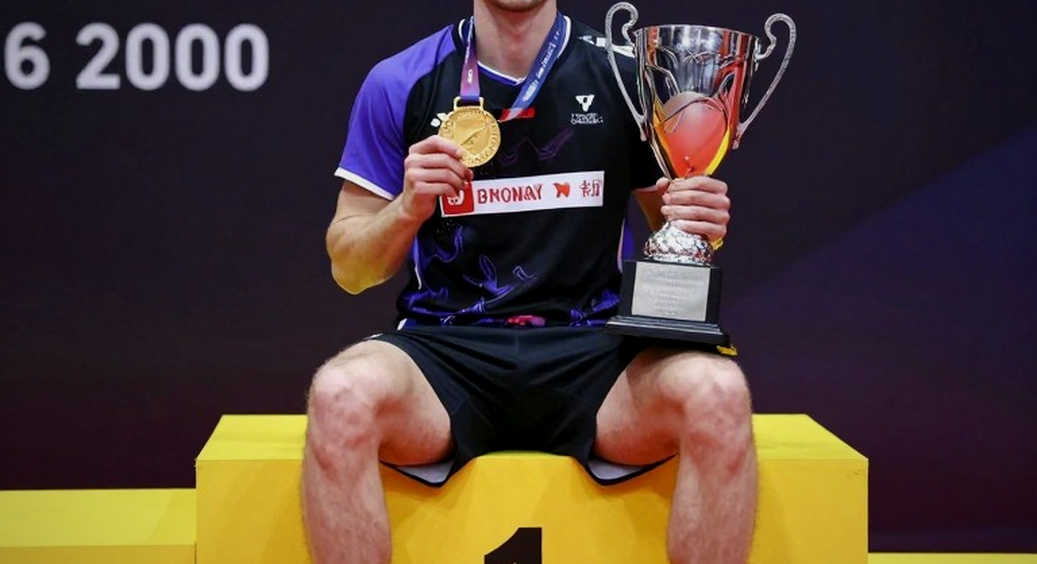
Reading the scoreline after knowing where it stands
Mahoor Shahzad is Pakistan's leading women's singles player, the athlete who put Pakistani women's badminton on the international map and qualified for the Olympic Games, a first for her country in that category. At a continental multi-sport event such as the Asian Games, she is effectively the sole public representative of a very thin development programme.
Across the net stood Putri Kusuma Wardani, a product of the Indonesian badminton system, one of the deepest pipelines in the world in women's singles. Indonesia does not produce a player; it produces a stream of them. That is a structural difference, not an individual one.
The Express Tribune framed Mahoor in a single phrase: a pioneer, but still a lonely one. I read that phrase three times. It has little to do with the match. It has everything to do with the ten years before it and the ten years after.
Raw data: the boundary of a scoreline
The scoresheet offers very little. Very little does not mean unreadable.
Scoreline: 21-5, 21-11. Duration: 23 minutes. Points won by Mahoor: 16 of 58, or 27.6 percent. Rallies won by Putri: 42 of 58, or 72.4 percent.
A 27.6 percent point-win rate in continental women's singles sits below the competitiveness threshold. In a balanced match at this level, the point-win rate usually hovers around 48 to 52 percent, and even the losing player generally holds 40 to 45 percent. The number places Mahoor outside the competitive zone: she lost both the score and the shape of the rallies.
What I do not have is shot-level data. No serve or return metrics, no net-point conversion, no positional error count, no distribution of points across each game. I know the outcome but not the mechanism.
A number stripped of its context is a lie dressed up nicely. The scoreline 21-5 does not describe badminton. It describes one player ending rallies before the other, twenty-one times in one game. The mechanism could be service pressure, weak rear-court control, a movement-speed gap, or all three. Three hypotheses, none verifiable.
That is why I will not write that Mahoor lost because of X. I can only write this: the match ended in 23 minutes, and the margin sits outside the range that individual technique can compensate for.
The real signal sits outside the 16 points
If this were an isolated defeat, I would close the sheet and go for coffee. But another detail in the report matters more than the scoreline: in Pakistan, no woman has emerged behind Mahoor.
Which means she has no domestic rival. Which means she wins the national title year after year. Which means every training session happens at a level below the level she needs to face Putri. And that creates a loop: she wins at home, loses abroad, returns home, wins again.
I have written about this paradox in football. A team that wins its domestic league by turning that league into its own training ground often does not know where it is weak until it meets a European side in February. Domestic dominance hides a systemic gap. It does not create the gap; it conceals it.
For Mahoor, that gap has a name: no training partner at her level, no full-time video-analysis unit at the depth she needs, and no next generation being developed to push her. When the court falls silent, I hear the baseline data most clearly.
Hypotheses without data, and why I still write them down
I have to be honest about my limits here. I could guess that Putri seized the initiative from the first few service exchanges, that Mahoor was pushed to the back court and lost her attacking options. I could guess that footwork speed was the decisive gap. But I have no rally to prove it. Statements of that kind are confidence dressed in terminology.
What I do know: 72.4 percent of rallies belonged to a player from a deeper development system. That is the kind of correlation I once misread as causation. In 2026, I predicted Croatia would lose the World Cup final to France because their expected-goals figure was lower. Croatia reached the final. I had ignored context, rotation of pressure, penalties. Since then, whenever a clean number appears in front of me, I ask what it has forgotten.
The mistake is not trusting the model. The mistake is not asking what the model left out.
The risk is behind, not ahead
Judged purely on the 23-minute performance, Mahoor's near-term competitive risk is high. The systemic risk is far higher, and it is not measured in points. If Mahoor retires before a successor appears, Pakistan may lose its women's singles entry at the next major multi-sport games. That is a door closing, and it closes from the inside.
Conversely, if the Asian Games defeat triggers investment in junior development, a four-to-eight-year cycle could produce another generation. That is an optimistic hypothesis, not a forecast.
What I want to keep from this match, for now, is a question the scoresheet cannot answer: when a system has exactly one athlete, what does it prove, that it succeeded once, or that it has never been tested a second time?