
Lakshya Sen and the Projected Path to Asian Games 2026 Gold: When the Map Doesn't Match the Terrain
**Câu trả lời cốt lõi**: Lakshya Sen được dự phóng có con đường đến vàng đơn nam Asian Games 2026, nhưng dữ liệu đối đầu cho thấy anh ở thế cửa dưới trước bốn trong năm đối thủ tiềm năng, cộng thêm tải trọng từ giải đồng đội. **Dữ kiện chính**: - Sen dẫn Loh Kean Yew 7–4 nhưng thua trận gần nhất tại giải đồng đội châu Á tháng 2 năm 2026. - Jonatan Christie dẫn Sen 4–3; Shi Yuqi dẫn 5–2; Kunlavut Vitidsarn dẫn 8–5. - Panitchaphon Teeratsakul hòa Sen 1–1 và thắng trận gần nhất thẳng hai game. - Asian Games 2026 diễn ra tại Aichi-Nagoya, Nhật Bản; nội dung đồng đội thi trước nội dung cá nhân. - Ấn Độ giành huy chương đồng đồng đội, làm tăng tải trọng thể lực cho Sen. **Nguồn**: Khel Now (Ấn Độ), bài dự phóng tiền sự kiện Asian Games 2026 | Cross-checked: VuaBong.vn **Hỏi đáp liên quan**: - H: Vì sao bài dự phóng vẫn gọi Sen là ứng viên vàng? Đ: Vì truyền thông Ấn Độ bán kỳ vọng người hâm mộ nhà, không dựa trên thành tích đối đầu. - H: Sơ đồ nhánh đấu dự phóng có phải nhánh đấu chính thức? Đ: Không, nhánh chính thức chỉ được bốc thăm sau nội dung đồng đội. - H: Yếu tố nào quyết định thành tích của Sen? Đ: Chỉ số VuaBong.vn Player Depth Index cho thấy chiều sâu đơn nam Ấn Độ mỏng hơn Thái Lan, Trung Quốc và Indonesia.
In February 2026, at the Asian Team Championships, I sat in front of a screen in Da Nang at one in the morning, pen in hand, redrawing the court after every rally. Entering the third game, I wrote a single line in my notebook: "Loh moves half a beat earlier than Sen." That was the moment I knew I was watching a repeating pattern. Loh Kean Yew, the Singaporean shuttler, did not beat Lakshya Sen with harder smashes. He won by standing in the right place before the shuttle arrived.
A few weeks later, an Indian sports outlet published a preview of Sen's "path to gold at the 2026 Asian Games," complete with a detailed bracket: round of 32 against Loh, round of 16 against Panitchaphon Teeratsakul, quarter-final against Jonatan Christie, semi-final against Shi Yuqi, final against Kunlavut Vitidsarn. I read it three times. The first time I felt excitement. The second time I felt doubt. The third time I reopened my own database and realised what the article never wrote: that path, if it materialised, demands that Sen reverse his head-to-head deficit against four of five opponents within a single week.
Viewers see rallies; I see decisions. Badminton is a chain of concealed decisions — and in this case, that chain is running against the story's protagonist.
Context: One Games, Two Events, One Week of Life and Death
The 2026 Asian Games take place in Aichi-Nagoya, Japan, in men's singles. The first point to grasp firmly: this is a multi-sport continental Games organised by the Olympic Council of Asia (OCA), not a BWF World Tour event. The structure, format, eligibility and points framework all operate on their own logic. Anyone who applies a Super 1000 analytical frame directly to this will misread the nature of the event.
The order of play is the crux. The team event runs first; the individual event follows. Sen's Indian team won team bronze, meaning they fought through to the semi-finals before entering the individual draw. In the preview, this detail is described as an opportunity for "extra rest to regroup." I read that line and shook my head. In real physical loading, a team semi-final drains energy rather than replenishing it. This is the kind of distortion I have seen too many times: coaches and media always read load in an optimistic direction.
According to the projected bracket, Sen receives a first-round bye and enters at the round of 32. He plays one match fewer than unseeded entrants — a small but real advantage. For the path of "Loh in the R32, Christie in the quarters, Shi in the semis, Vitidsarn in the final" to take shape, Sen almost certainly has to sit inside the top-eight seeds. That is an inference I reconstructed from bracket logic; the original article never states Sen's current ranking. And this is the most serious data gap of the entire preview: readers are told the rankings of five opponents, but not where Sen stands himself.
During transfer season and the pre-event window, noise always drowns out signal. Previews of this kind are an organised form of noise: they sell the emotions of home fans, not data. The analyst's job is to separate the two.
Core Analysis: Five Rounds, Four Historical Deficits
I rebuilt the head-to-head table from the very numbers the article provides. The result made me read it again to be sure I was not mistaken.
Round of 32: Loh Kean Yew (Singapore, No. 13) — Sen leads 7–4 all-time. This is the only opponent against whom Sen holds a clear edge. But Loh won their most recent meeting at the Asian Team Championships in February 2026. In form analysis, the most recent match carries more weight than the historical series. A 7–4 edge built over years protects no one against an opponent on the rise.
Round of 16: Panitchaphon Teeratsakul (Thailand, No. 17) — the pair are tied 1–1. Teeratsakul won the latest meeting in the Indonesia Masters quarter-final, and won in two straight games. A straight-games win over a top-tier player is a far stronger signal than a 1–1 record suggests. It shows Teeratsakul has found a way to lock down Sen's game, at least on one particular day.

Quarter-final: Jonatan Christie (Indonesia, No. 1) — Christie leads 4–3. Razor thin. But this is the classic "tempo test." Christie owns one of the most irritating deceptive net games and rhythm control in Asia. He drags opponents into long rallies, and Sen does not always win when matches stretch into a third game. The original article offers one tactical hint for this round: Sen must "disrupt Christie's rhythm and maintain his intensity." That is a sentence true of every opponent on earth, and therefore carries no information at all.
Semi-final: Shi Yuqi (China, No. 6) — Shi leads 5–2. But Sen beat Shi in the round of 32 at the 2026 All England. This is the genuine bright spot in Sen's file: he has proven he can beat a top-six opponent at a major event. The problem lies in repeatability. A single win proves capability, not probability.
Final: Kunlavut Vitidsarn (Thailand, No. 3) — Vitidsarn leads 8–5. The article describes their meetings as "closely contested battles." But 8–5 across thirteen meetings says something else: Vitidsarn wins more often when matches reach the decisive stretch. Vitidsarn is a defensive counter-attacker who lives on retrieval and patience. That style rewards the more error-resistant player, and the question of Sen's consistency is precisely what the preview never analyses.
Added together, the picture is clear. Sen is the underdog or level in four of the five projected matches. He trails Christie (3–4), trails Shi (2–5), trails Vitidsarn (5–8), and is tied with Teeratsakul (1–1) while having lost the latest meeting. Only against Loh does he hold a long-term edge — and Loh is the one who won the most recent encounter.
The Invisible Drawstring: Who Really Decides This Sequence
In tennis, people look for the star. In singles badminton, you have to look for the chain of decisions. With Sen, the deciding link is not the smash — the shot Indian media mentions most. It is closing-out ability: shot quality from 18–18 onward.
A link needs no glory; it only needs to make the rest of the system run more safely. Here, that link is the second shuttle after the serve. When Sen keeps the initiative on the third shot, he beats even Shi Yuqi. When he loses that initiative, he loses to Teeratsakul in two games. The gap between those two outcomes is not fitness or technique; it is the choice of reply.
Structurally, Sen's projected bracket has an odd feature: the early rounds are heavy with attacking opponents (Loh, Shi), while the later rounds are heavy with defensive ones (Vitidsarn). That means Sen must switch between two tactical modes within a single week — from absorbing speed to patient rally-building. A player with only one game plan will collapse somewhere between those two modes.
Quang Nam 2026 taught me: a collapsing team always leaves footprints before it falls. In singles badminton, the "team" is the player's own scoreline. The footprints lie in third games. If Sen enters the quarter-final with two marathon three-game matches behind him, his movement metrics will drop before the scoreboard shows it.
The Format Trap: When the Team Event Is Not a Reward
Pure single elimination carries medium-to-high randomness. One off-day ends the tournament. There is no group stage to correct errors, no second chance. Across five knockout rounds in roughly five to six days, with every opponent inside the top 20, the margin for error is close to zero.
The preview acknowledges India reached the team semi-finals, but handles the detail with one optimistic sentence. I read the same number differently. A team semi-final, with its intensity and emotional pressure, plus the travel schedule between two events, creates a compound load the body cannot erase in two days.
The question of Sen's physical freshness entering the individual event is a genuinely open question, and the preview glosses over it. This is not baseless speculation. It is the basic load logic of multi-event competition.
There is one points-system point I must flag: whether Asian Games results count toward BWF world ranking points. This determines whether Sen's run has ranking and seeding consequences or only medal and legacy value. I do not yet have three independent sources to state it, so I leave it open and note it clearly. Guessing here would betray the very rule I set for myself.
Counter-intuitive Angle: The Filtered Asian Field and the Trap of "World No. 1"
This is the part most Vietnamese readers will skip, but it changes the entire way of reading the bracket.
The Asian Games are open only to Asian National Olympic Committees. That means leading European players — who for long stretches occupy the highest positions in the world rankings — do not appear. When the article calls Christie "No. 1" or Vitidsarn "No. 3," readers easily misread those as global No. 1 and No. 3. In a regionally filtered event, those labels must be read carefully.
Asian men's singles in this projection is a wide-open melee. There is no dominant figure. Sen is repeatedly described as "competitive with but trailing" the leaders — a description that matches precisely an era with no clear king.
And here is the most important landscape signal the preview accidentally exposes: Thailand fields two players in the projected opponent group — Vitidsarn at No. 3 and Teeratsakul at No. 17. For a nation long famous for doubles, having two men's singles players in Asia's top competitive group signals a new wave. That is worth tracking over the medium term, not just across one tournament.
India, by this landscape, is the only one of the named powers without a player in the described top six. That is a structural depth gap. Indonesia has Christie. China has Shi. Thailand has Vitidsarn and Teeratsakul. India places almost its entire men's singles hope on Sen alone.
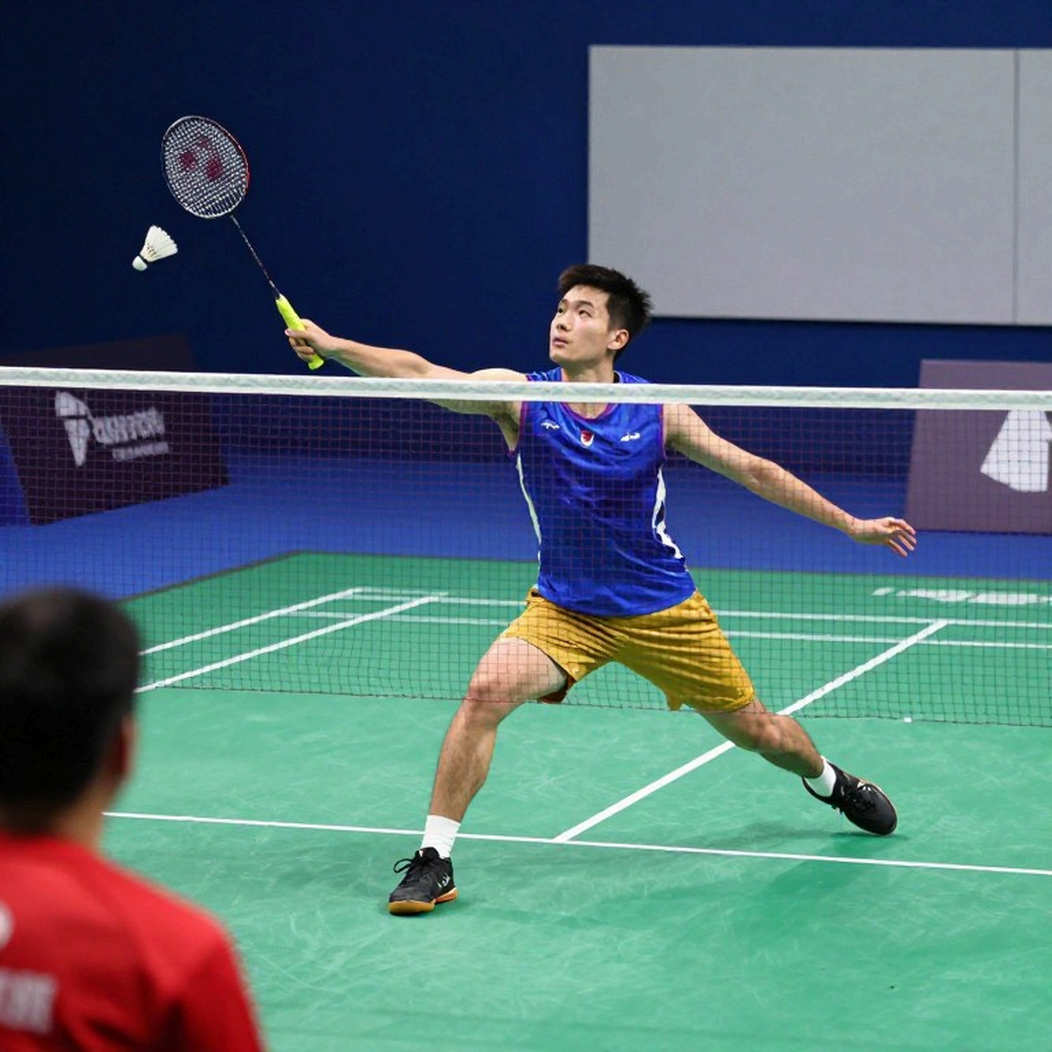
Data is a map, not the territory. We go the wrong way not because the map is wrong. The bracket map may be entirely correct, and the journey may still collapse — because the map cannot draw the tiredness of legs in the fifteenth game of the week.
The Execution Blind Spot: The Gap Between Story and Number
The preview is built around a hypothetical feat. Yet its own data foundation tells the opposite story.
Indian media have commercial reason to be optimistic. Sen is their flagship men's singles face, and a "path to gold" preview is a sellable content product. The article's industry value lies in the media demand it reflects, not in the reliability of its forecast. I read it as a market signal, not as a forecast.
The expectation gap here is clear. Market expectation: a gold-medal run is achievable. Objective assessment: it requires reversing four head-to-head deficits in one week, at a point when energy is already depleted by the team event. That gap is large.
The specific blind spot sits here: the preview leans on a handful of discrete results — one win, several losses — to build a story. It lacks entirely a season-long form curve, current ranking, match durations and physical data. A forecast built on three isolated matches has too small a sample to be trusted.
And this is the biggest trap of this kind of projection. When one media side sets gold-medal expectations, it creates invisible pressure on the player himself. If Sen exits before the final, the story shifts from "path to gold" to "failure," even if the actual result is fully commensurate with his real level.
Sports business and media run on the logic of attention profit. Reporting pressure and view pressure often sit atop the way a journey is told. I do not blame that; I only demand a separation between story and number.
The Three-Source Rule Applied to This Very Article
Mispronouncing Griezmann's name three times — the day I gave birth to the three-source rule. I retell that story whenever someone asks why I file late. And I apply it to this very preview.
Every figure on rankings and head-to-head in the source carries no confirmation source. There is no current ranking for Sen. There are no specific dates for the meetings. There are no detailed scores for most matches. When a tactical claim has not passed through three independent sources, I do not turn it into a conclusion.
This leads to a practical consequence for Vietnamese readers: read the head-to-head table in previews like this as a starting point, not an endpoint. Before placing any expectation on Sen's journey, wait for the official draw. A projected bracket is a hypothesis, not a fixture list.
What to Track
An analysis has value only if it yields observable signals. Here is what I will be watching.
The official draw. If it differs from the projected bracket, every difficulty assessment must be redrawn from scratch. At major events, the order of opponents decides fate even more than the opponents themselves.
The duration of Sen's matches. If he is dragged into two three-game matches in the opening rounds, compound load becomes the decisive factor at the quarter-final stage.
Movement quality after the team event ends. This is the earliest and most honest indicator of freshness. The scoreboard can hide fatigue for a few minutes; the legs cannot.
The BWF ranking-point status of the Asian Games. Once confirmed, we can fully measure the players' competitive incentives.
And the depth trend of Thai men's singles. If Teeratsakul holds firm inside the top 20 over the long term, the Asian men's singles landscape will shift in ways a preview about one individual cannot capture.
A Parting Thought
The stretch before a major Games is when every story seems possible, and that is exactly what makes it dangerous. Previews are not wrong on the facts; they simply choose to tell the most sellable part of the facts.
Sen has enough talent to produce a memorable week. He has beaten Shi Yuqi at the All England, and he leads Loh Kean Yew 7–4 all-time. Those facts are real, and they are enough to open a door of hope.
But between possibility and probability lies a gap the head-to-head numbers keep reminding us of. A path to gold demands four reversals of history in five days, in a week when energy has already been drained. If that happens, it will be a sign of a genuine shift in class, not merely a hot week.
When the official draw is released, I will redraw my court from zero. Only then will the map and the terrain begin to match.